In contemporary discourse, the term ‘infrastructure’ typically conjures images of roads, bridges, and utilities—physical systems essential to the functioning of our societies. However, the concept of infrastructure can be extended beyond its tangible form to encompass networks of care, healing, and empathy. As a community initiative, an ‘infrastructure of care’ transcends mere functionality, weaving connections that nurture the human spirit and foster collective healing.
The interconnectedness of our built and social environments reflects collective strength, illustrating how initiatives can mend not only physical scars but also deeper societal wounds. To illuminate this concept, I turn to the experiences of four Ukrainian initiatives and NGOs dedicated to rebuilding Ukraine amidst ongoing war. Their efforts—including grassroots volunteering, cultural promotion, educational activities, environmental restoration, heritage preservation, and community events—highlight the critical role of collective action.
Repair Together
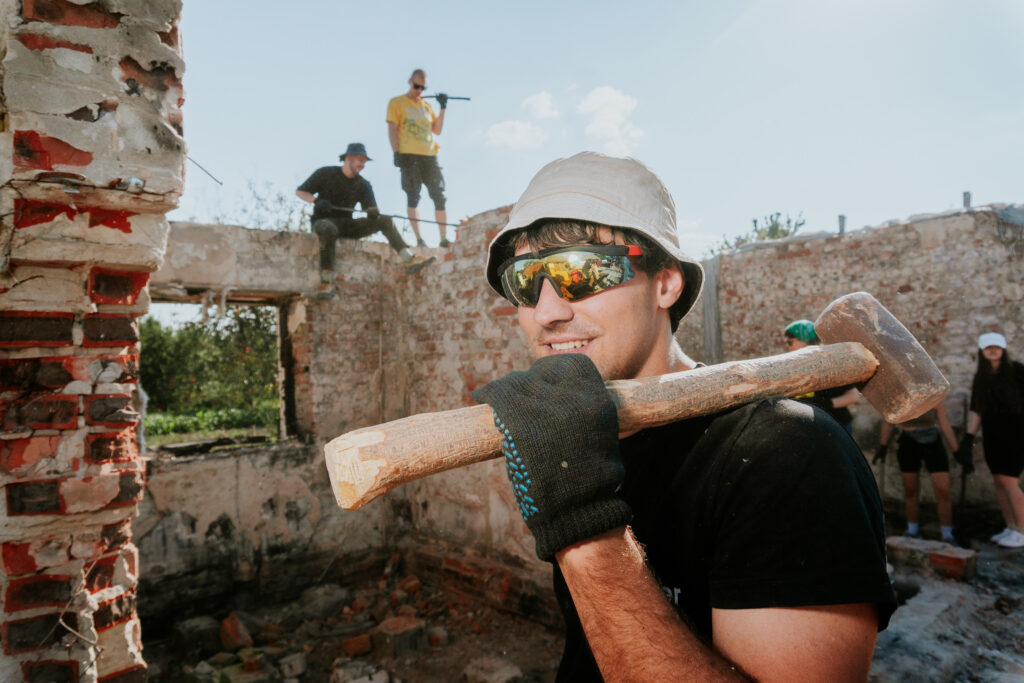
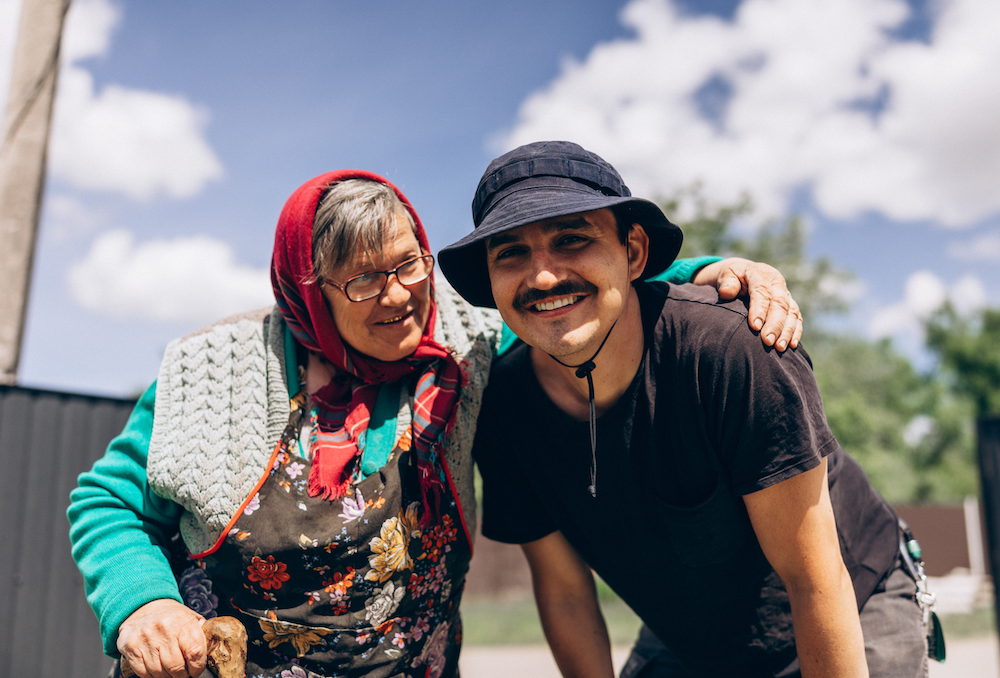
Repair Together is a volunteer initiative focused on rebuilding Ukrainian villages impacted by the russian1 invasion. Their efforts combine physical reconstruction with cultural activities, engaging volunteers in construction work and community events through music, art, and culture. Repair Together co-founder, DJ, and creative director Daria Kosiakova told me more about their projects.
What inspired the concept of Repair Together, and how did you start organising it?
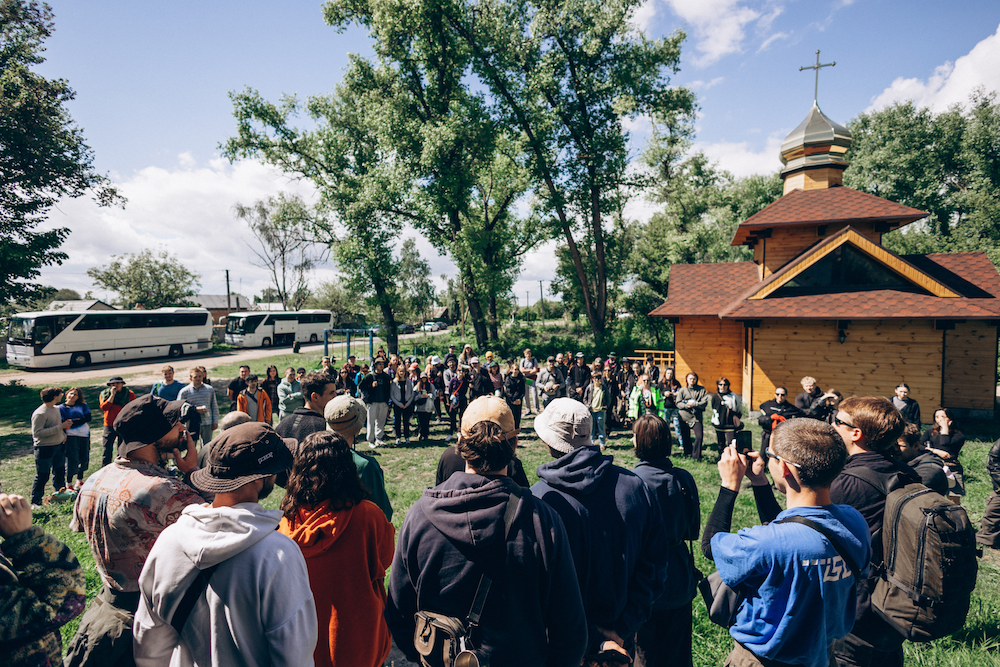
Daria Kosjakova (DK): Before the full-scale war, we were a group of friends who loved travelling and partying together. When russia invaded, Vika, one of our co-founders, suggested to organise a ‘dog toloka’2 in Hostomel to support a local animal shelter, drawing 40–50 volunteers. Seeing the destruction and emotional toll in the Chernihiv region, we realised the need for both physical and emotional rebuilding, leading to the creation of Repair Together. Over two years, 4,500 volunteers have cleared 180 sites, repaired 60 homes, and started building 16 more. This combination creates a unique atmosphere where volunteers connect with each other and the local communities.
Seeing the destruction and emotional toll in the Chernihiv region, we realised the need for both physical and emotional rebuilding, leading to the creation of Repair Together.
What are the typical activities at Repair Together events?
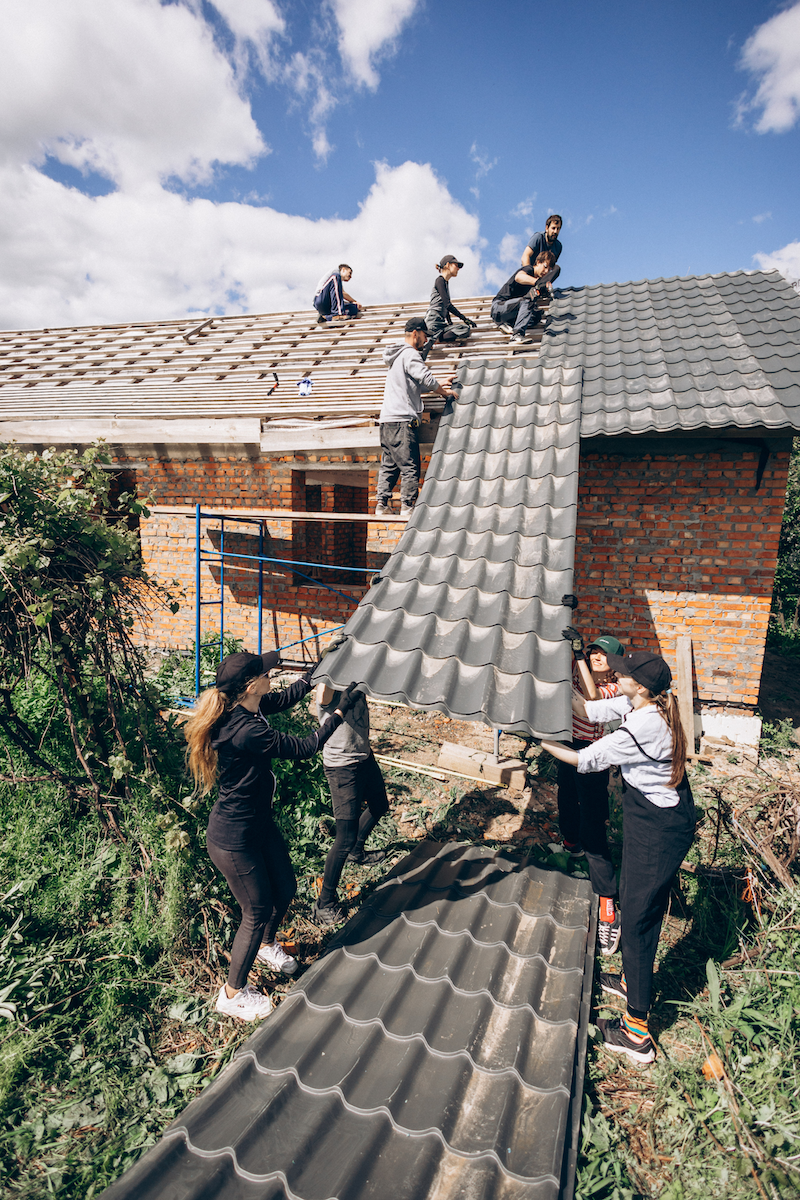
DK: Initially, our activities involved cleaning debris, repairing roofs, painting, and restoring public spaces like playgrounds and community centres. However, we’ve evolved beyond repair-raves and now focus on three main projects:
- International Construction Camp
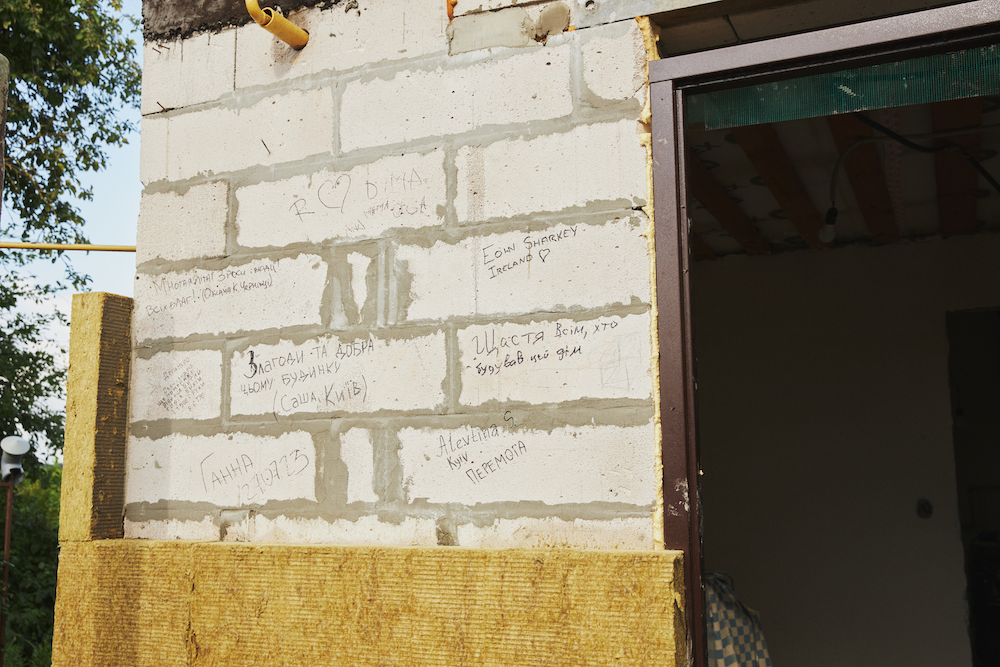
In Lukashivka, Chernihiv region, this camp focuses on rebuilding homes destroyed during the occupation. Volunteers work on 11 houses and live in a cozy, shared-room house with amenities like meals, showers, laundry, and internet. The camp is self-sufficient, with volunteers also contributing to cooking and cleaning.
- Velyke Divnytstvo
This project is dedicated to breaking the stereotype that women don’t belong in construction. We wanted to break these biases and prove that women can build just as well as men, if not better. The team is currently building a house for Ms. Nina, a single mother who lost everything in the war. Ms. Nina’s resilience drives the team to continue pushing boundaries and proving the strength and skill of women in construction.
- Community HUB in Kyiv
This recently opened hub serves as a space for volunteers, activists, and community members to connect, share ideas, and collaborate on rebuilding Ukraine. It also hosts cultural events and workshops, strengthening community bonds.
What are your future ambitions and what support do you need to achieve them?
DK: Our future ambitions are to rebuild more homes and restore communities across Ukraine, with a focus on completing our International Building Camp projects and starting new ones in other regions. To achieve this, we need continued financial support for construction materials, labor, and logistics, and are actively seeking partners and sponsors.
Beyond reconstruction, we’re concerned about the war’s environmental damage. Once immediate rebuilding is done, we aim to focus on ecological restoration, including replanting trees and cleaning forests, to help the environment recover alongside the people.
Nova Kakhovka Society of Cultural Heritage Protection
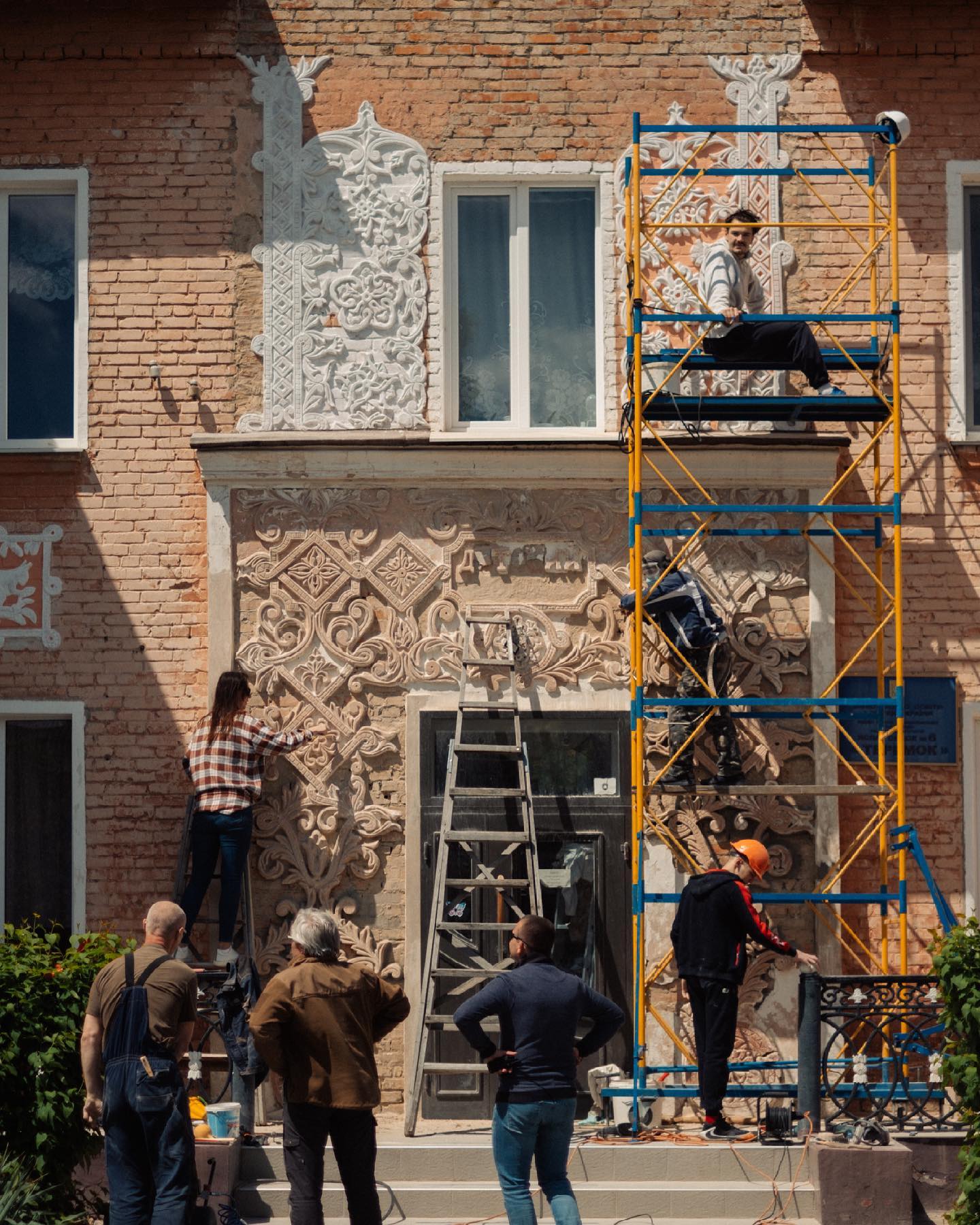
Nova Kakhovka Society of Cultural Heritage Protection, founded in 2012 by architects Ielizaveta and Tetiana Ievseieva aims to protect, restore, research, and promote the unique heritage of Southern Ukraine. The organisation engages residents in preservation efforts, organises restoration works, exhibitions and educational initiatives to raise awareness of local history, and tries to dismantle Soviet and russian narratives regarding Southern Ukraine’s cultural identity.
Could you tell me about the focus of your NGO?
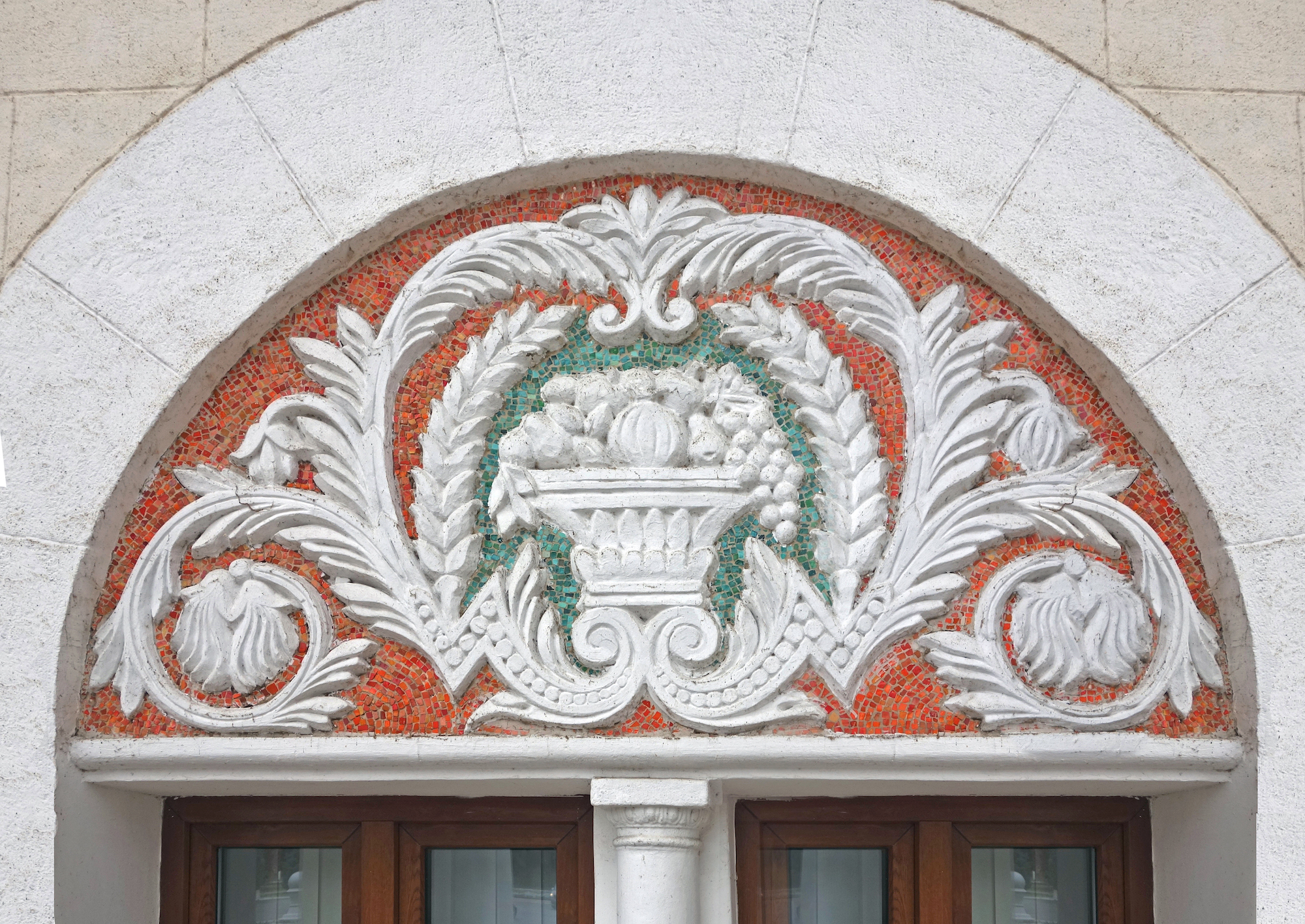
Jelõzaveta Jevsejeva (JJ): Our project in Nova Kakhovka revolves around preserving and reviving the town’s unique cultural heritage, particularly through stone embroidery. Stone embroidery, or ‘кам’яна вишивка’, is a technique developed in the 1950s by the artist Hrygoriy Dovzhenko. He carved intricate Ukrainian folk patterns directly onto the façades of buildings—a distinctive blend of traditional art and modernist architecture that turned ordinary structures into cultural symbols, reflecting the town’s identity and resilience. Especially significant during the Soviet era and now in wartime, stone embroidery serves as both an artistic expression and a symbol of cultural endurance.
What impact do the workshops have on participants and the community?
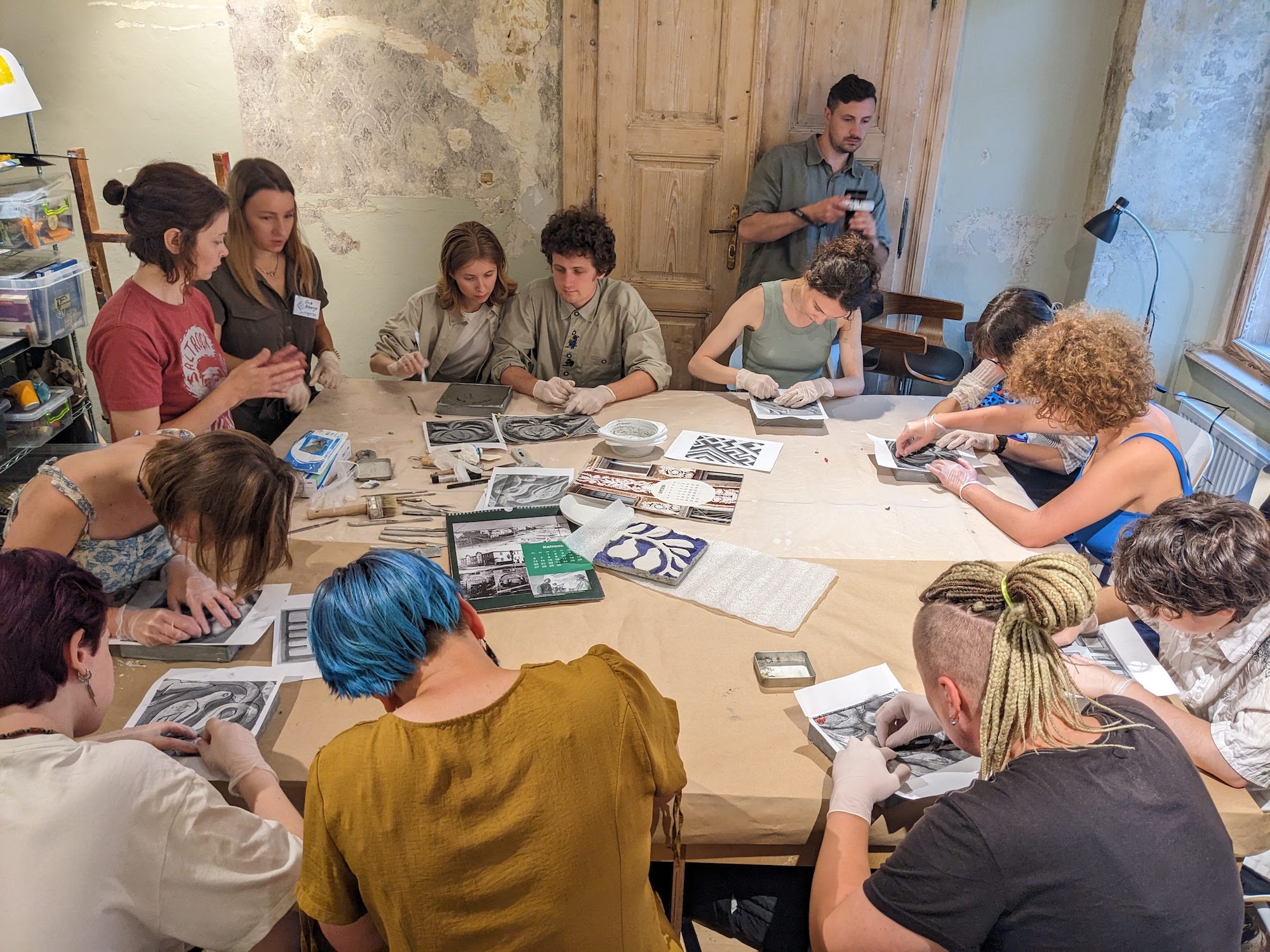
JJ: The workshops offer a hands-on way to reconnect with cultural roots, especially for those displaced by the war. By participating in the hands-on process of restoration, individuals find purpose and community. One memorable participant was a woman from Donetsk, whose home had been destroyed. After learning the stone embroidery technique, she said, ‘I will return, rebuild my home, and create stone embroidery on it’. This story embodies the resilience and hope these workshops inspire. They provide not only cultural connection but also emotional healing, helping participants rebuild their lives. We encourage other communities to host these workshops, as they are powerful tools for both cultural preservation and personal recovery.
The workshops offer a hands-on way to reconnect with cultural roots, especially for those displaced by the war.
What is the future outlook for your NGO, and how can people support your efforts?
JJ: We remain committed to preserving our cultural heritage despite the ongoing war. Our future projects will focus on restoring artworks, organising educational programmes, and promoting heritage. Support us by attending workshops and exhibitions, spreading the word, or collaborating on events.
Ukrainian Environmental Humanities Network
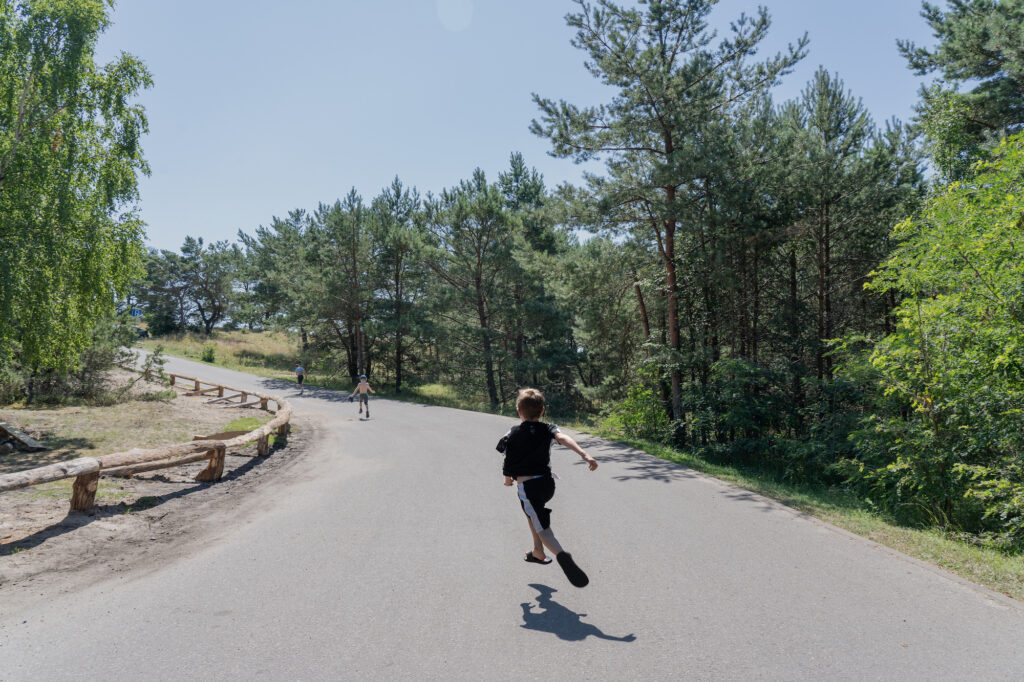
Rebuilding efforts should actively collaborate with environmental agencies to ensure sustainable development. The Ukrainian Environmental Humanities Network, established in 2022 by Dmytro Chepurnyi, Karolina Uskakovych, Jonathon Turnbull, Oleksandra Pogrebnyak, and Ewa Sułek, plays a pivotal role in this effort.
What ecological challenges has the UEHN identified in Ukraine’s landscapes since its establishment, and how are these challenges being addressed in your initiatives?
Karolina Uskakovych (KU): After the Kakhovka Dam tragedy, discussions of russian ecocide in Ukraine intensified, both within Ukraine and in the global media. One of the seminars in our inaugural seminar series was dedicated to the concept of ecocide, examining the weaponisation of nature in Ukraine, the environmental impacts of war, and the environmental legacies it will have. We later created an educational series for the Grounding Invasion Art Residency that discussed the environmental consequences of the full-scale invasion, highlighting both negative impacts and paradoxical opportunities, such as conservation efforts and ‘war-wilding’, which we later explored in collaboration with Vidnova Lab.
Dmõtro Tšepurnõi (DT): A major challenge is rewilding battlefields in Eastern Ukraine, which are heavily mined and can take centuries to de-mine. Activists are developing policies to turn these areas into natural reserves, in line with Ukraine’s ‘Smaragdova Merezha’ and broader European ecological strategies. The goal is to preserve about 30% of Ukraine’s territory for nature, rather than for agriculture or infrastructure.
A key issue is the sustainability of Ukraine’s energy system. Russian attacks on energy infrastructure show the need for a new, sustainable strategy to survive long blackouts.
Ewa Sułek (ES): When creating the first seminar series, we divided it into five panels, each addressing different themes: ecocide, food and agriculture, urban ecologies, Chornobyl (and the impacts of nuclear catastrophes on the environment more broadly), and the future of environmentalism and environmental research and art in Ukraine.
Oleksandra Pogrebnyak (OP): I would like to delve more into how the russian war in Ukraine has disrupted global food production and distribution. We’re also exploring ecological farming approaches emerging due to the occupation of chernozem soil in Eastern and Southern Ukraine and the displacement of households to safer regions. We discussed this in a seminar, and the conversation continues in the Ukrainian chapter of Climavore, a project by the Turner Prize-nominated duo Cooking Sections.
We support ideas from Oleksii Vasyliuk’s Ukraine War Environmental Consequences Work Group, which advocates for creating natural reserves from mined and battlefield areas.
How do you hope the network’s activities will evolve to address emerging environmental challenges and opportunities in Ukraine?
DC: A long-term goal is to influence political discussions on sustainable rebuilding. Despite Ukrainian NGOs’ efforts, green approaches are still unpopular among politicians. We support ideas from Oleksii Vasyliuk’s Ukraine War Environmental Consequences Work Group, which advocates for creating natural reserves from mined and battlefield areas. While economists may push for rebuilding infrastructure like the Kakhovka Dam, ecologists see potential for green restoration, though military strategies add complexity to these discussions.
Our efforts include addressing the industrial heritage of regions like Donetsk and Luhansk, ensuring they’re included in future plans. We must prepare now to tackle the challenges that will emerge when we return after years of occupation and war.
JT: The network is committed to hosting as much of our research, events, and practices in Ukraine as possible while staying accessible globally. After Ukraine’s victory, rebuilding will require a strong environmental network, uniting researchers, cultural practitioners, and others to foster a vibrant eco-cultural community.
KU: Many young Ukrainians have been displaced by russia’s war. Part of our recent work has involved working with displaced Ukrainian children within and beyond Ukraine to foster their knowledge of and care for the environment, cultivating the next generation of Ukrainian environmentalists.
Vsesvit: Ukraine Solidarity Collective
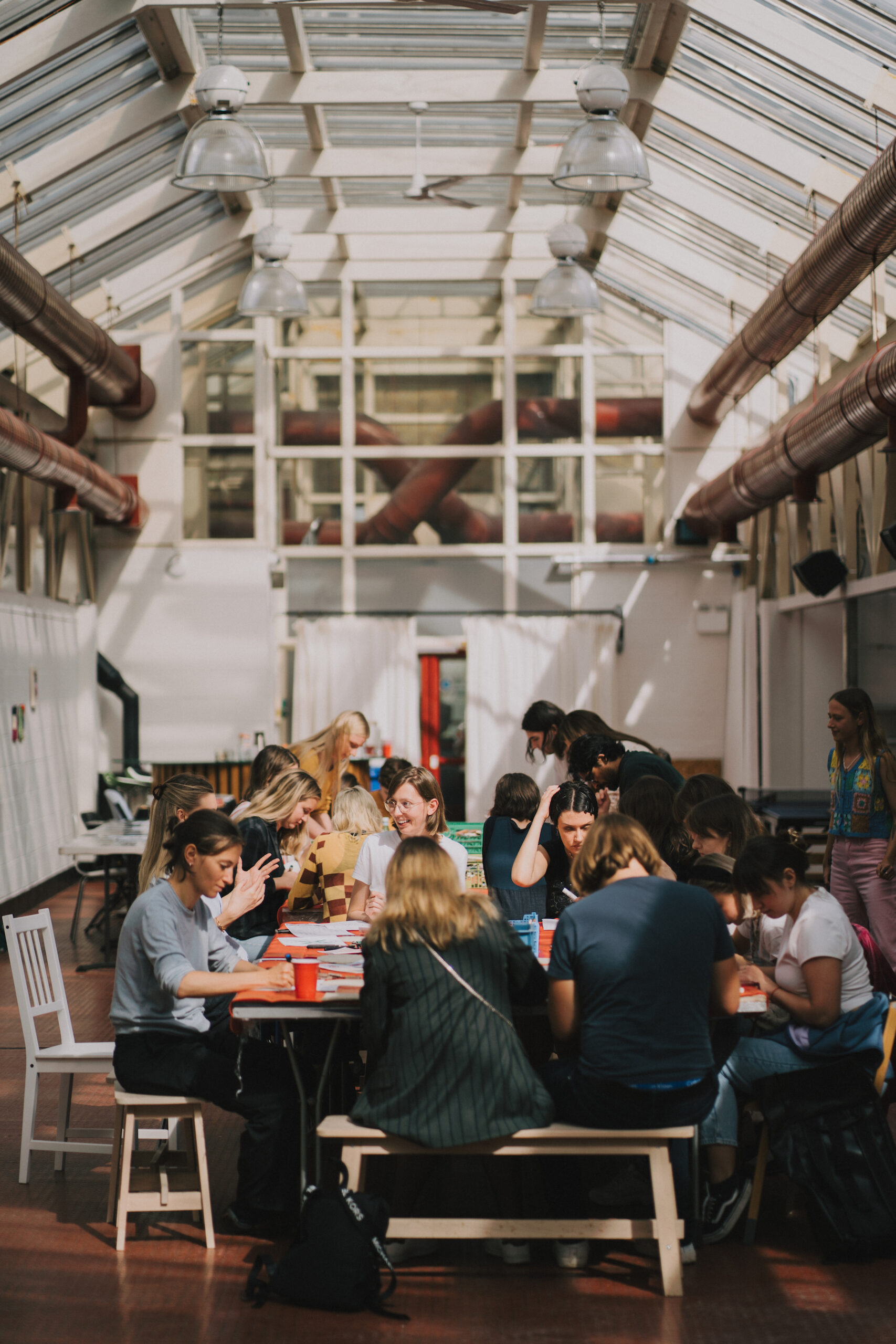
Vsesvit (from Ukr. ‘всесвіт’, meaning universe/world/space) is a London-based Ukraine solidarity collective, founded by Mariia Pastukh, Valentin Rajenkov, and Janina Pedan in response to russia’s invasion of Ukraine. Set up in the spring of 2022 as a donation centre at an independent library Biblioteka in Peckham, they raised over £41,000 in aid within nine months, supplying medical equipment and first aid to Ukraine. In January 2023, they expanded into a community interest organisation Vsesvit to foster a community network in London alongside continuing fundraising efforts. They host cultural events and gatherings to introduce Ukrainian culture and facilitate dialogue on resistance, anti-colonialism, and diversity.
How does Vsesvit collaborate with volunteer groups in Ukraine, and what impact do these partnerships have on local resistance efforts?
Mariia Pastukh (MP): Many of these groups are run by people I personally know, individuals who sacrificed their careers, creative projects, exhibitions, and travels, putting their lives on pause (and in danger) to focus on practical work on the ground, organising mutual aid groups to resist the violent invasion and its consequences. In 2014, during Euromaidan in Kyiv, I volunteered at an improvised first aid point in the protesters’ camp. This experience taught me a lot; I wouldn’t be the same person today if I hadn’t been there. Naturally, when the full-scale invasion started, I used the skills I gained in 2014: I organised a critical first aid collection point. Later on, we started running fundraising events and gradually shifted to a focus on fundraising, community building, and cultural representation via a variety of events.
Vsesvit integrates decolonial perspectives into its initiatives. Could you describe your experience in promoting cultural autonomy and resilience?
Janina Pedan (JP): We have worked hard to revive Ukrainian rituals and crafts suppressed during Soviet times, helping people reconnect with our culture and build a supportive community. Based in London, we have access to a lot of other activist groups and diasporas. Beyond making sense of our own experience and resistance to russian colonialism, we realise the value of creating a wider net of discussion and mutual support between groups.

With Vsesvit you also support and amplify queer Ukrainian voices. Could you explain how this inclusion strengthens your overall mission of solidarity and support?
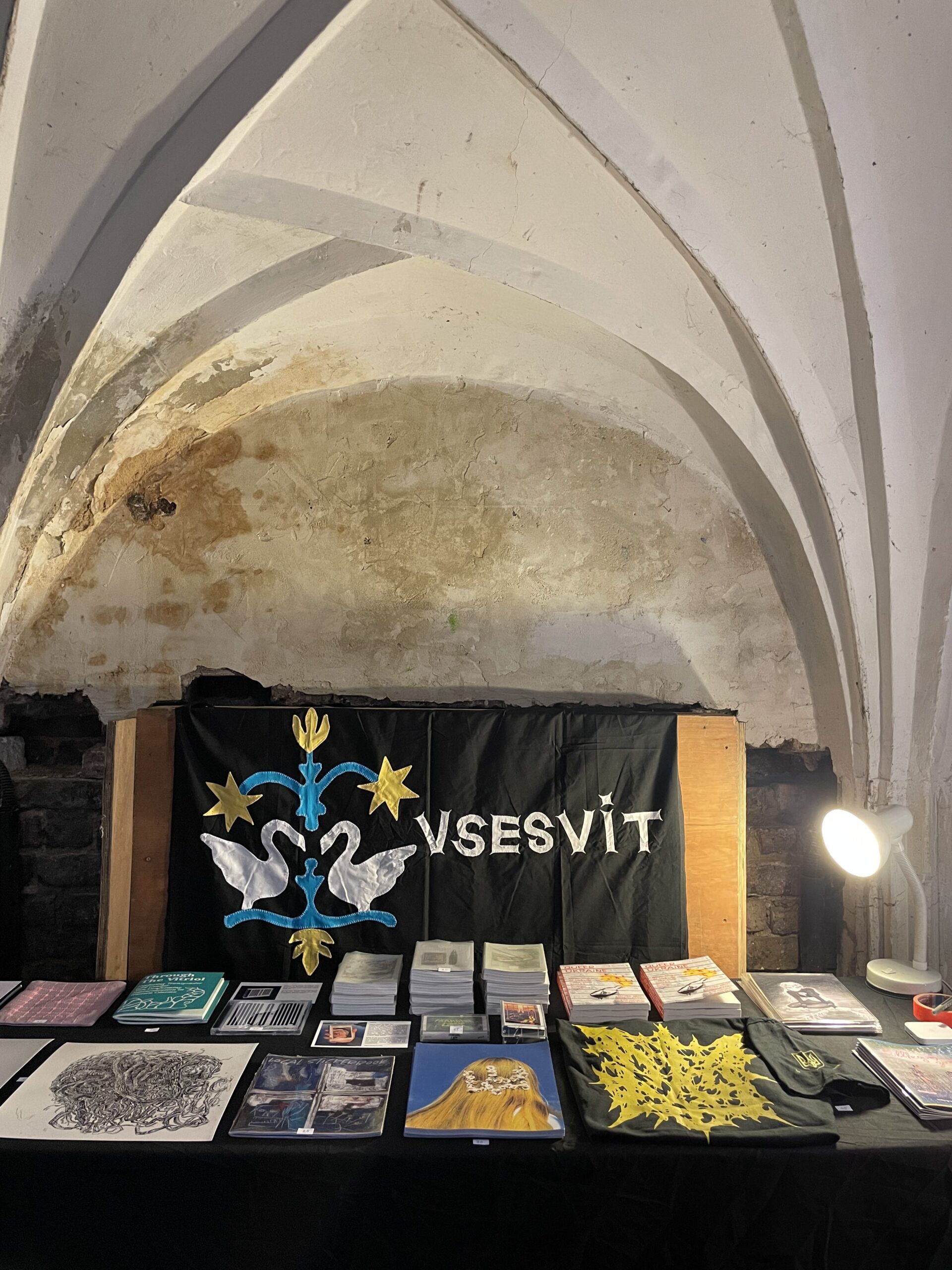
MP: We were very lucky to get to know several amazing members of the Ukrainian queer community here in London, who published the book Queer Ukraine: Anthology of Ukrainian Queer Voices During Wartime. I think our contribution lies in simply spreading the word and showcasing their work to a wider audience. We always go to London Trans Pride together, which is not easy, as leftist groups in the UK are very much split on supporting Ukraine. We use our platform to bring their work to people who wouldn’t come across it otherwise. A good example is when we first participated in a big diasporic fundraising event some time ago. The book Queer Ukraine was our best-selling item and many Ukrainians seemed excited to discover a piece of Ukrainian queer literature.
What innovative fundraising strategies or events has Vsesvit discovered to sustain support for Ukraine, and how have these approaches evolved over time?
MP: After the first wave of detailed media coverage and general compassion passed (which took about six months), we had to get creative with fundraising. Our first cultural event, a photography print sale, wasn’t very successful. We experimented with different formats, locations, and setups, but faced a dilemma: ticketed entries could raise more funds, but we wanted to keep events accessible. Our gatherings help refugees find community and educate non-Ukrainians on our culture, so affordability is important. We also learned that raffle tickets are popular in the UK and an effective way to raise money.
JP: Our dilemma is that we need to collect funds without excluding many of the people in our community who have limited financial means. We found that selling some of our specially designed objects online where reach is much wider has worked quite well, so we plan to open an online shop soon and see how that goes.
The biggest challenge now is that Ukraine has faded from public focus.
What are the current challenges faced by Vsesvit and grassroots groups in terms of financial support, and how can individuals and communities outside Ukraine best contribute to your ongoing efforts?
MP: The biggest challenge now is that Ukraine has faded from public focus. If in 2022, mentioning ‘Ukrainian’ in an event description drew crowds, then now it deters some people, affecting fundraising. As for our finances, we have no funding except a few Patreon supporters. While we’re not aiming for profit, we do need a budget for cultural projects, so we’re starting to apply for funding. We want to invite Ukrainian artists, scholars, and activists to London, pay them fair fees, and cover expenses.
LISA GONCHARENKO is a Ukrainian architect, urban designer, and researcher whose work
explores landscape regeneration and the narrative power of architectural drawing.
HEADER photo by Andrii Yakymenko
PUBLISHED: MAJA 3-2024 (117) with main topic INFRASTRUCTURE
1 The symbolic choice not to capitalise ‘russia’ or its adjective ‘russian’ is one of the ways to show support for Ukraine in written language. It marks the non-recognition and isolation of russia from the international community due to the atrocities committed by the russian regime.—Ed.
2 Toloka (Ukrainian) is a traditional form of communal labor where community members voluntarily gather to help with large or urgent tasks, like building a house or harvesting crops, emphasising mutual aid and social cooperation, often ending with a communal feast; similar traditions include Talgud (Estonian), Talkoot (Finnish), and Tłoka (Polish).