A decade ago, the city of Tallinn organised an idea competition for innovative solutions. The sea tram idea earned a prize and a place on Tallinn’s roadmap of innovative ideas. Its author, Villem Tomiste, sketches the opportunities arising from this potential infrastructure.
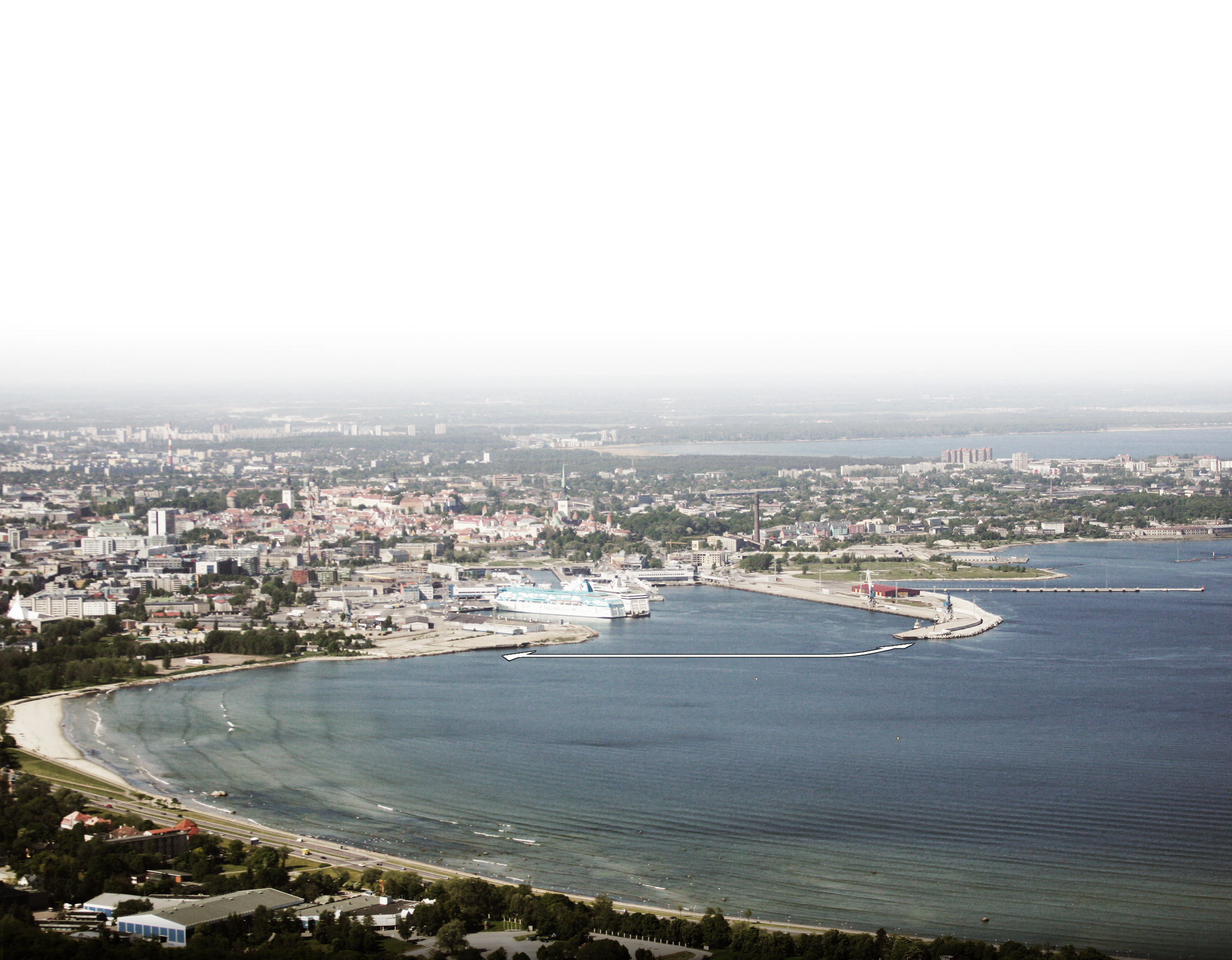
Standing on the shore of Tallinn Bay, the other end of the arched shoreline is always visible and close, yet so far. Tallinn today is a seaside city, not a sea city. People go to the sea to have fun or see it as a gateway to some other place. Although the map shows that the bay is like an inland sea for the city, locals do not use it as an everyday route to work, school, or their friend’s place. And yet, if you study maps from the interwar period, you can see that there were regular ship connections on several intracity waterways—from Kalasadam and Kadriorg, boats were going to Pirita and Merivälja.
In the future, a sea tram could link together currently disjointed parts of Tallinn’s seaside promenade and create new direct connections across the bay. A boat connection from Miiduranna to Paljassaare would create a circular promenade going around the whole of Tallinn Bay. The population of Pirita and Viimsi is 40,000 and the same number of people is soon expected to live on the other side of the bay, in the area stretching from Katariina pier to Hundipea harbour.
For starters, however, we could create a direct connection between Kadriorg and Kalamaja. We could build two small squares with floating docks—one in Kadriorg, the other at the end of the Old City Harbour cruise terminal promenade—and have a public transport boat travel between them. It would be three minutes from Kadriorg to the city centre.
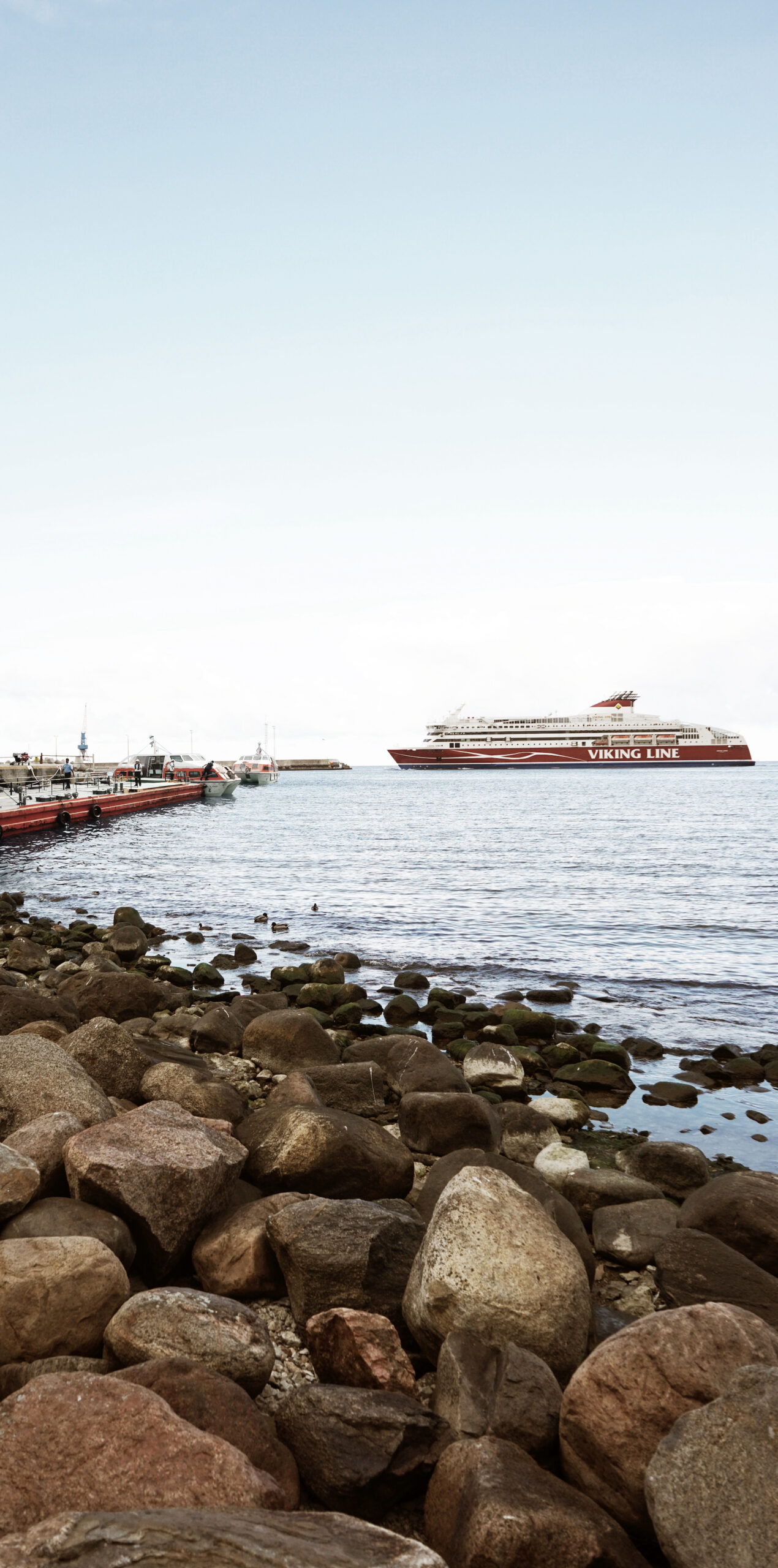
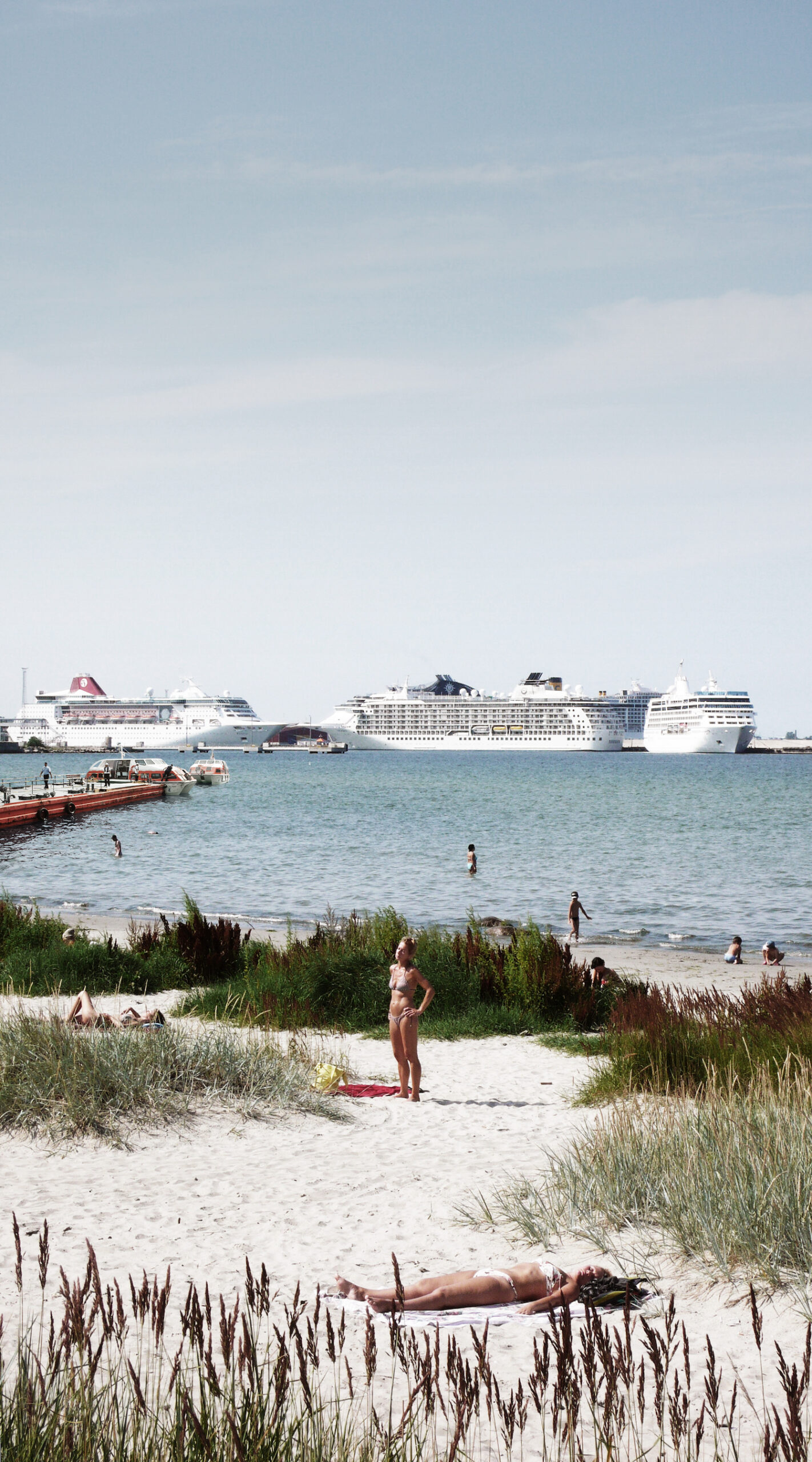
The sea tram stop at Pikksilma promenade (top left) and Russalka beach (top right). The boat would connect today’s dead ends and create an uninterrupted connection via the beach promenade starting in Merivälja and the centre of Tallinn.
Photos: Villem Tomiste
A couple of years ago, the promenade of Tallinn cruise terminal was completed, and Pirita Road was extended toward the city, now ending at Pikksilma Street. Both are currently cul-de-sacs and thus, they do not figure in the day-to-day activities of Tallinners. The city centre section of the seaside promenade has long been drawn on Reidi Road, but there is not much sea there, nor is it very pleasant to walk. The seaside at the centre of Tallinn is filled with a passenger port that is crucial for the city. The port needs a large land area for its activities, in order to serve ships. The port is not expected to decline in the near future; rather, the number of passengers is slowly growing. A sea promenade, however, can only be situated by the sea. Reidi Road indeed created a connection between the city centre and Kadriorg that is near the sea, but it is not really by the sea.
One end of Reidi Road on the side of Kadriorg is very distant from the current focal point of the city, thus being a kind of cul-de-sac. The seaside area, however, is an even more extreme cul-de-sac, cut off from the city centre by the Admiralty Basin, and on the other side by the eastern surroundings of Linnahall. A boat connecting these two places would create a wholly different dynamic and an opportunity to develop the area in several ways. On the perimeter of the passenger port, a central ring road could then begin to develop, its sides bustling with life strongly linked to the maritime identity of the city, and port basins lying in the middle.
The distance from Kadriorg to Kalarand is 2.5 km by foot; from Kadriorg to the tip of the northwestern pier of the Old City Harbour, it is 3.5 km. A waterway between these two places would be 350 metres. On land, the first route takes half an hour on foot and the second one takes even 45 minutes. A boat ride would take three minutes.
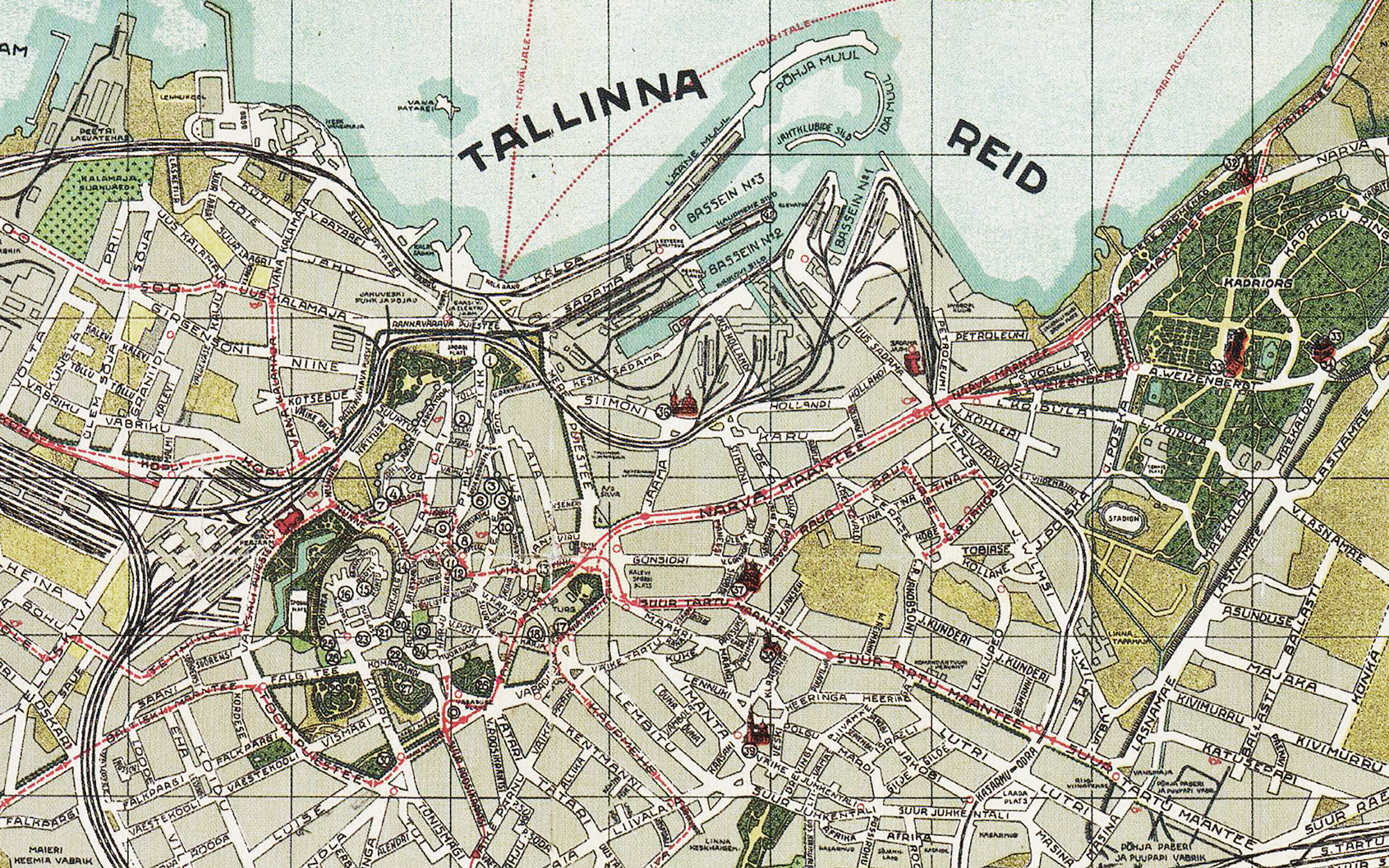
This map from the 1930s shows that in the period between the world wars, there was an intra-city boat connection on Tallinn Bay between Kadriorg and Kalarand near the centre and Pirita and Merivälja beaches.
In the long run, this solution would be of most benefit to the new residential quarters that are planned along Reidi Road and to the east of Linnahall. The current barren stretch of land on the northern side of Reidi Road between Kadriorg and Linnahall will develop into a new subdistrict with a population comparable to an average Estonian town, i.e., approximately 15,000. In other words, as many people as in Viljandi will be living and working there. However, the immediate beneficiaries are naturally all the promenaders strolling by the sea. The seafront that begins in Merivälja will get an uninterrupted connection with the centre of Tallinn and the planned promenades that continue towards Paljassaare. In the future, the sea promenade’s connection with the bastion zone will form the unbroken backbone of Tallinn with parks, public buildings, green areas and recreational spaces. The sea tram can also be enjoyed by visiting cruise tourists, of course, as the cruise terminal will also be part of the future sea promenade.
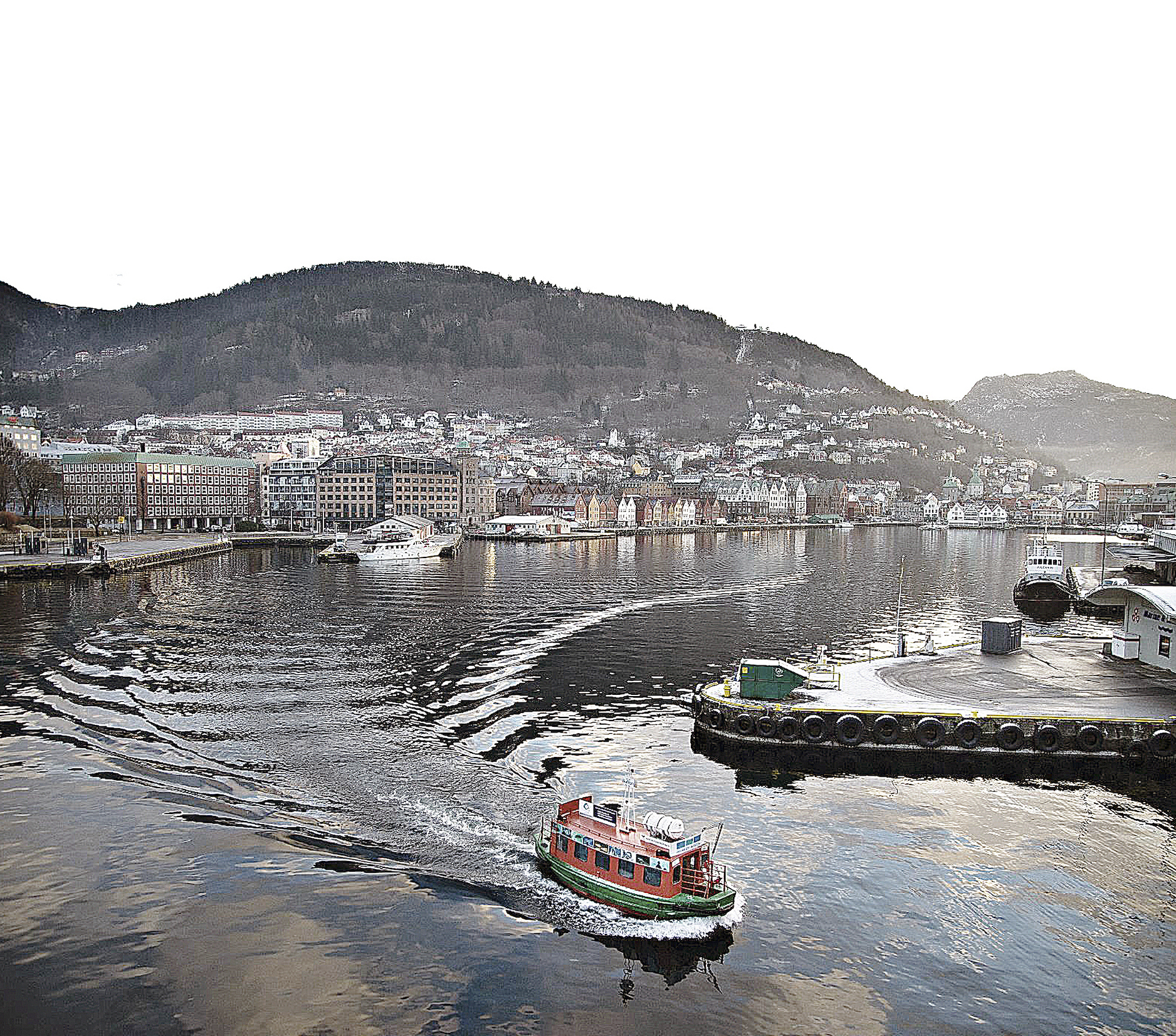
In the centre of Bergen, the electric boat Beffen takes people from one shore of Vågen Bay to the other.
Photo: Roar Christianses
Based on the experiences of other cities, we can assume that creating a boat connection is not overly expensive and the line would be used more than we might initially expect. Just recently, in the summer of 2024, a waterway with two boats was opened in Barcelona, going from the end of La Rambla to La Barceloneta. The zero-emission boats carry 56 and 84 people plus bicycles and trolleys. There are long queues at the ticket booths. Now they are already planning to open new lines. Two catamaran hull boats and the construction of docks and pavilions cost 1,872,000 euros. In other words, one boat costs approximately the same as the new trolley buses that Tallinn just ordered. Similar year-round water connections can also be found in Nordic countries. One of the most well-known sights in the city of Turku is the ferry Föri that carries pedestrians and cyclists over the Aurajoki River all year round, in any weather, and free of charge. In 1894, engineer Jacob Trumpy founded an electric boat company to facilitate travelling from one side of Vågen Bay to the other. A small boat named ‘Beffen’, which is also iconic by now, makes 50 trips in a day and is popular with locals as well as tourists. Daily commutes to school or work include a kilometre travelled as a three-minute boat trip.
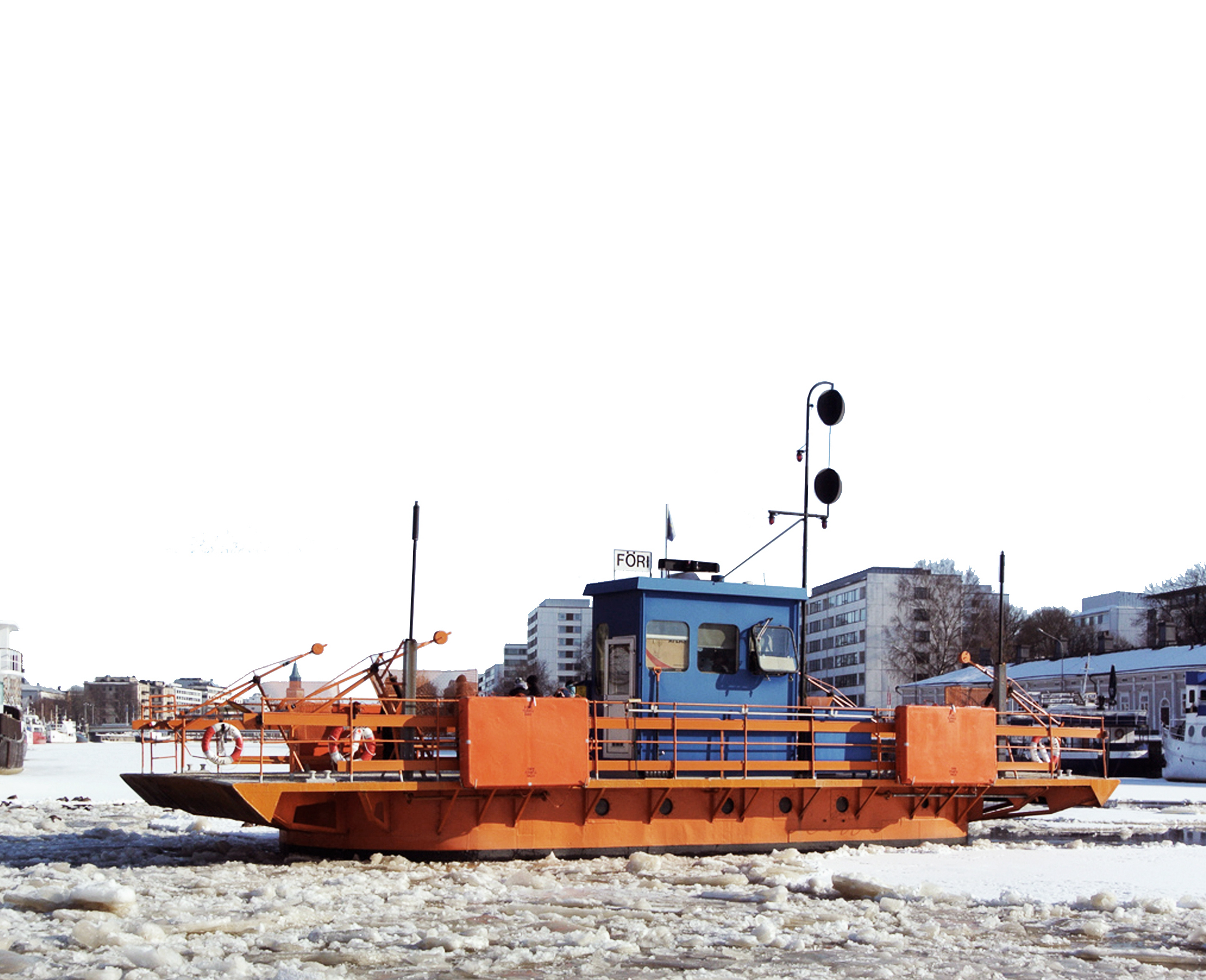
In the city of Turku, the small ferry Föri transports pedestrians and cyclists across the Aura River free of charge and regardless of the weather.
Photo: Wikimedia Commons
Tallinn sea tram stops would be small squares with shelters designed as lighthouses. The stops are small landmarks scattered along the shoreline, thus decorating a comprehensive urban network. The first two would be Kadriorg and Kruiisikai, then Kalarand, then the Seaplane Harbour, Hundipea and Paljassaare Harbour, Katariina pier, Miiduranna, Pirita, etc. Harbour pavilions could be designed as unique spatial installations like those on the art island Naoshima in Japan. Each harbour has slightly different needs when it comes to public functions, whether it be more spacious bicycle parking, an ice cream kiosk or bathroom. The pavilions would be eye-catching works of art, a must-see for people coming from afar. On a regular day, however, they would provide a cozy haven for the local community.
Opening up the city to the sea means living at the sea, and this should not be something rarefied that is unavailable to the common city dweller. Tallinn needs to bring back regular intracity passenger shipping, build a boat that would take into account the bay, port, passengers and climate, and bring pedestrians, cyclists, and, in the wintertime, also skiers from the city centre to Kadriorg in three minutes. The boat should be supported by a waterfront square and pavilion, a gateway to the city around it.
VILLEM TOMISTE is an urban visionary living and working in Tallinn, who runs a studio named after his hometown.
HEADER: design by Unt / Tammik
PUBLISHED: MAJA 3-2024 (117) with main topic INFRASTRUCTURE