Hannes Aava shares some subjective tidbits about the last 30 years of spatial design in the Baltics.
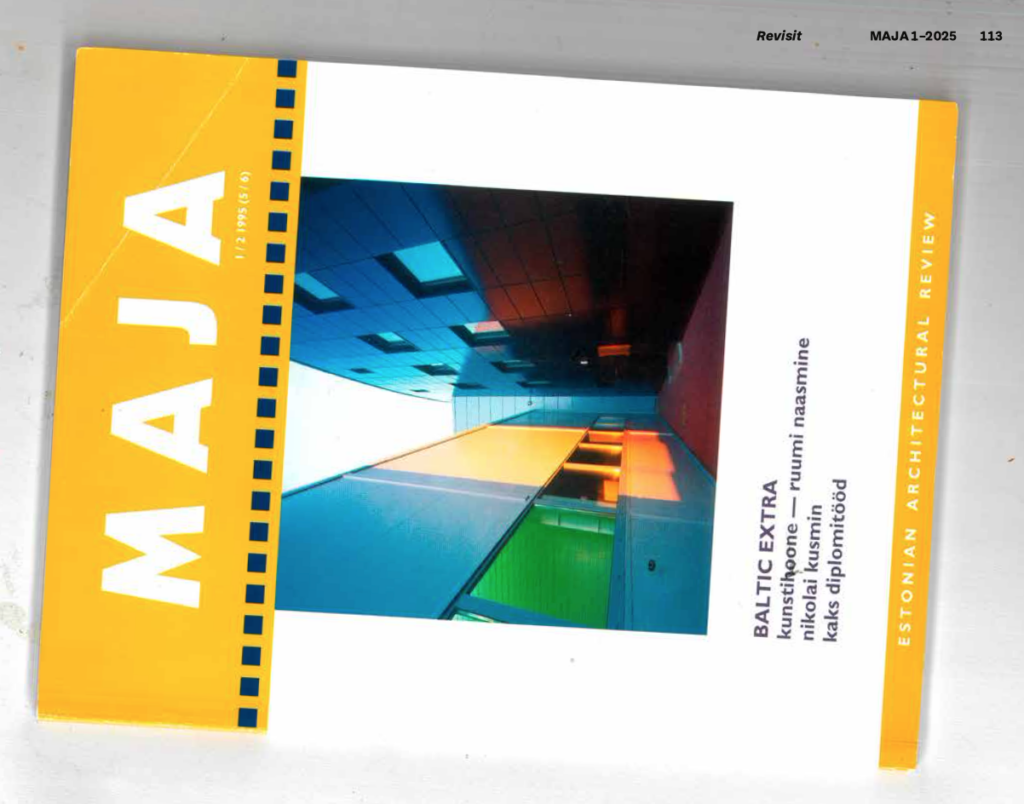
In 1995, ‘Baltic Extra’, a special issue of Maja, was published. Now that thirty years have passed—essentially a generation’s time—it seems fitting to look back on how the once again independent Baltic states approached spatial issues of the day, what was considered important, and what potential developments and risks were anticipated for the future.
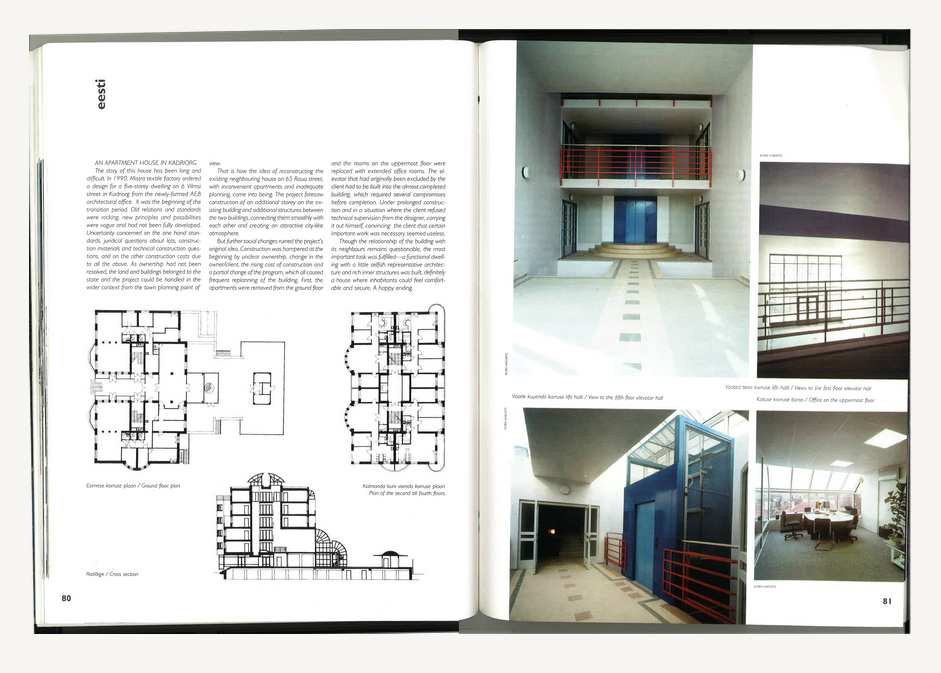
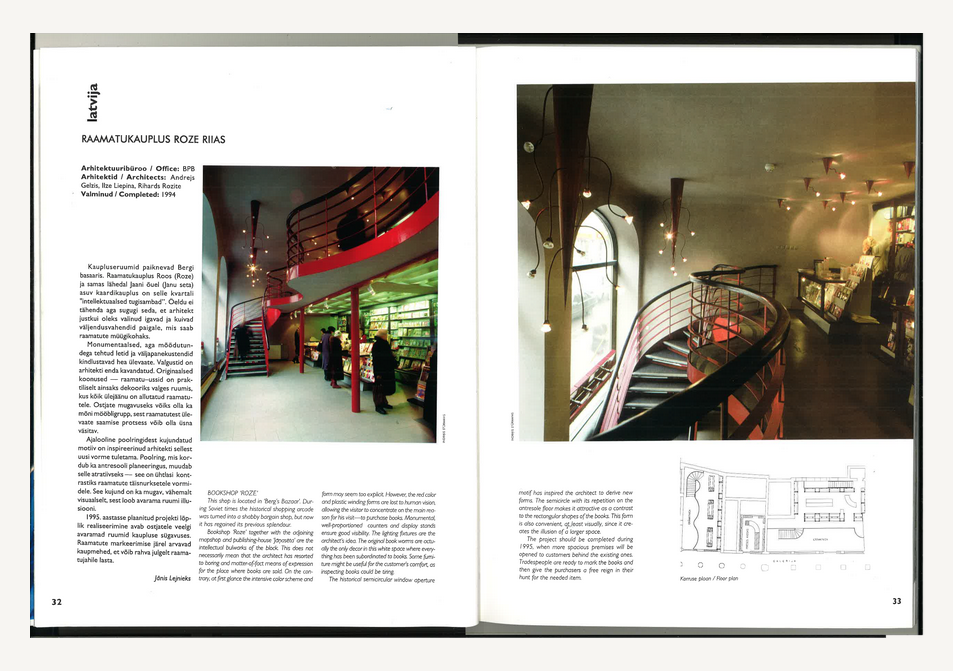
The aspect of spatial experience that is bound to evoke similar joys (and horrors) of recognition in all three countries is housing. Discussing the topic of private houses in Vilnius, Lithuanian architect Rūta Leitanaitė aptly wrote in 2013 that after people in the Baltics had experienced the oppressive uniformity of the Soviet period, acquiring a private home became one of their biggest dreams. This has led to uncontrollable urban sprawl, while spatial planning has been impotently tagging along. ‘Pompous castle-like residences, the legacy of the 1990s, were succeeded by tinier houses in different styles. The mosaic of styles embraces everything, from an American dream chalet to the prototype of a vernacular Lithuanian cottage, from prosaic rationality to bold experimentation, from the pretentious display of material wealth to elegant minimalism’.1
This description still largely applies to the situation today—regardless of the rapid population decline in all three countries, construction volumes have increased, and larger cities continue to sprawl. The private house also seems to be the main genre with which architects of the three countries are most likely to get on prominent promotional platforms such as Dezeen.
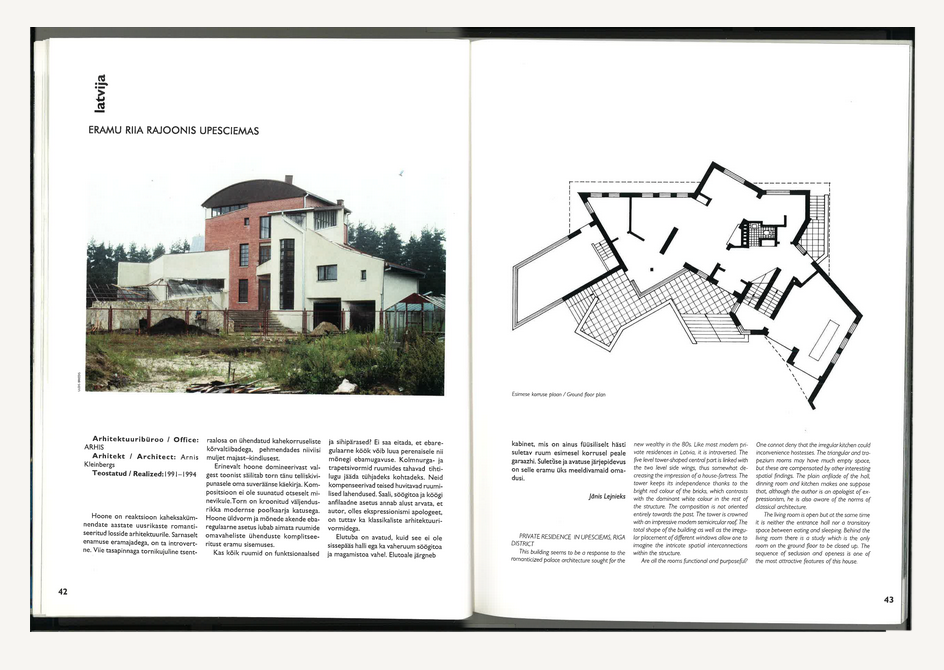
Mansion-like private residences of the early capitalist period, both finished and unfinished ones, continue to linger in the spatial landscape of Baltic towns and villages. However, the real problem concerns the segment of society that cannot afford a private home at all. The words of Latvian architect Jānis Lejnieks, written in 1995, sound almost prophetic today:
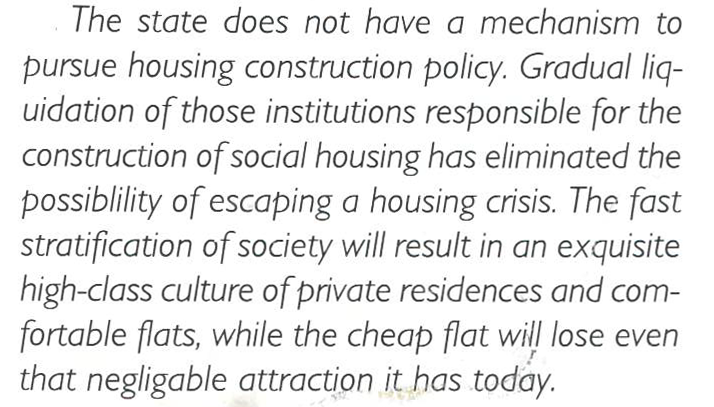
From 2015 to 2023, the three Baltic states have topped the European Union’s real estate price growth rankings. According to Forbes, Tallinn in particular has seen the steepest rise of all European capital cities in property prices over the last 12 years, far outpacing the average income. Fortunately, after calls from experts in the field and studies confirming these troubling facts, there are now first signs that politicians are beginning to respond. Yet, whether they take it seriously enough will only become clear over time.
Same, but different
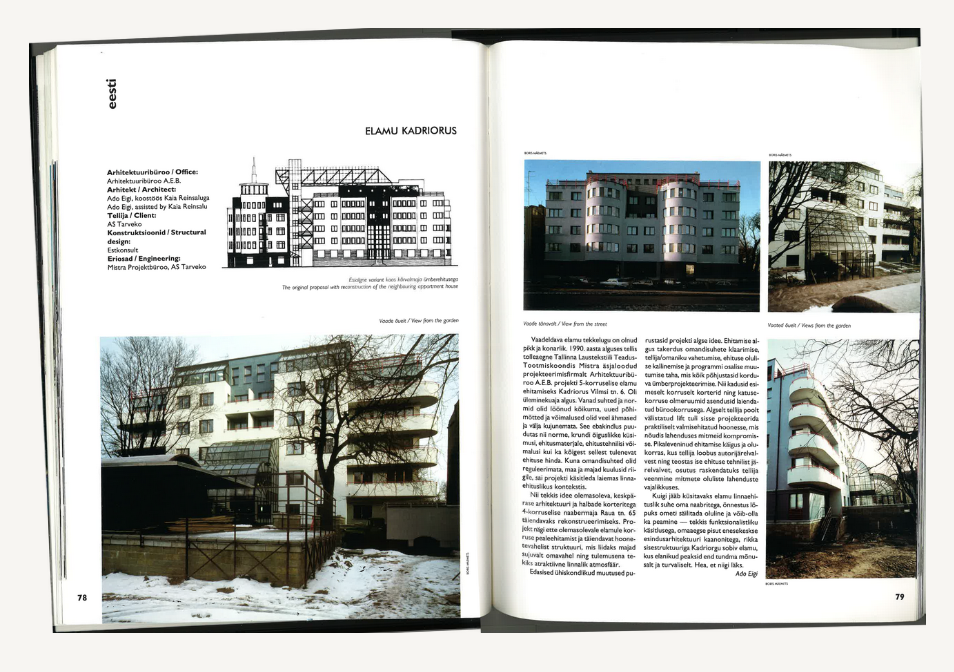
The Estonian take on the Baltics has always exhibited a certain kind of evaluative dualism—while there is a willingness to collaborate and appreciation of shared historical experience, these are often accompanied by a caveat, like in the editorial of ‘Baltic Extra’, the 1995 special issue of Maja written by Ado Eigi:

Although the three Baltic states occasionally pull in different directions in their search for an identity—Estonians to the north, Lithuanians to the south, toward Poland—connections in the field of spatial design do exist, even if somewhat episodically. Over the past 30 years, there have been six Nordic-Baltic architecture triennials, a shared pavilion at the Venice Biennale, and the ‘adventures’ of at least one Estonian real estate developer in Latvia. Estonian and Latvian architects have successfully submitted their works to competitions in each other’s countries, winning prizes and sometimes even seeing their projects realised. A wholly new dimension in spatial cooperation emerged with the colossal undertaking of Rail Baltic, which also intensified the pre-existing ambivalences in Baltic relations—on the one hand, the project fosters unity and encourages collaboration, but on the other, its complexity has caused visible frustration for all parties, which is a fertile ground for (re)producing national prejudices.
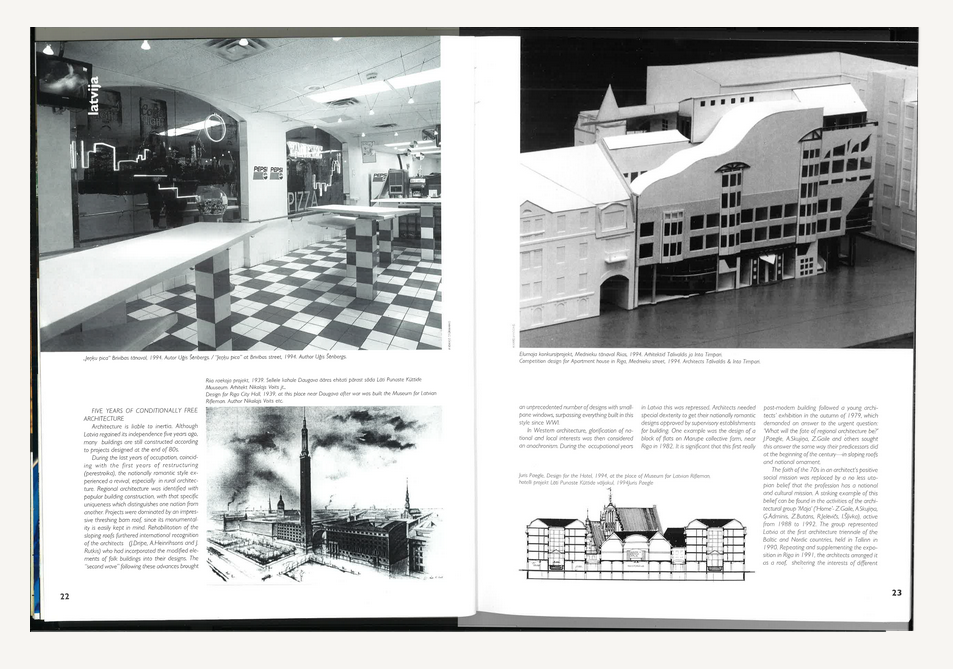
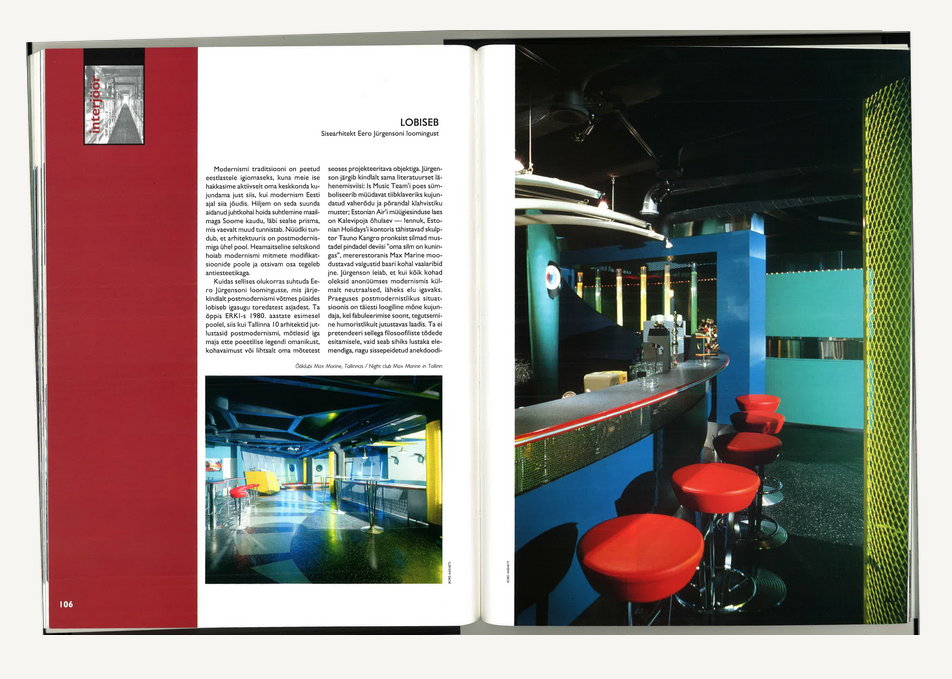
Another theme common to all three states has been their bold entry into the world of international architecture competitions and starchitect projects, such as the planning work by OMA in Riga and Zaha Hadid Architects in Tallinn or the MO Museum of Modern Art building by Daniel Libeskind in Vilnius, but also many that have been left unrealised, such as the Tallinn Town Hall design by BIG. The intense activity of Zaha Hadid Architects in the region is already on the verge of becoming a joke. Should the Rail Baltic project succeed, it will be possible to experience a Jacques Tati-like sequence when looking out of the train window—the stations in Tallinn and Vilnius are both designed by ZHA, and the PLH Arkitekter-designed Riga station in between does not exactly invent something aesthetically new either.2 This ironically highlights the fact that for most of the world, Estonia, Latvia, and Lithuania are three indistinguishable small states that are in many contexts more conveniently treated as a single entity, whether it be for market segmentation or geopolitical labelling.
Re-tendencies
History is often seen as cyclical, and the completion of a certain cycle was also observed by Jānis Lejnieks in 1995:
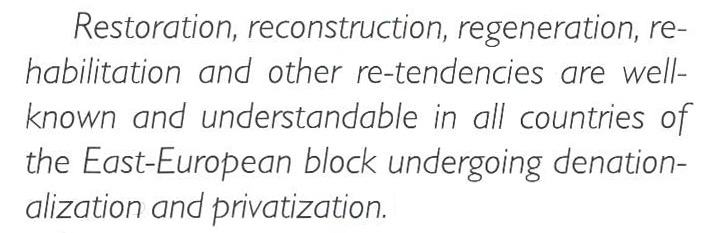
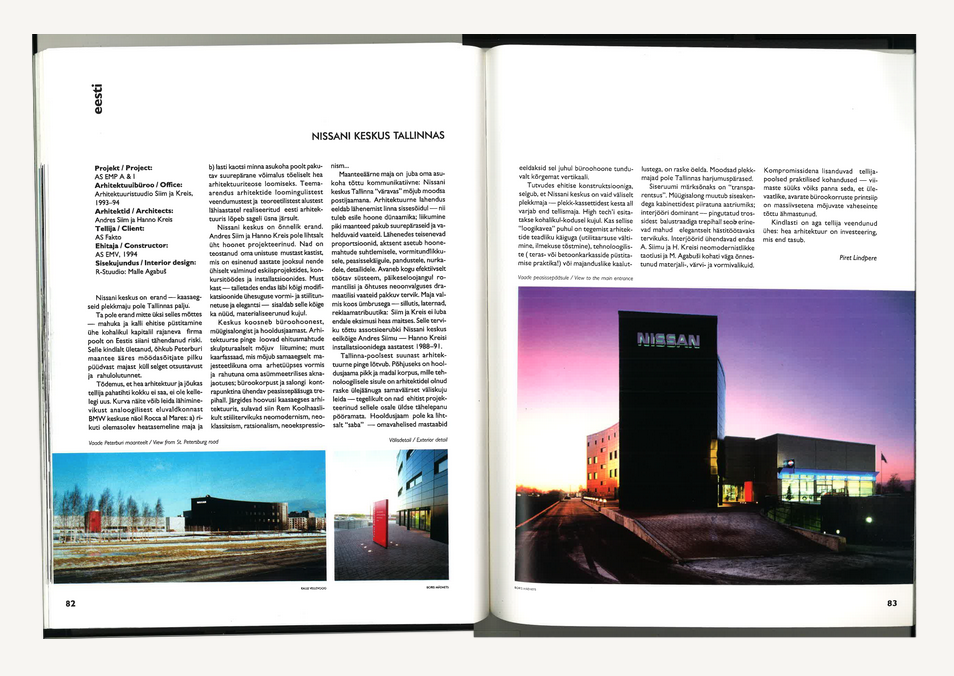
Indeed, the social and political contexts behind these terms have changed—political emancipation has been replaced by the environmental, housing and other crises. However, looking at recent architecture award winners from the three Baltic states, projects nominated for the Mies van der Rohe Award, as well as the spatial development of various urban districts, this quote still sums up the situation quite well. Good examples include the reconstruction of New Riga Theatre, the renovation of Pelėdžiukas Kindergarten in Vilnius, and the revitalisation of Tallinn’s former industrial districts.
Social actors
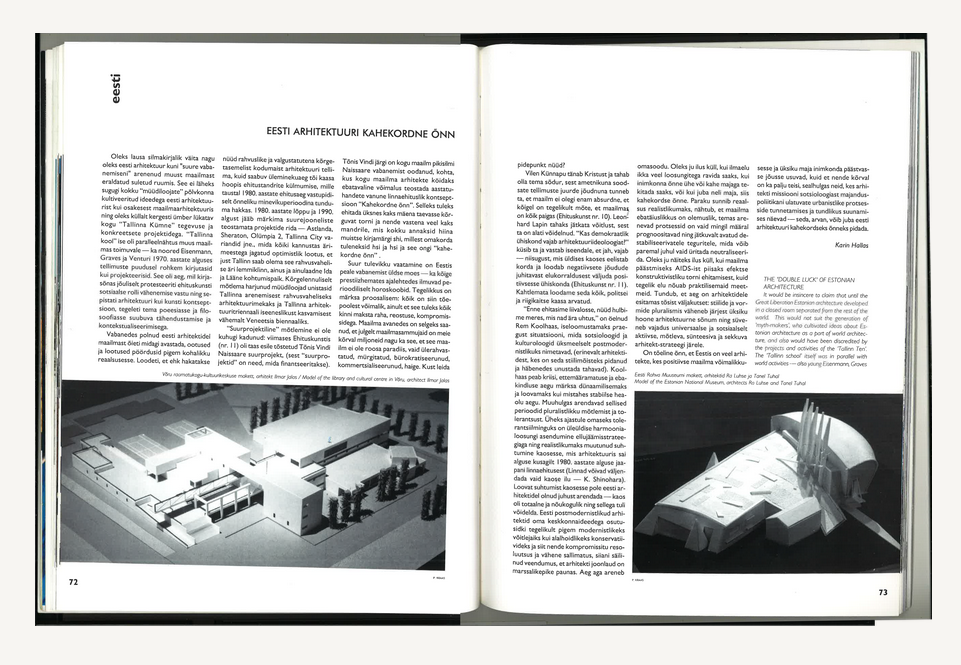
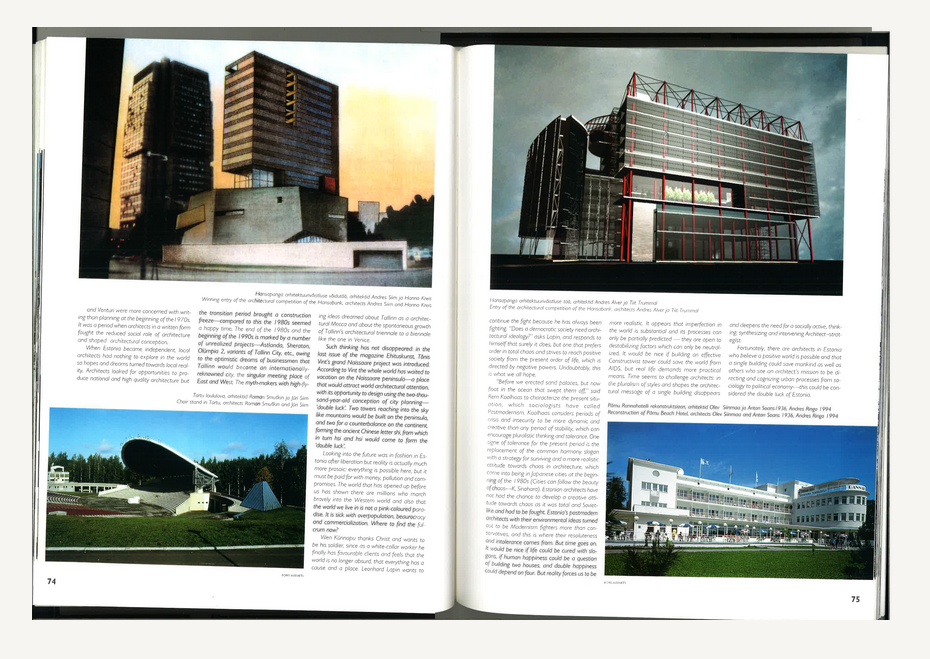
Karin Hallas Murula described two archetypes of architects in 1995. On the one hand, we have the kind of architect who takes a single perfectly designed building to be redemptive for the whole society. On the other hand, there is the
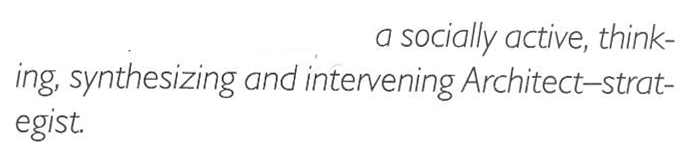
whose mission is to comprehend urban processes from sociological and political-economical perspectives, and steer them in a delicate way. This type of architect is perhaps most likely to be found among the architect-activists of the recent years, creative urban planners, advocates of material reuse, and other local champions of ‘soft’ (yet hugely important) issues, who are all now being criticised by the Patrik Schumachers of this world with the help of a simplistic anti-woke discourse that ignores the social, environmental, and ethical problems on the global scale.3
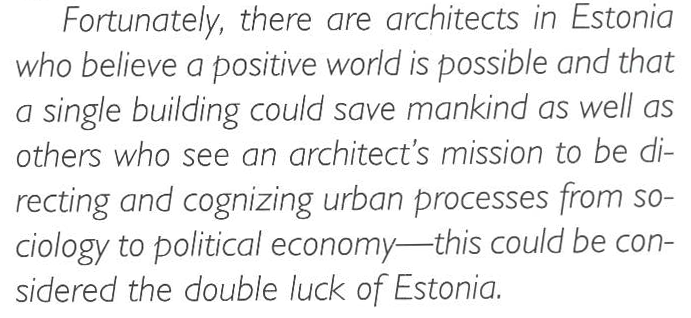
It is fascinating to see how our forerunners were able to frame critical issues in a way that strikes us quite prescient today. Free thought and action have surely enabled our societies to make a lot of commendable progress. And yet, it is sad to see how, on the whole, many warnings have gone unheeded, and after regaining independence, we have stumbled through every pothole on the way in a befuddled manner. Neoliberal excesses related to privatisation and their spatial manifestations, plus all the environmental damage, have often been endured in full, and it looks like it will take a long time to recuperate, find the proper balance, and correct past mistakes.
An optimist might still wonder, though, whether the pendulum has already left the extreme of maximal individualism and is now swinging back toward more responsible, systemic, and hence collective thinking that does not take only individual well-being, but also previously marginalised social groups and the broader ecosystem into account.
HANNES AAVA is a landscape architect who writes about spatial issues. He has (among other things) studied history, art history, and environmental planning.
HEADER: the beginning of the article in issue 119 of MAJA, design byUnt/Tammik.
PUBLISHED: MAJA 1-2025 (119) with main topic BALTIC EXTRA
1 Rūta Leitanaitė, ‘The Lithuanian Dream. Private Housing’, in Vilnius 1900–2013. A Guide to the City’s Architecture, ed. Marija Drėmaitė, Rūta Leitanaitė, and Julija Reklaitė (Lapas Publishing House, 2016).
2 In Tati’s satirical masterpiece Playtime (1967), the protagonist looks at advertising posters for travel destinations bearing the names of various well-known cities, but all the photos depict the same international-style building from slightly different angles, thus ridiculing the homogeneity of a globalising architectural language that eradicates local distinctiveness.
3 Tom Ravenscroft, ‘Architecture being killed by “woke take-over” says Patrik Schumacher’, Dezeen, 26 February 2025.