THE ESTONIAN STATEHOOD HOUSE
Type: reception and conference rooms for hosting foreign delegations
Location: Tallinn, Estonia
Interior architecture: PLSAB
Architecture: Urmas Lõokese arhitektuuribüroo
Structural Engineer: EKK
Conservation: H&M Restuudio, Eesti kunstiakadeemia, Uderna Puit
Commissioned by: Riigi Kinnisvara
Contractor: Oma Ehitaja
Net area: 3240 m2
Project: 2012–2024
Completed: 2024
In recent years, public space and visible symbols within it have fallen under sharp scrutiny. Given the number of Soviet monuments removed in that time, one could even say that the public space in Estonia has been undergoing a very severe audit. The reason, of course, is the renewed need to address our Soviet legacy in the face of Russia’s war against Ukraine. Similar processes can be seen in the other two Baltic countries, as well as in Ukraine and elsewhere. However, as many practitioners in the field of Estonian architecture and heritage have already suggested, simply removing the ‘foreign’ symbols offers no more than an ostensible solution, for dissonant heritage—a complex and controversial past, conflicting historical interpretations, etc.—need to be dealt with in a much more in-depth manner.
The Estonian Statehood House
In the debates over our Soviet legacy, specialists have repeatedly pointed out that Estonia has a highly layered heritage due to having been a contested borderland. This is particularly evident in such centres of power as the Toompea Castle in Tallinn Old Town. The latter is packed with traces of earlier rulers, featuring a castle of the Teutonic Order, a state hall building of Swedish Great Power, and late 18th-century Russian imperial governorate office built under the command of Catherine II. The modern Parliament building, designed by Eugen Habermann and Herbert Johanson and built in 1920–1922, was tucked between all those representative buildings of old authorities, on the foundations of a medieval convent building.
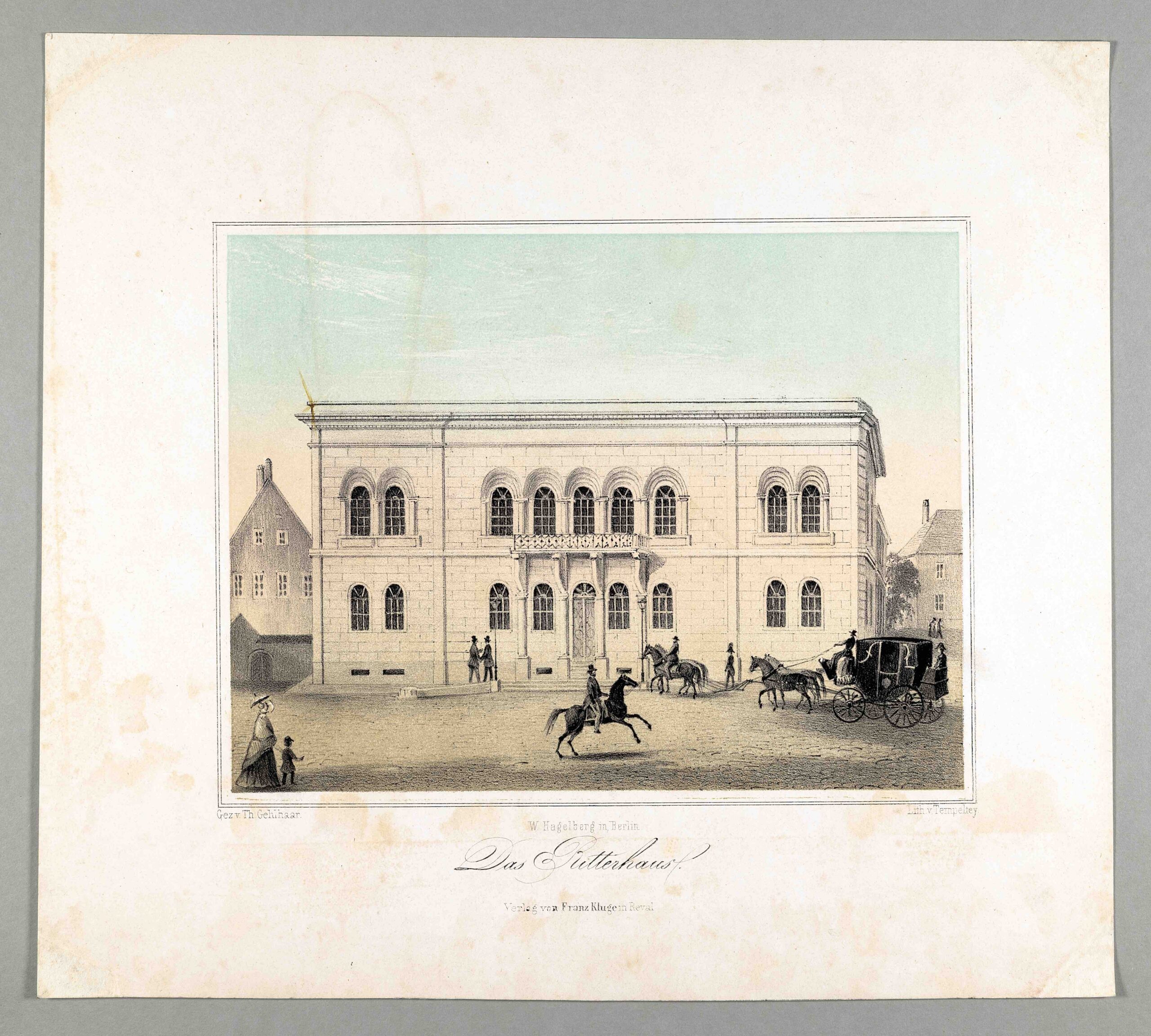
Theodor Gehlhaar, Eesti Ajaloomuuseum SA
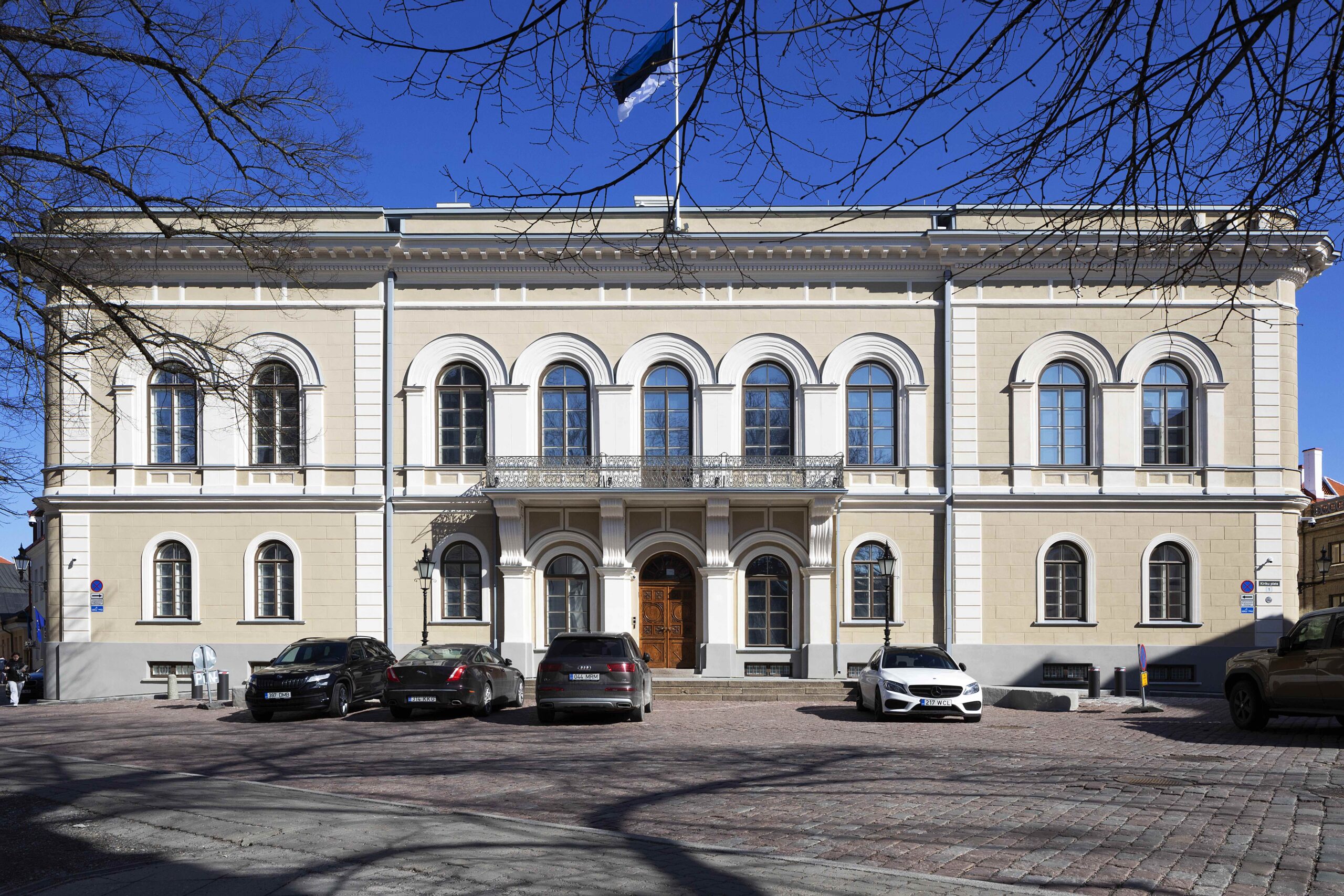
Photo: Martin Siplane
The recently completed Estonian Statehood House, which will be hosting important state events and high-ranking foreign guests and delegations, follows a different sort of logic—the renovation project sought to revamp the former Knighthood House that once represented the authority of the Baltic German nobility. In fact, the building has a more diverse history than that. Before the Estonian Knighthood, it belonged to the Uexküll noble family. Afterwards, it has housed the Estonian Ministry of Foreign Affairs, the National Library of the ESSR, the Art Museum of Estonia, and the Estonian Academy of Arts. On the exterior façade, the architects have marked various construction stages of the building with different shades. The interior of the building likewise contains numerous references to the previous occupants. At the same time, it is very clear about the decisions on which historical layers to showcase, which of them to hide, and which of them to remove. Such choices are always laden with meaning—and on the backdrop of current disputes over monuments, they become especially telling.
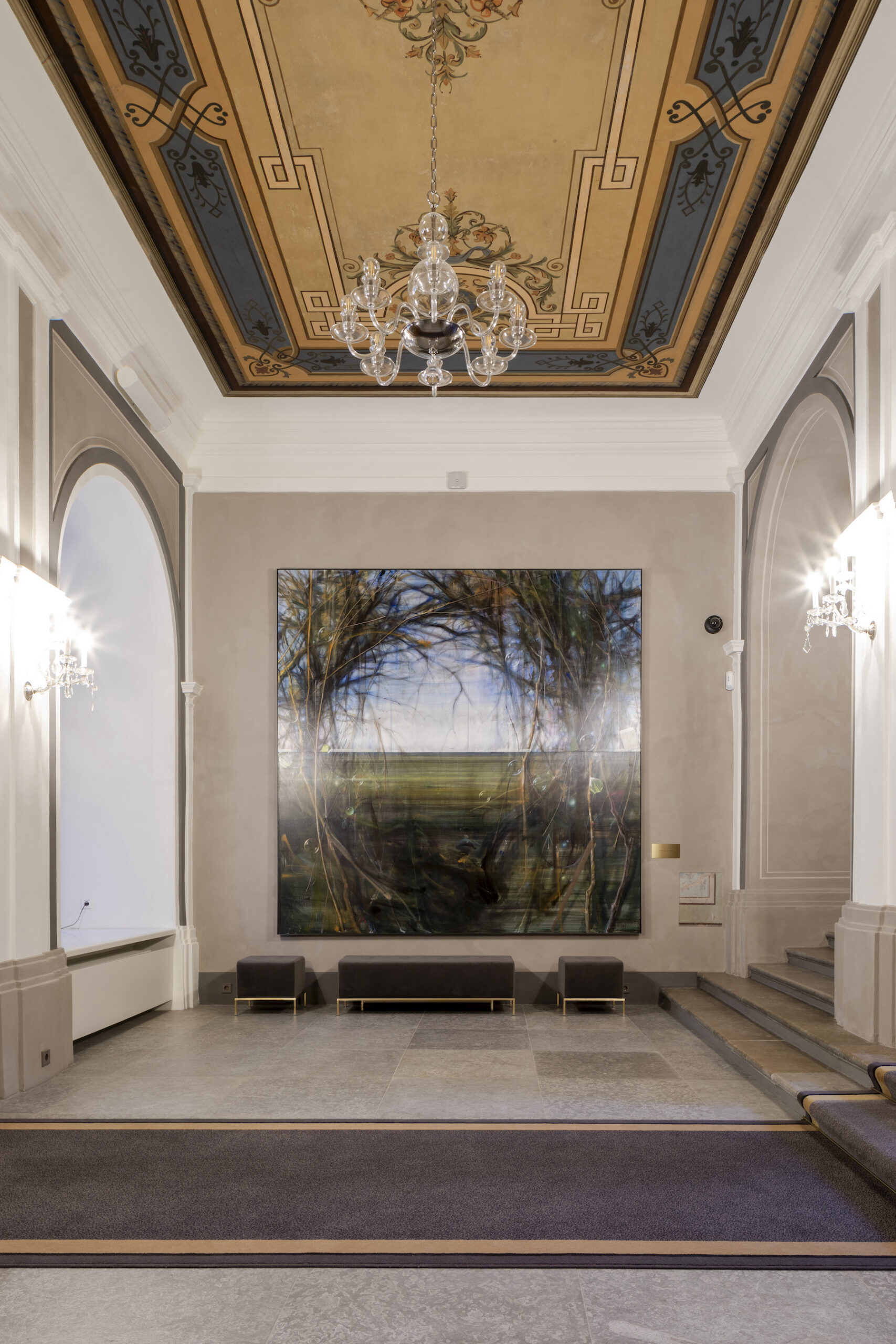
Photo: Martin Siplane
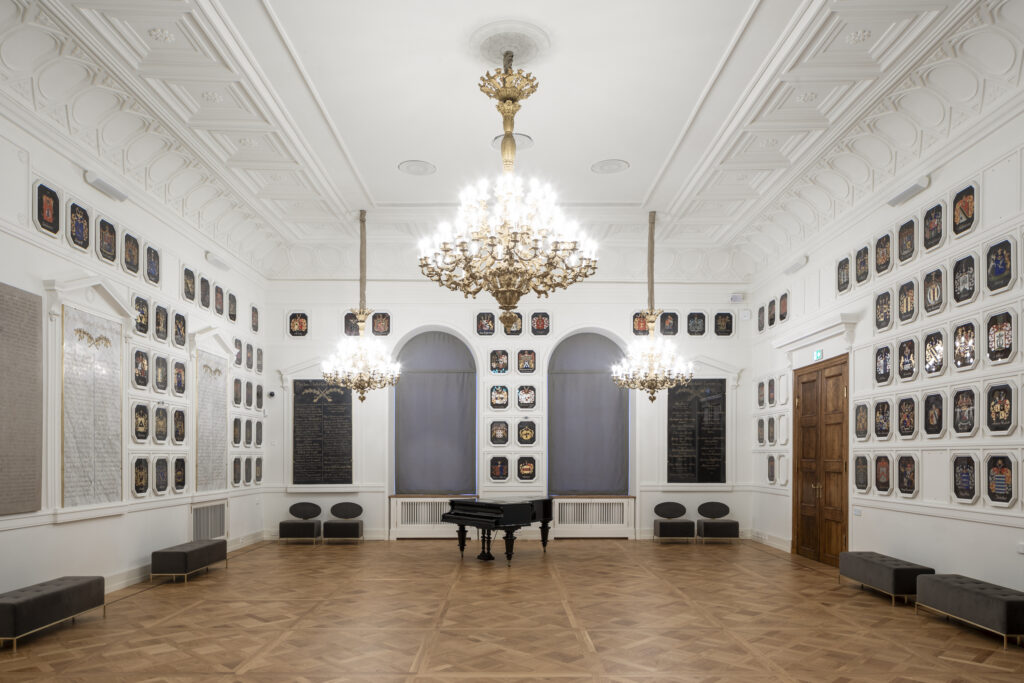
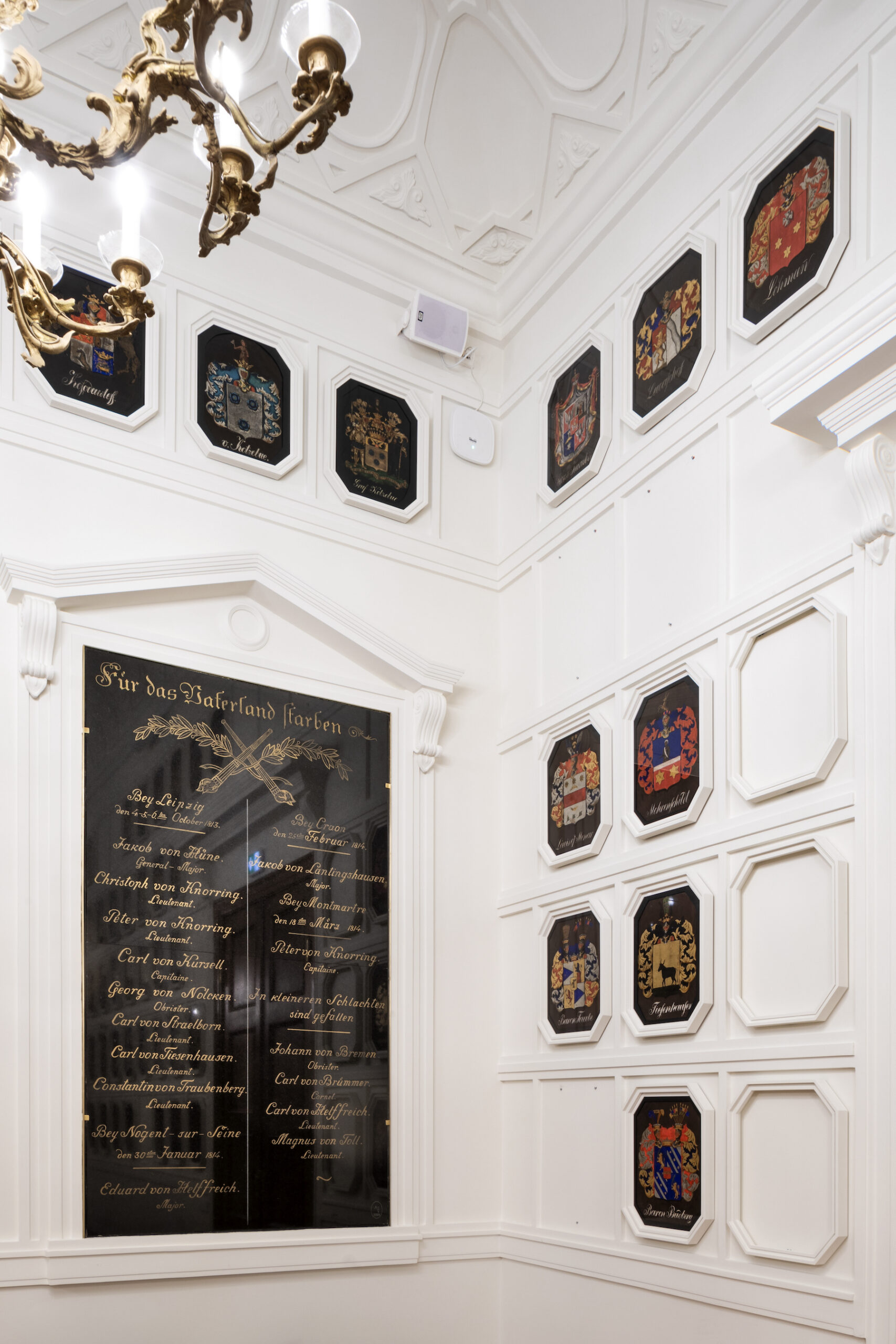
The renovation project and the symbolic programme for the Statehood House were led by the Government Office. In 2022, the same institution also oversaw the work of the so-called secret commission mapping the Soviet monuments in the country. In the case of Soviet monuments, the Government Office spearheaded their removal, whereas in the Knighthood House, the legacy of previous regimes has been carefully curated and reconstructed instead. The most significant transformation concerns the Diet Hall, where some of the interior design from the 1920s–1930s has been dismantled so as to return the coats-of-arms of the Estonian Knighthood to the walls. In the 1920s and 1930s, the building was used by the Estonian Ministry of Foreign Affairs, which had ordered the removal of the original interior design together with the coats-of-arms. This decision reflected the anti-German sentiment that was widespread in the young republic that had declared independence in 1918. The Estonian Constituent Assembly had already disbanded the Estonian Knighthood as well as Livonian and Öselian Knighthoods with the law on the abolition of social ranks in 1920.
Changing meanings
Of all the halls in the Statehood House, it is precisely the Diet Hall that has undergone the most extensive reconstruction which cannot be reversed (certain architectural details from the Ministry of Foreign Affairs era, including pilasters, have been demolished). Although the Knighthood-era interior has not been restored in each and every detail, the entire room is dominated by altogether 280 coats-of-arms of the Estonian Knighthood noble families, now freshly restored and hung on the wall again. Old buildings often call for difficult decisions. Reconstructing certain historical layers (even at the expense of others) can offer an opportunity to construct new values and meanings, but doing so requires a well-thought-out framework. Here, it is worth noting the ‘official’ narrative of restoring the Diet Hall.1
In that narrative, the governance system under the Russian Empire has been reinterpreted, albeit with a lot of convoluted hedging, as a sort of prelude to democracy. ‘The governance system in Estonia before its national independence was not democratic. The Diet represented only one social class—the nobility. […] The Diet was democratic, however, in terms of its internal organisation: each member had voting rights, regardless of rank, title, or lineage.’2 Yet, priority was still given to those nobles who were in the matriculation records that began to be compiled in the 1730s–1740s. Furthermore, representatives of cities were no longer welcome at the Diet during the rule of the Russian Empire.
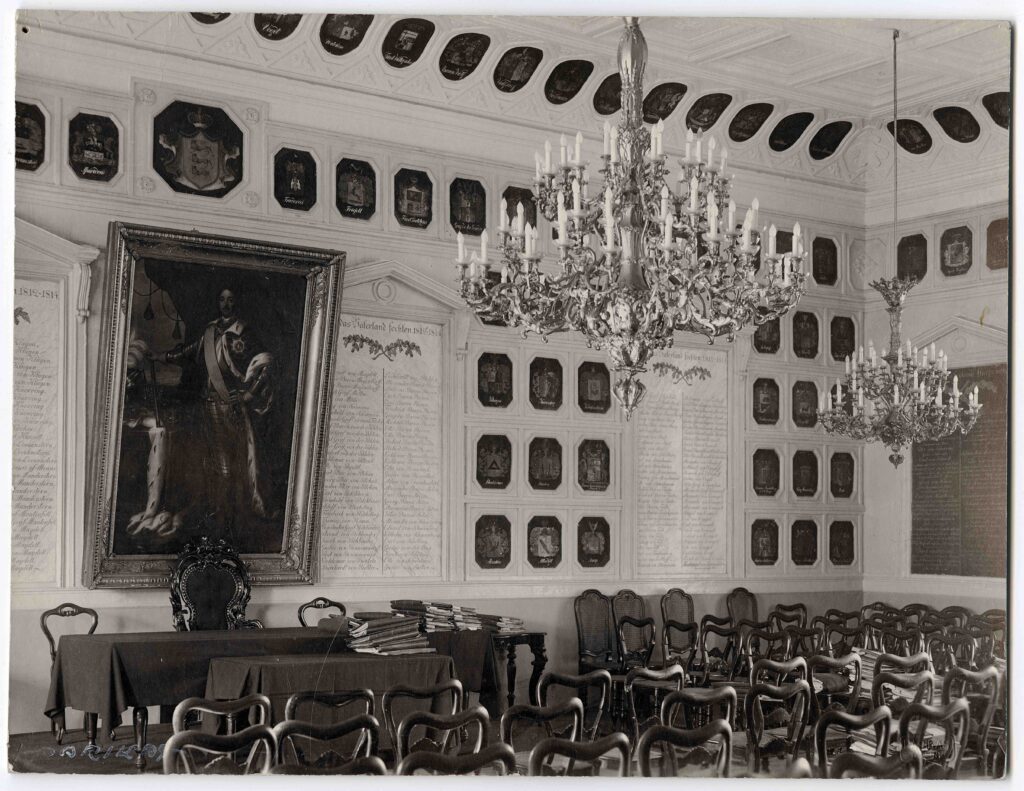
Photo: J. & P. Parikas, Tallinna Linnamuuseum
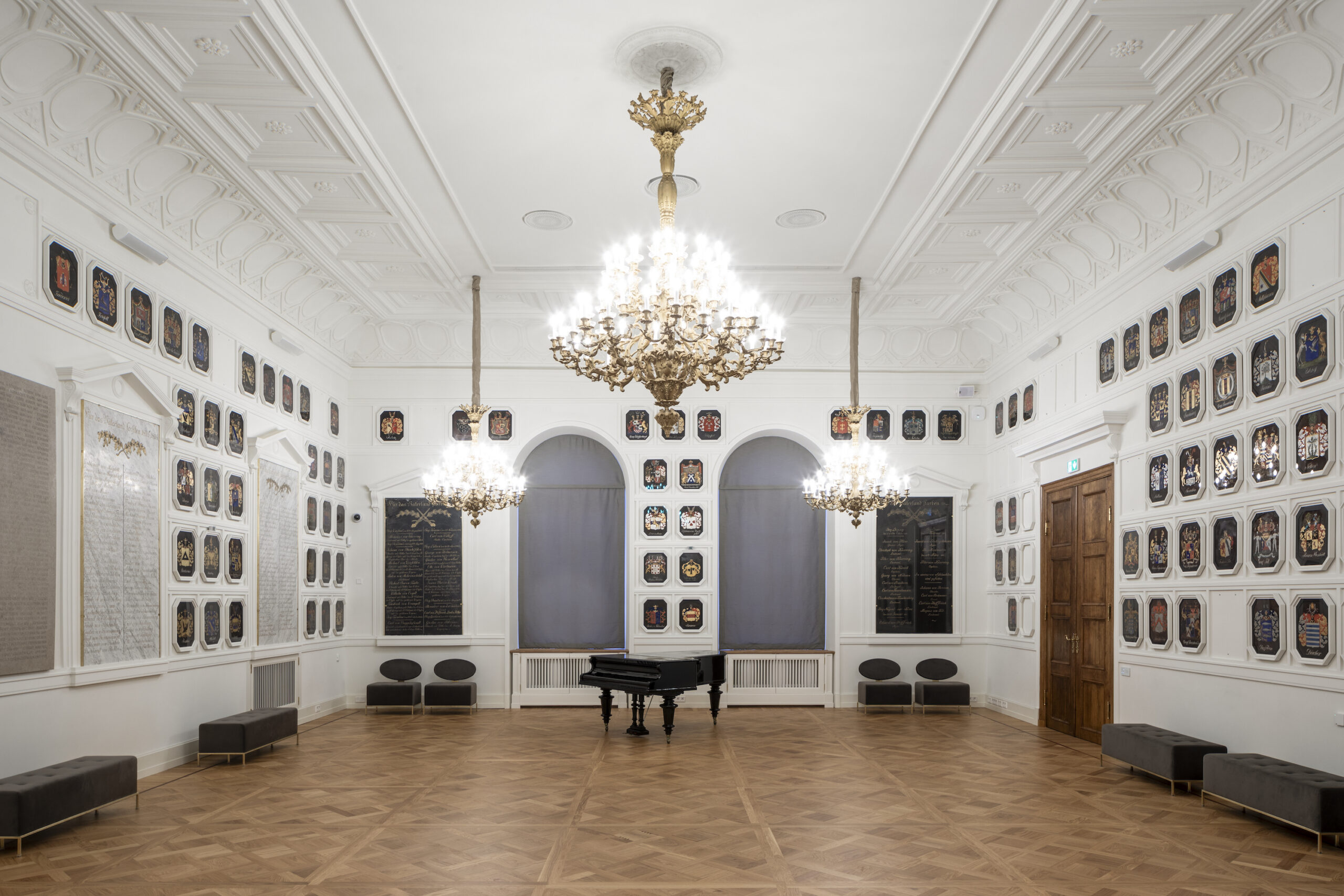
Photo: Martin Siplane
The texts introducing the Statehood House also claim that, regardless of foreign rule, the governance of the Estonian territories did not involve only the nobility but also the indigenous common folk.
The website states: ‘The Diet represented the entire land with its people, divided into knights’ manors. […] On the one hand, the coats-of-arms represent a rank-based society and, naturally, their owners, but, on the other hand, the collection as a whole can also be said to represent Estonia as such before its independence. After all, only those noble families who represented the people living on their estates could hang their coat-of-arms on the wall.’2 The claim is that the nobles’ coats-of-arms represented also the peasants who had no land nor any rights—the rank- and serfdom-based social order is thus presented as a sort of prelude to national independence and democracy. This differs significantly from the mainstream Estonian national historiography, where it has been generally found that the unchecked power of the Baltic German nobility in local affairs could only be exercised by suppressing the rights of Estonian peasants. The latter is held true even while acknowledging that the privileges of the Baltic German-speaking nobility in imperial Russia did help to retain a distinct regional character and closer ties to Europe—or, as Jaan Undusk has argued, it fostered a peculiarly Baltic sense of autonomy.
Telling omissions
Thus, restoring the original interior of the Hall, returning the once-removed coats-of-arms, and, perhaps most importantly, using the described kind of framing narrative are all highly charged symbolic acts. Yet the omissions are no less telling. One item that has not been brought back is the portrait painting of Peter I that originally hung in the Diet Hall. At first glance, omitting the portrait of a foreign ruler seems to align with the broader trend of blotting out ‘foreign’ heritage, even if Tsarist-era symbols in Estonia have been relatively untouched by it so far. Granted, there have not been many monuments to Russian rulers here in the first place—the most famous example, the statue of Peter I that once stood in what is now Freedom Square in Tallinn, was removed already in 1922.
However, the omission of Peter I from the Diet Hall also illustrates how more complex aspects of history can disappear along with physical heritage. Above all, the omission helps to obscure the Baltic nobility’s close ties to the Russian Empire. Peter found it important to win the favour of the Baltic nobles, which is why he granted them several privileges—restitution of their estates, extensive self-governance for them as well as for cities, preservation of the Lutheran faith, etc. Belonging to the Empire brought material benefits to the Baltic nobility and enabled many of them to have illustrious careers in the government, military, universities, etc. One heritage object that indeed has been returned to the Hall is the series of memorial plaques commemorating the military campaigns of 1812–1814. It highlights the role of the Baltic German nobles and especially Field Marshal Barclay de Tolly in defending the Russian Empire against Napoleon.
I already noted that the Russian imperial legacy has not figured much in the recent debates over monuments in Estonia. This is very different from Ukraine, where the topic has been heatedly discussed and very many monuments to Russian cultural figures and rulers have been actually removed. It is quite possible that we are still only getting to that point in Estonia. However, the reconstruction of the Diet Hall and also other initiatives of this sort suggest that this involves a certain risk of privilege blindness. A case in point is the planned removal of the statue of Nikolai Pirogov in Tartu. Pirogov was a military doctor rather than a military commander like de Tolly, whose statue stands only 200 metres apart from Pirogov’s. Removal is warranted for neither, but nor are there any grounds for treating them differently. Instead, both monuments offer brilliant opportunities for examining the entanglements of Estonian history and heritage with the Russian Empire.
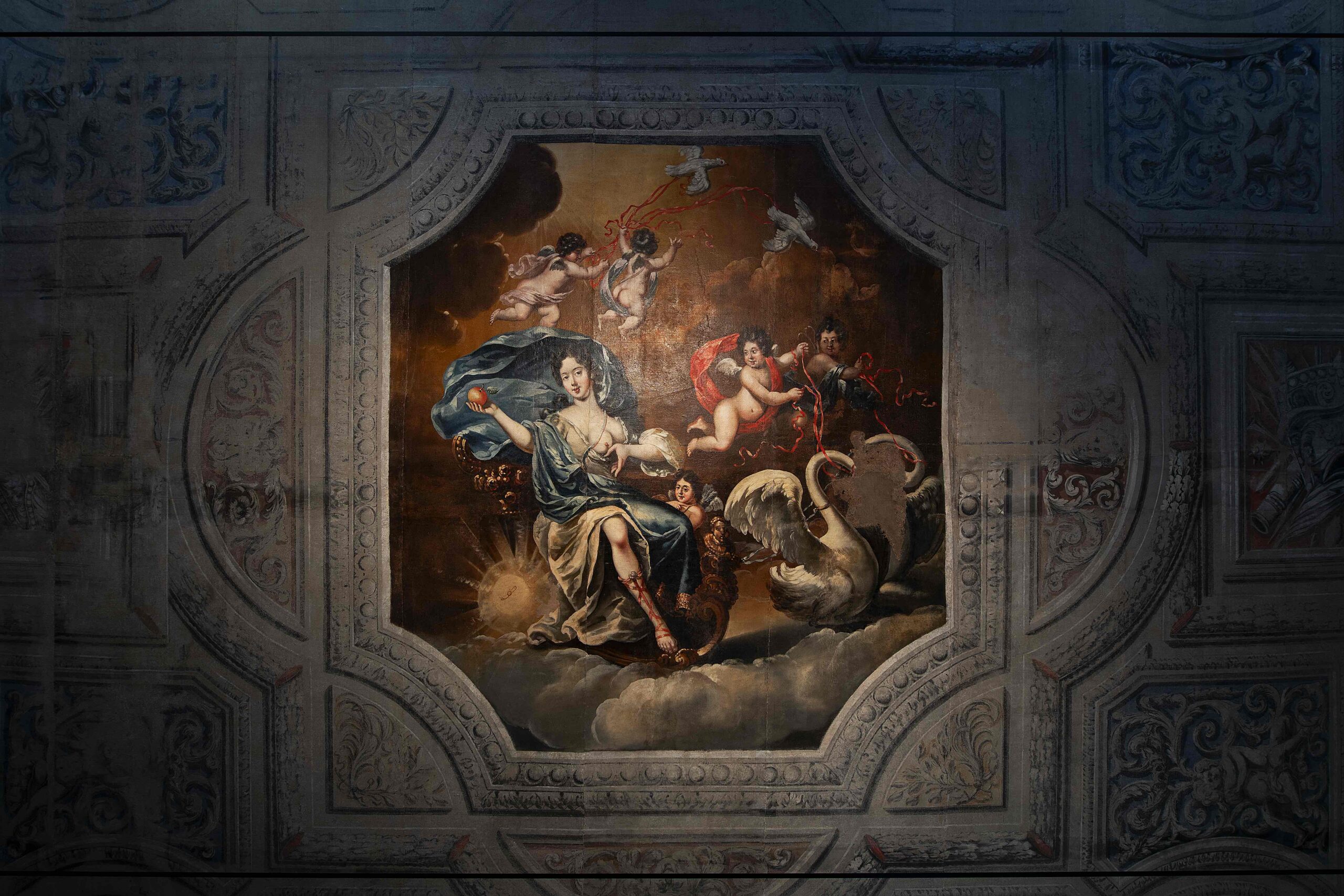
Photo: Terje Ugandi
Giving sense to space
One might argue, then, that the current approach highlights the parade-like, prettier, more Germanic aspects of the imperial era while obscuring the more problematic ties to the Tsarist rule. Those ties could have been effectively made sense of with the help of contemporary art or architecture. Contemporary art could have given the building an additional present-day layer that would approach power and history critically. Currently, the freshest-looking element is, paradoxically, a restored and reinterpreted 17th-century ceiling painting from one of the building’s oldest layers.
In contrast, the newly commissioned painting in the Independence Hall, The Decision of the Provincial Assembly by Jaan Toomik, takes the approach of classical history painting by presenting (male) figures and events on the basis of photographs. This differs significantly from most contemporary art dealing with historical themes, where the past is no longer merely glorified as heroic but engaged with more substantively. This is not to say that the Representative House should not showcase the defining moments of Estonian history or the events and characters in the story of our nationhood. However, had this been done in a more contemporary manner and without sidestepping difficult questions, the results would have been more credible—especially for foreign visitors, for whom this building is largely intended.
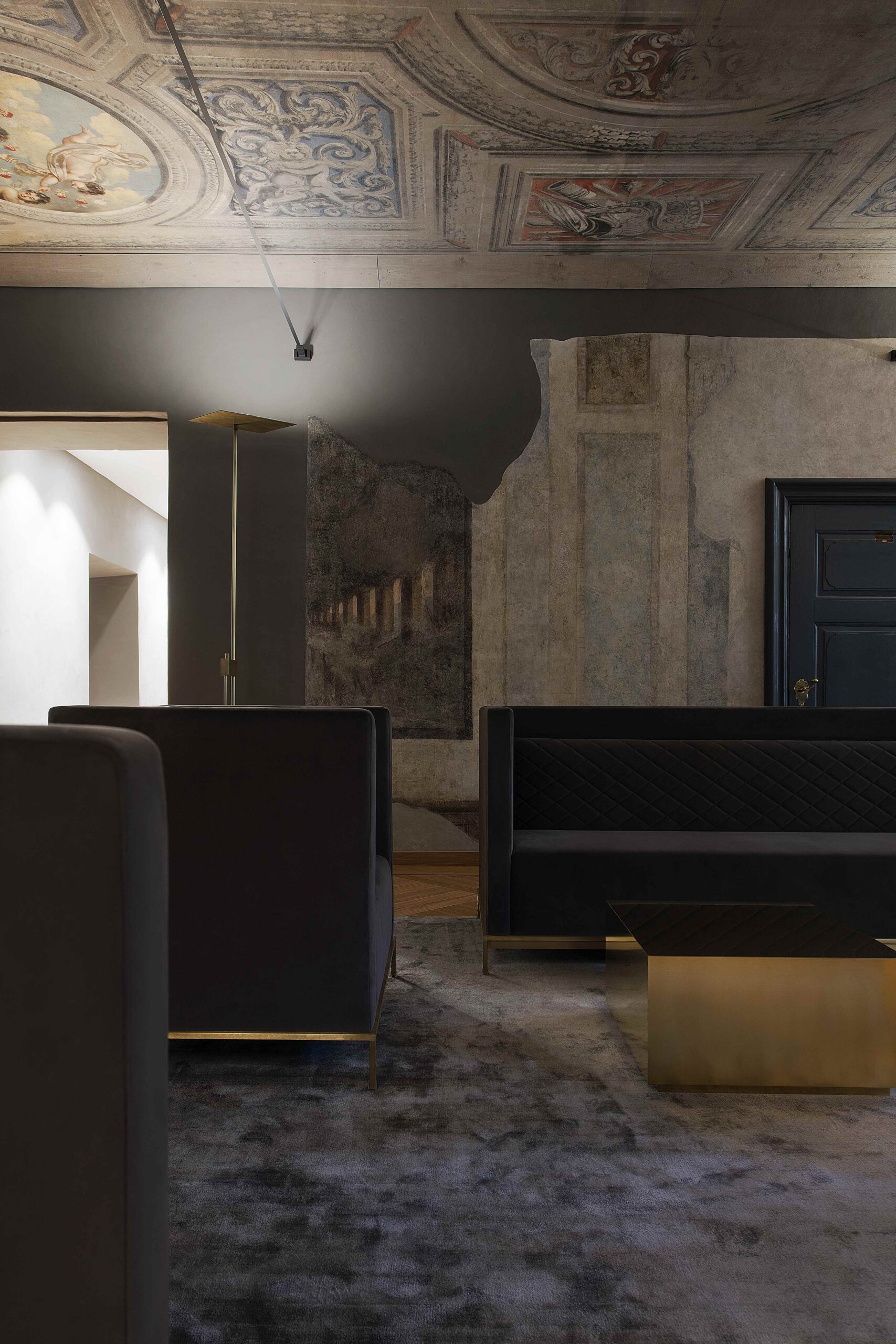
The current solution that cherry-picks only from the acceptable layers of history is not convincing. The task of displaying different facets of Estonia’s history and heritage while not shunning the complications and contradictions within would have been well-suited for modern art, but the opportunity was missed. The highly expensive project has provided very little work for present-day artists.
A slightly mawkish general impression is further confirmed by the thematic halls. In addition to the Diet Hall and the Independence Hall, the building also features halls dedicated to literary culture and art, meant to retrace the story of how Estonians became a nation with their own culture and state; another chamber is dedicated to the Estonian War of Independence. All this can easily bring to mind the representative buildings from certain earlier eras. Modern approach to identity, historical memory, and historiography are much more complex—as foreign delegations are certainly well aware.
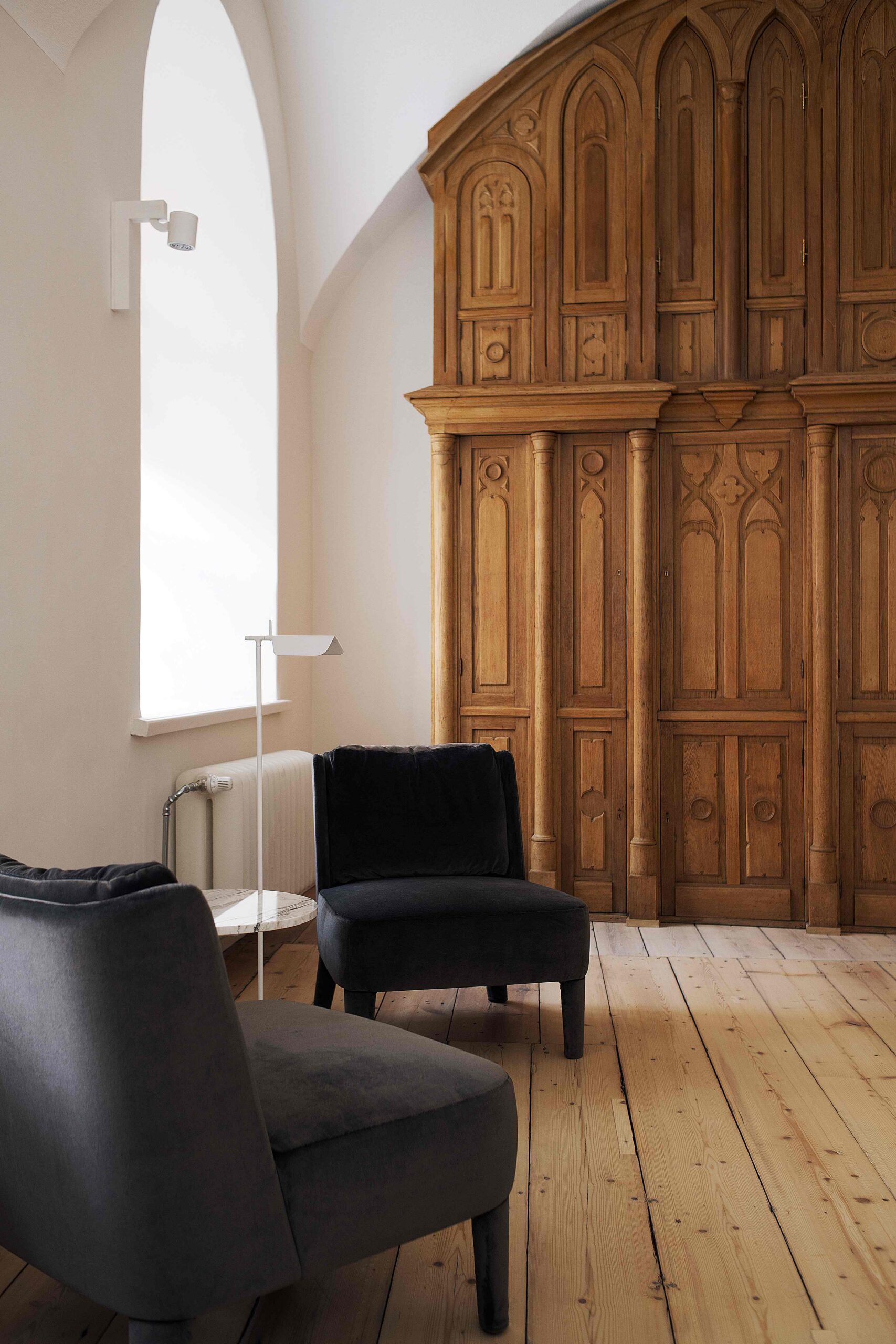
Let us conclude on a more positive note. Inspiration for contemporary solutions can also be sought from the past. Looking back to the founding times of the Republic of Estonia, which the Statehood House aims to tell about, we find again the example of the Estonian Parliament building. The latter struck as forcefully modern when it was built in the early 1920s. Its architectural and artistic boldness paid off, for the expressionist parliament building remains unique in the world and continues to stand out today. Incidentally, the Latvian Parliament is housed in the Livonian Knighthood House. As one final aside, let me add that in designing the south wing of the Toompea Castle—completed in 1937, i.e., already during the authoritarian so-called Era of Silence (1934–1940)—architect Alar Kotli took inspiration from the Tsarist-era governorate building.
LINDA KALJUNDI is a historian and curator who teaches at the Estonian Academy of Arts; her research focuses on the intertwinements of heritage and identity, culture and environment, as well as the power and colonial relations looming over them.
HEADER photo by Martin Siplane
PUBLISHED: MAJA 1-2025 (119) with main topic BALTIC EXTRA
1 The Diet was the highest authority in the Knighthood and assembled once in three years.
2 The Government Office of the Republic of Estonia, ’Esindusruumid’, www.riigikantselei.ee.