CONTEMPORARY ART CENTRE VILNIUS
Location: Vilnius, Leedu
Architect (original building): V. E. Čekanauskas
Year: 1967
Architect (reconstruction 2006): V. Ozarinskas
Architect (reconstruction 2024): Audrius Bučas, Marina Bučienė
Construction project: Maspro
Contractor: HSC Baltic
Total area: 5965,44m2
Commissioned by: Contemporary Art Centre Vilnius
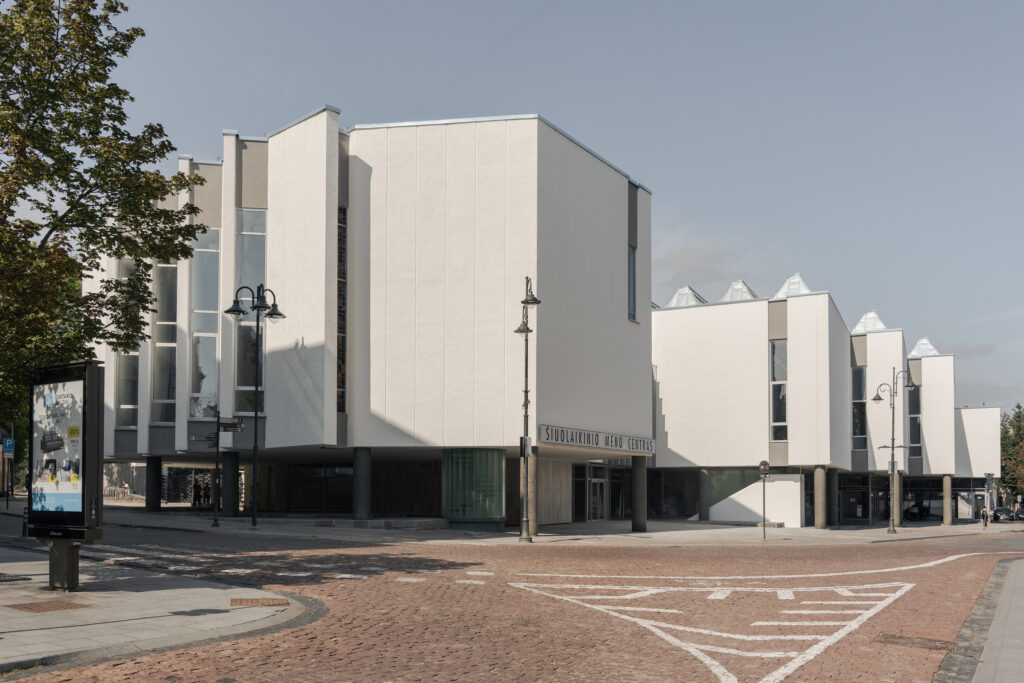
As people eagerly flocked inside, a girl with comically oversized red lips pointed to the ceiling and exclaimed: ‘What a beautiful shopping mall!’. But it was not that, even if it brought to mind those nicer Lidl supermarkets where bright wooden louvers are meant to give consumers an upscale feeling. It was the opening event for Days of Re-entry, an exhibition at the Contemporary Art Centre (CAC) in Vilnius that had attracted a crowd of art lovers, artists, and architects, all curious to see what had been done with the building over the secretive three-year-long renovation process. After all, this is the most important venue for contemporary art in the country. Half-serious remarks about the resemblance of the new CAC lobby to an anonymous shopping mall were among the few publicly critical comments stating the obvious—that the once culturally iconic and charged building had been sterilised. The brutalist and a tad industrial aesthetic that many visitors knew from the last 20 years was gone.
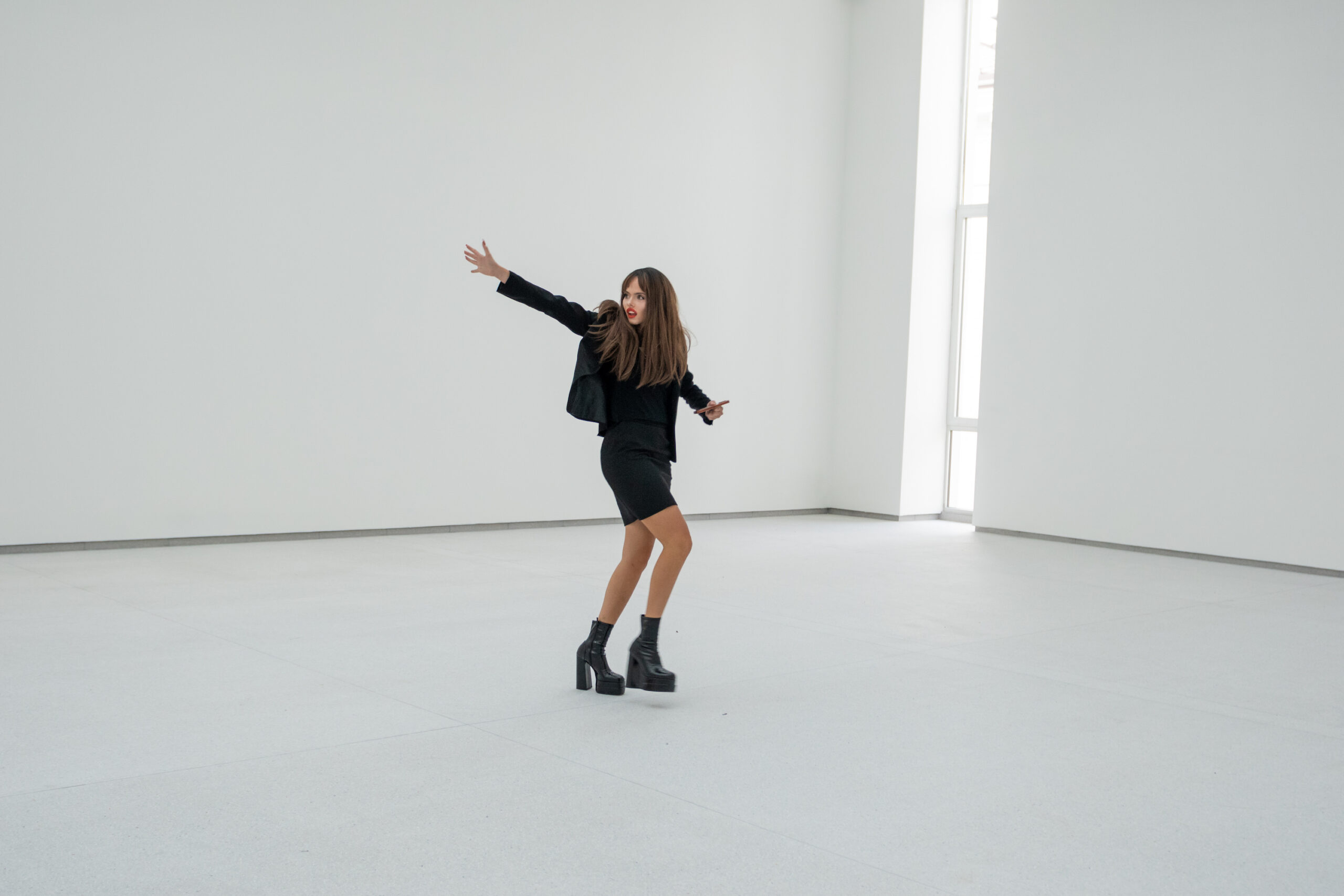
Photo: Remigija Vilniute
Ozarinskas
The first time I visited the Contemporary Art Centre was sometime in the 2000s after architect and artist Valdas Ozarinskas had already radically stripped down and industrialised the space—naked concrete ceilings, visible wires, and a reception desk made from the wings of a glider just made sense for a new art centre. It was edgy, laid-back, and contemporary. Ozarinskas, who was working at the centre as an exhibition designer at the time and hence had daily access to these spaces, brought about a radical brutalist transformation of the foyer by removing the ceilings and liberating the institution from its Soviet past. He was critical of the previous, original state of CAC, the Arts Exhibition Palace designed by V. E. Čekanauskas in 1967: ‘It is as if you have come inside to wait for something. It was designed in accordance with the principles of halls in the “red” era. As if, having entered, you would have to find a chair to sit in, and then be informed that the director will let you know when you can enter. This kind of architecture is so hard to overpower that I intend to compete with it by “inhabiting”’.1 According to Ozarinskas, the foyer should not be something fixed, but rather an everchanging public space allowing for different uses and arrangements: ‘Friends and colleagues can also bring items for inclusion here. You can bring designs that do not fit anywhere else.’
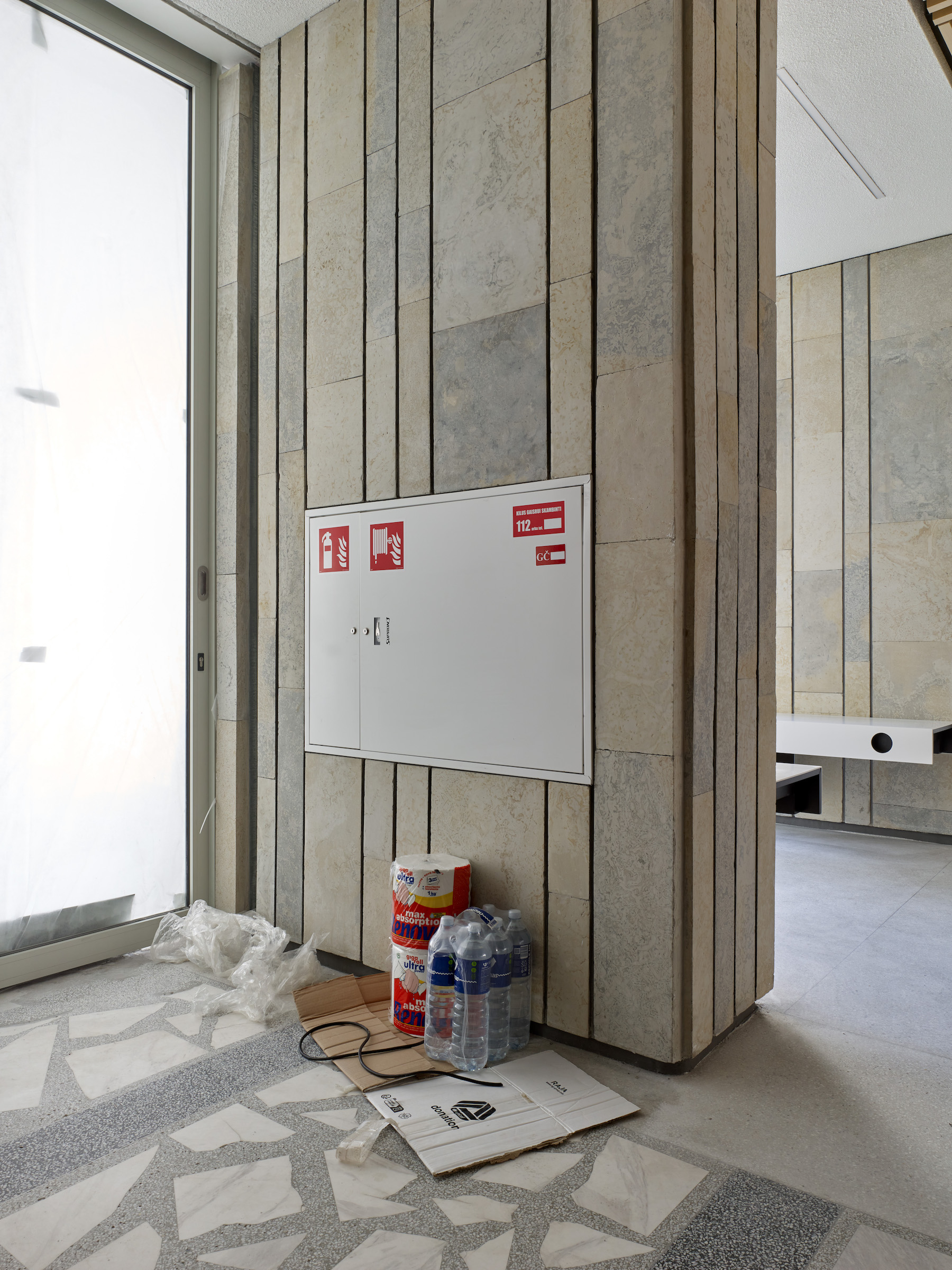
Photo: Kristien Daem
These on-the-go alterations embodied openness to change, which was necessary for a contemporary art centre of a young independent nation. The ready-made architecture, interior, and furniture put forth by Ozarinskas became the face of CAC for decades. Valdas Ozarinskas himself rightly became an icon in the Lithuanian art and architecture scene. After his untimely death in 2014, his work was exhibited at CAC in 2019, reintroducing it to the public eye. From an architectural perspective, his most famous work is the Lithuanian pavilion at Expo 2000 in Hanover. Created together with G. Kuginys, M. Bučienė, A. Bučas, and A. Čeponytė, it remains the best Lithuanian pavilion from any Expo, not only because of the design but because of the performance-like way the architects won the contract. The initial team, which did not include Ozarinskas, exploited the then-prevalent rule of selecting architectural projects by the lowest design fee. The architects bid zero for the design fee and won. This started an uproar, which led to the annulment of the result. For the second competition, Ozarinskas joined the team and they won the commission again. Their radical protest against competing for the lowest design fee caused a stir in the field.
Now that decades have passed, architectural projects are mostly selected based on the quality of the design rather than the design fee. This holds true for most cases—but, ironically, not for the latest CAC renovation, where the architects were chosen without an open design competition.
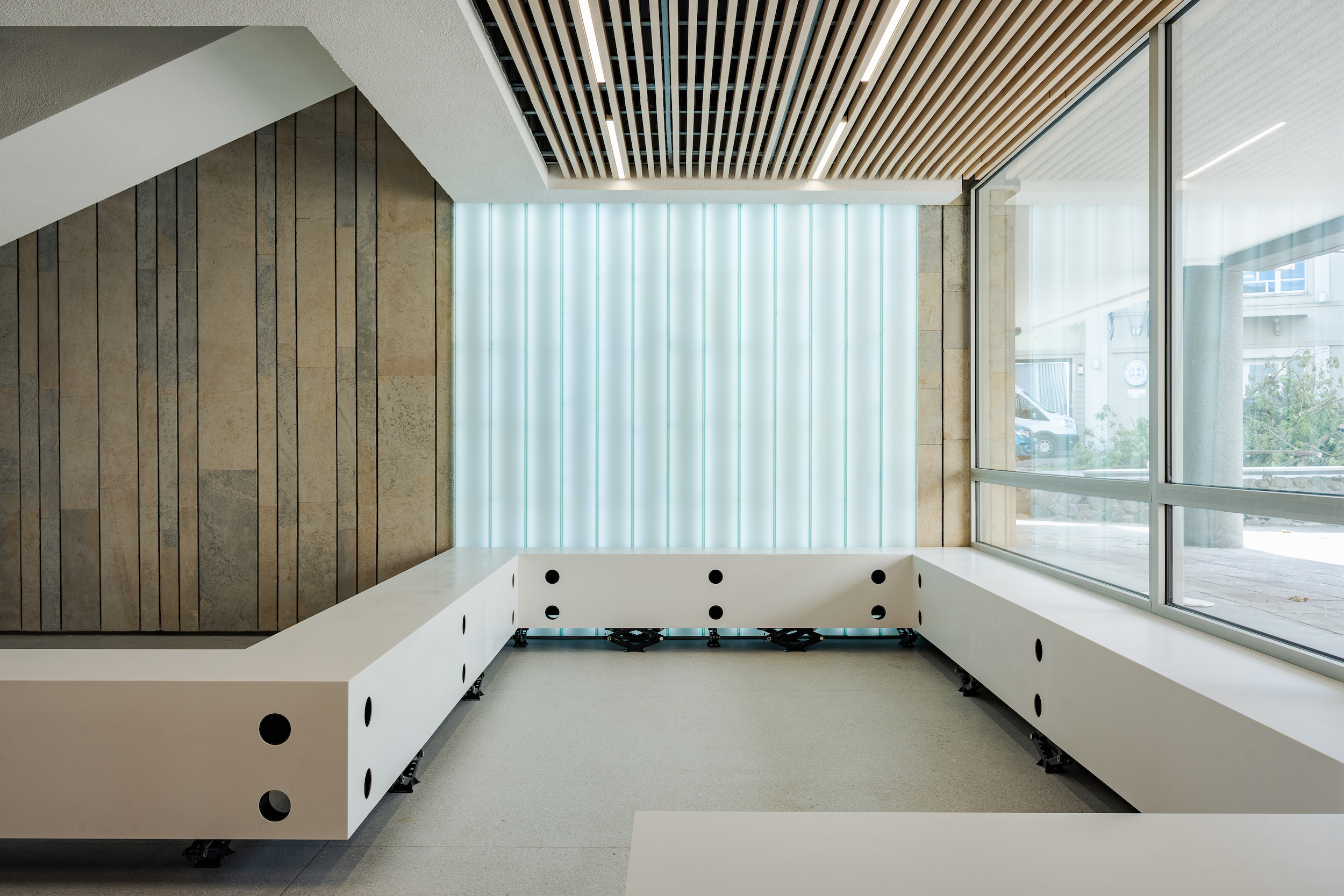
Photos: Andrej Vasilenko
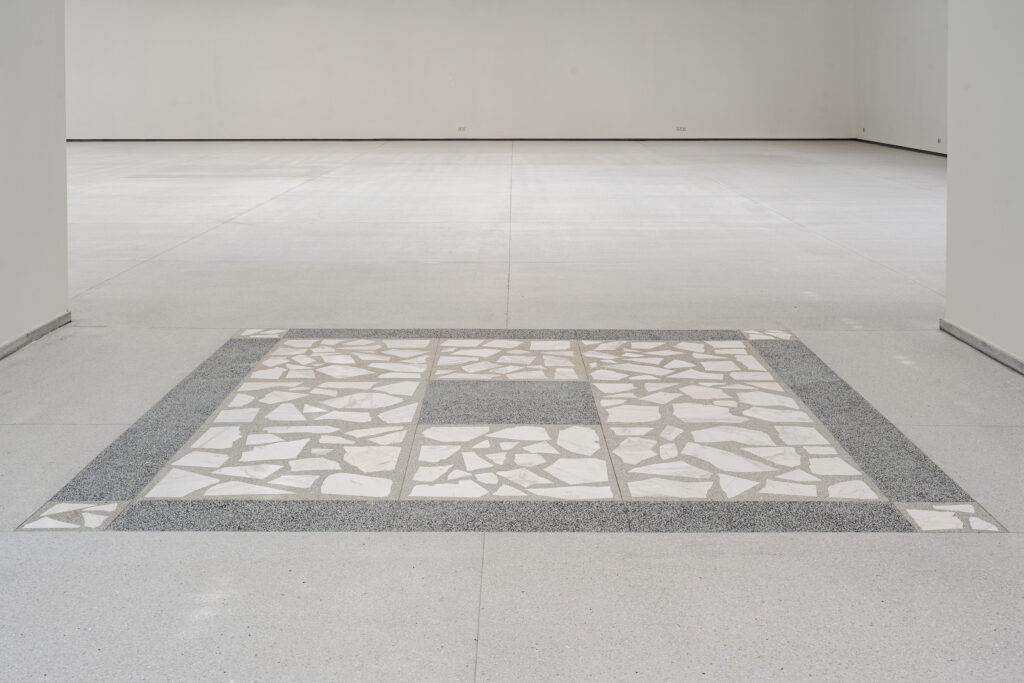
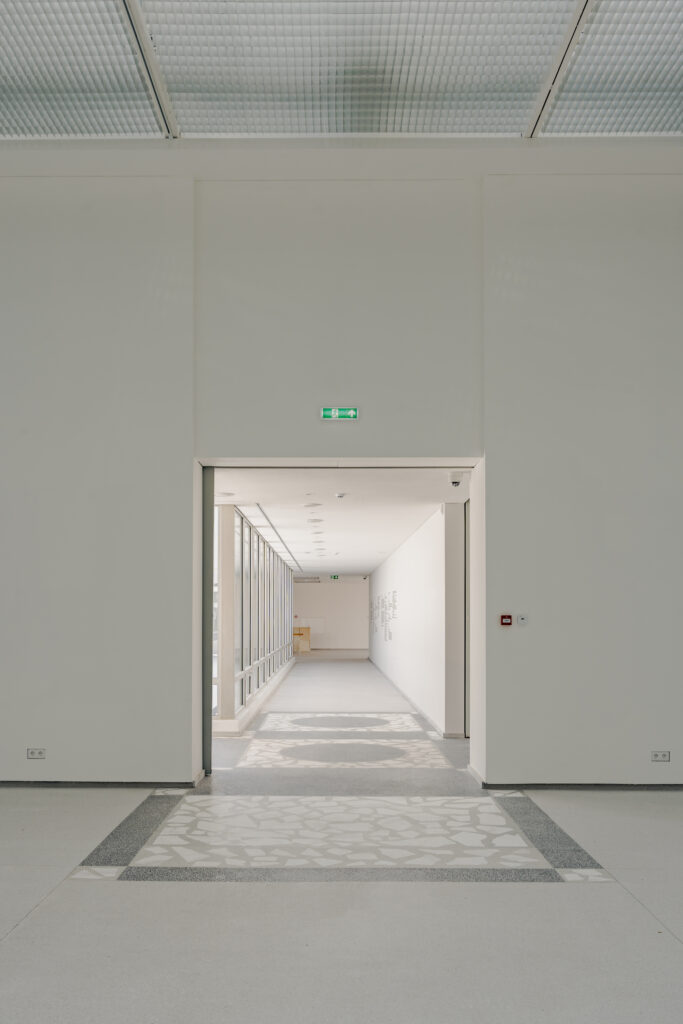
Germophobia
The latest transformation of the Contemporary Art Centre is just one of the many examples of the eradication of ‘dirt’ in architecture. In our region, patina is often misunderstood as negligence—walls must be clean, floors should be shiny and ceilings ought to cover all nasty fixtures. If, for some reason, architects decide to show rough surfaces, the ‘dirt’ should appear as if it were designed—by framing it, lighting it up, or introducing a feature which would clearly communicate that the architect did this on purpose. Leaving things intentionally as they are is unacceptable.
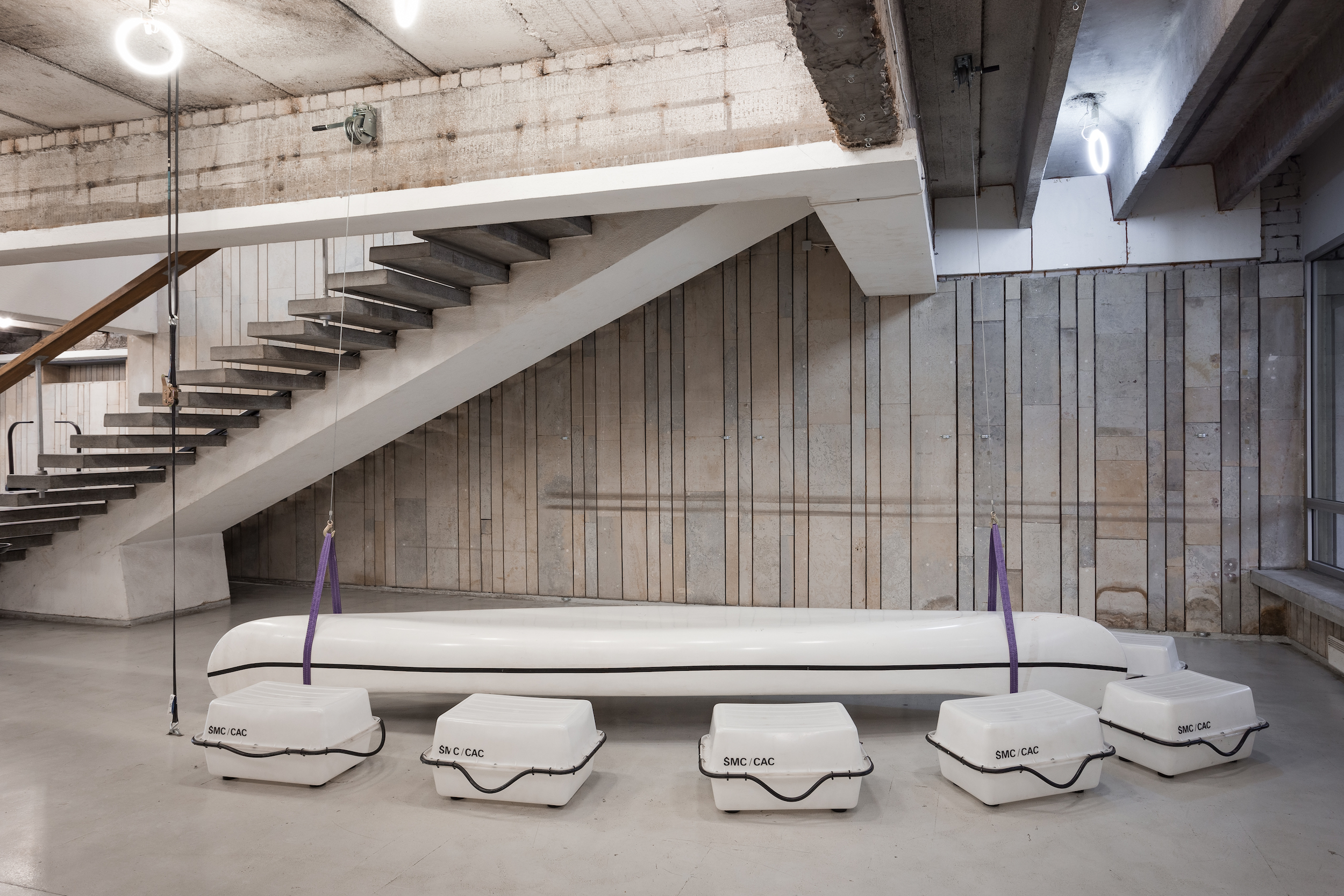
Photo: Andrej Vasilenko
After the renovation, CAC feels strangely similar to the Sapieha Palace in Vilnius, another outpost of the same institution. The original CAC building and Sapieha Palace originate from two very different periods—the former is a 1967 modernist building squeezed into the old town of Vilnius, whereas the latter is a 17th-century palace next to a park. Both buildings are now exhibition spaces for contemporary art and both underwent a renovation almost at the same time, resulting in the same kind of cute and cosy design. In the Sapieha Palace, authentic historical layers are mockingly framed with partly reconstructed decorations and bizarre contemporary additions, leading to something best described as an example of Pinterest-ish Japandi interior design. Real historical elements are transposed to look like fake decorations in some touristy Tuscan restaurant. If the CAC building is reminiscent of a shopping mall or an office, the Sapieha Palace signals that it could be a conference centre or a wedding venue. And, fittingly, since its opening a year ago, it has already hosted several business events.
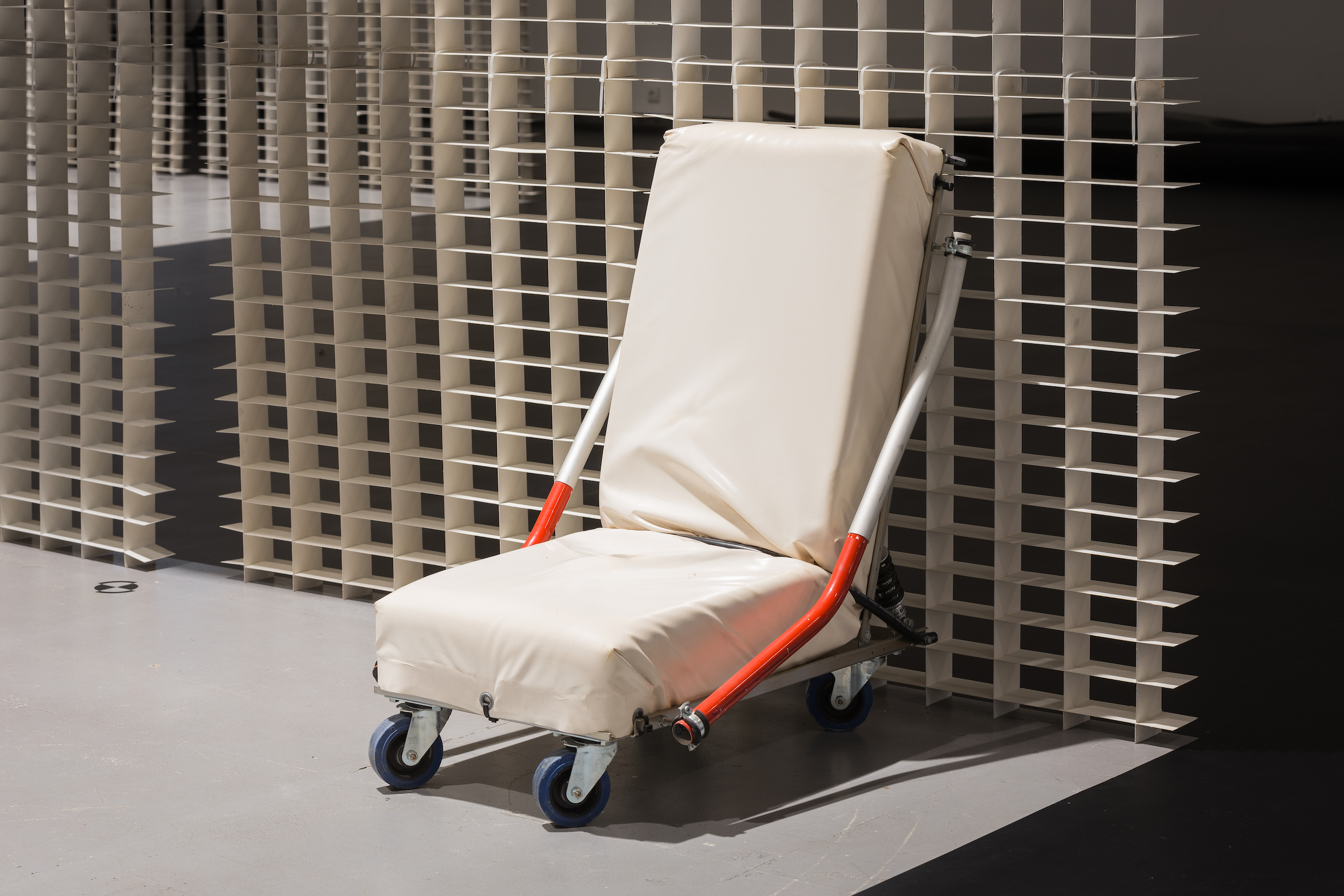
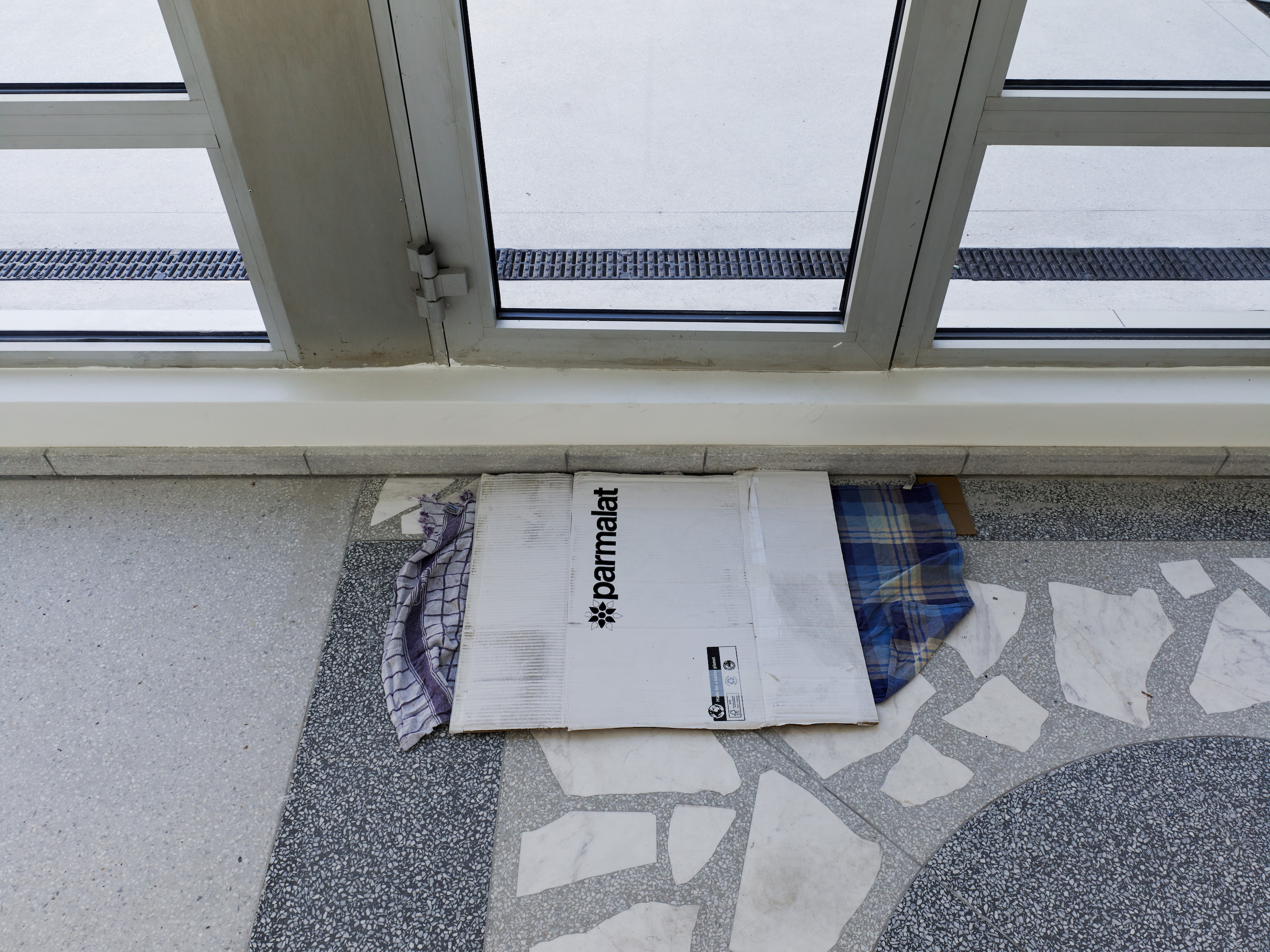
Photo: Kristien Daem
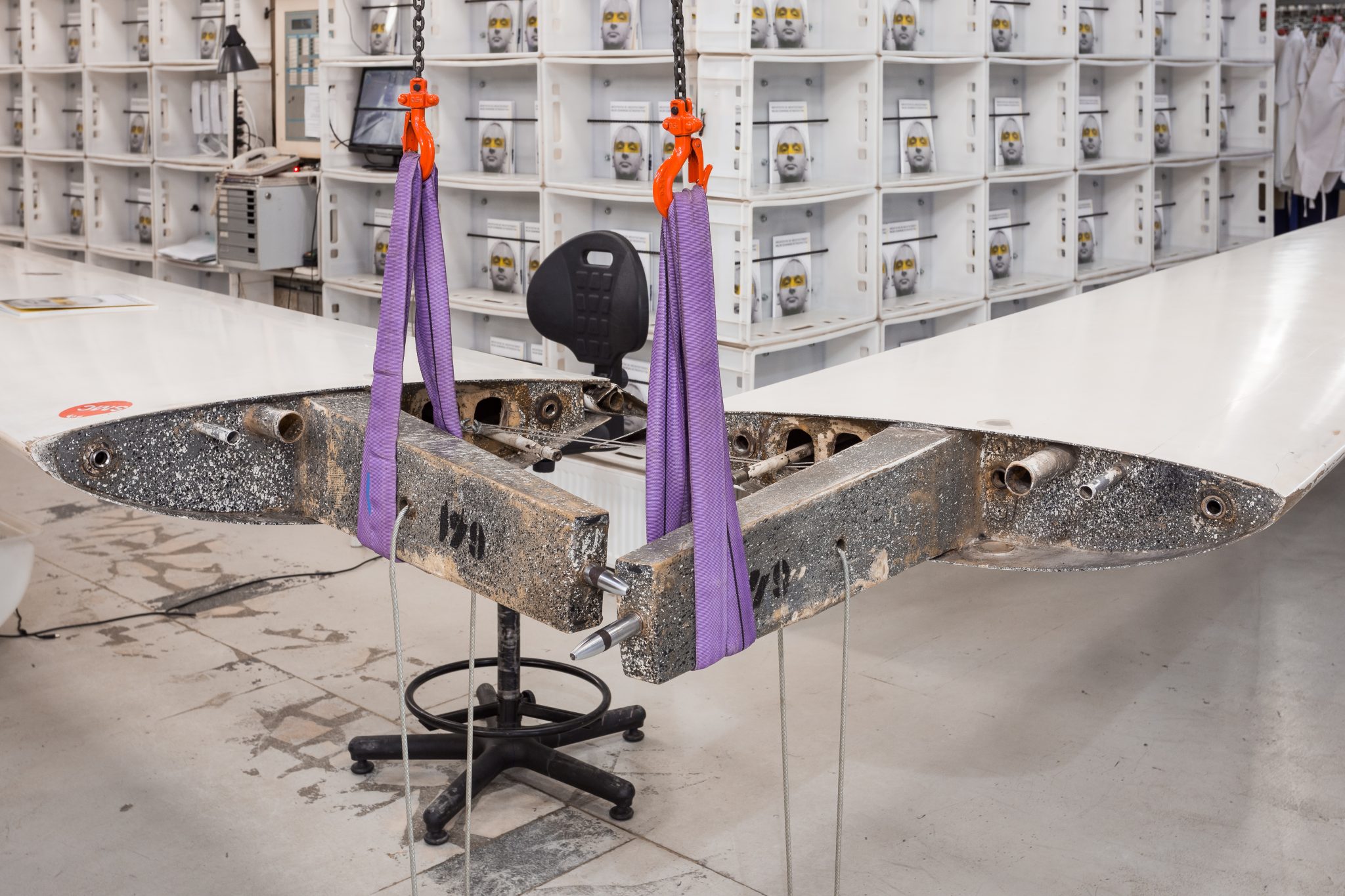
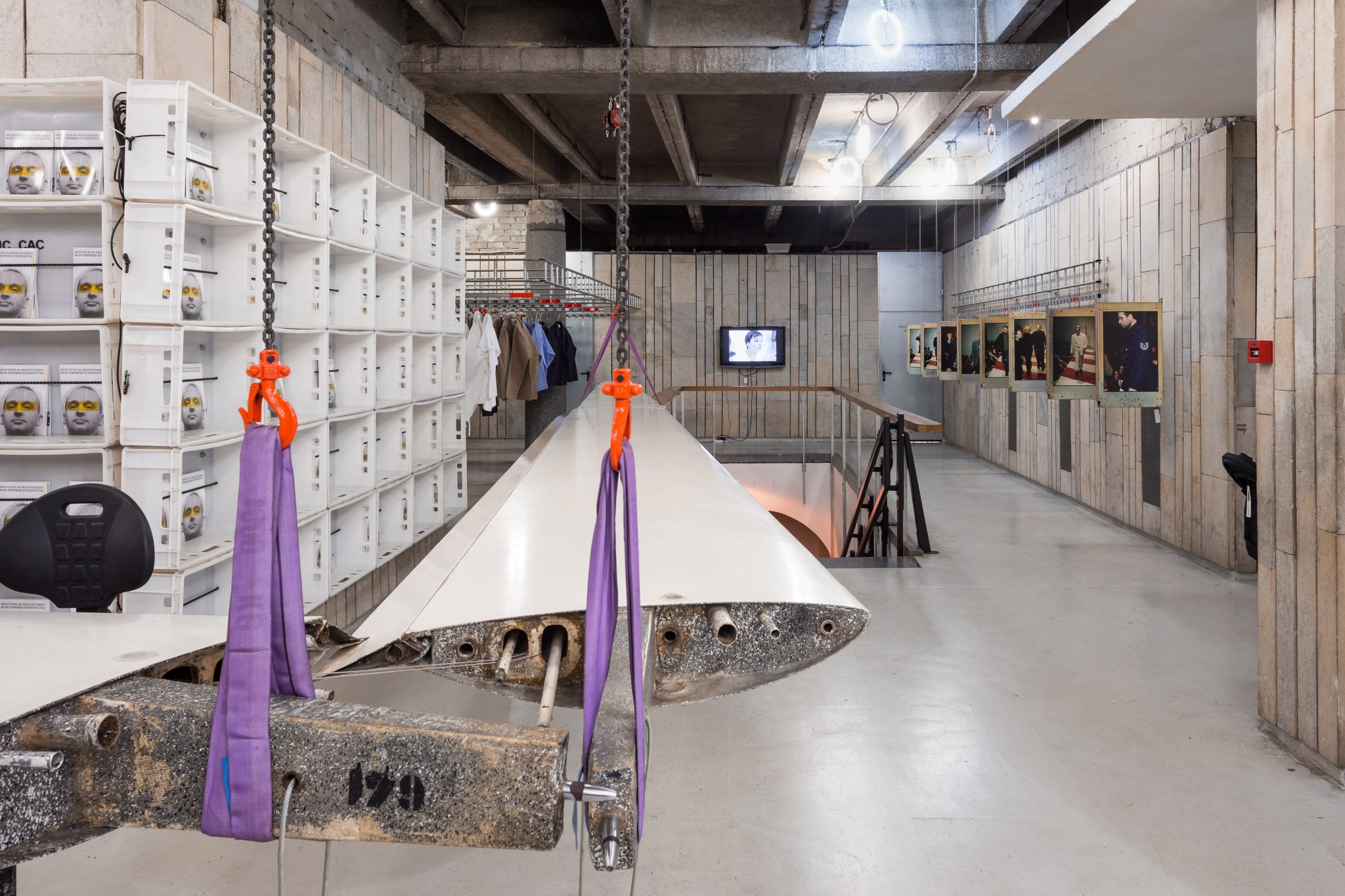
The inability to appreciate things in their raw form and avoidance of the discomfort of the unconventionally beautiful seem contradictory to the ideas often exploited in contemporary art. If artists tend to be at the forefront of the discussions on sustainability, why should a building that is meant to be representative of their field use decorative materials and replace or discard elements that could still be used or at least repurposed? The only thing repurposed from the previous CAC interior was the iconic glider wing table by Ozarinskas—however, this practical ready-made piece has been turned into a non-functional sculpture in the courtyard—the elements have been preserved, but the idea is lost. The way this table was approached reflects the overall attitude of the renovation of the building—the CAC was gutted, its previous ideas removed.
Photos: Andrej Vasilenko
Moving on
One of the stated reasons for the relentless pursuit to get rid of everything the CAC had been was the desire of the institution’s former long-term head, Kęstutis Kuizinas, to remove any traces of his own presence before his departure from the institution. Since he was the one who had invited Ozarinskas to make the changes at CAC, this layer had to go as well. At first sight, this seems to align with Ozarinskas’ own ideas: ‘Inside my house, I cannot imagine having anything more or less than the CAC lobby should have, and vice versa. […] and later all that is “mine“ in here will naturally disappear’. But Kuizinas doesn’t see it as an evolution, his approach was to return to the original project of 1967. In one interview, Kuizinas described his strategy as ‘nullifying the building’, even if the reset meant that elements have to be reconstructed, recreated, and added back.
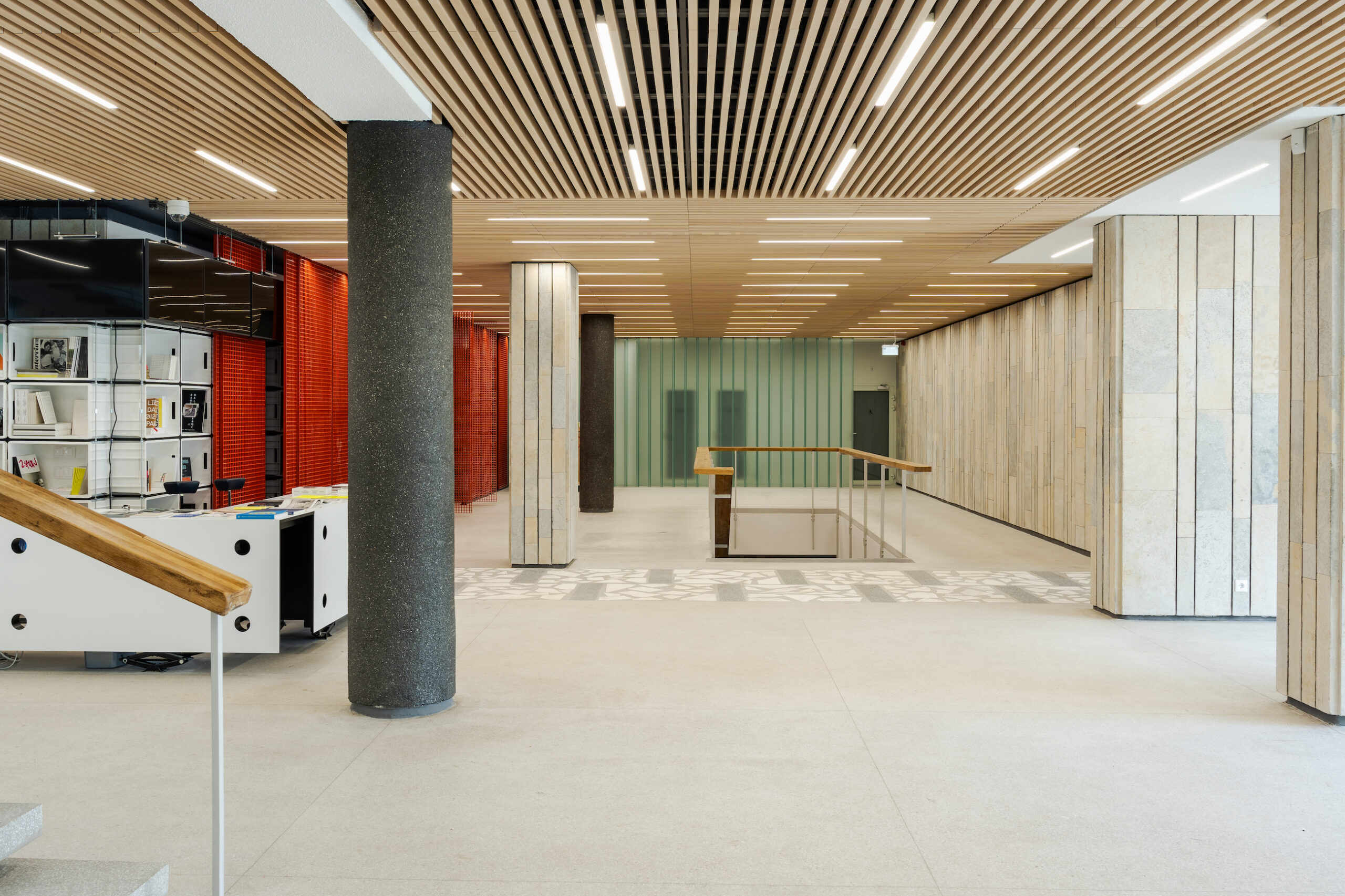
Photo: Andrej Vasilenko
In order to remain respectful, the architects chosen in the secretive process were Ozarinskas’ long-time associates Audrius Bučas and Marina Bučienė. Bučas and Ozarinskas co-created one of their most iconic works, The Black Pillow, which filled the main hall of CAC up to the ceiling at one of the Ozarinskas’ last exhibitions. Buas has also contributed to one of the most successful examples of museum renovation in Lithuania—the conversion of the former Revolution Museum into the National Art Gallery. On paper, everything seemed promising for CAC.
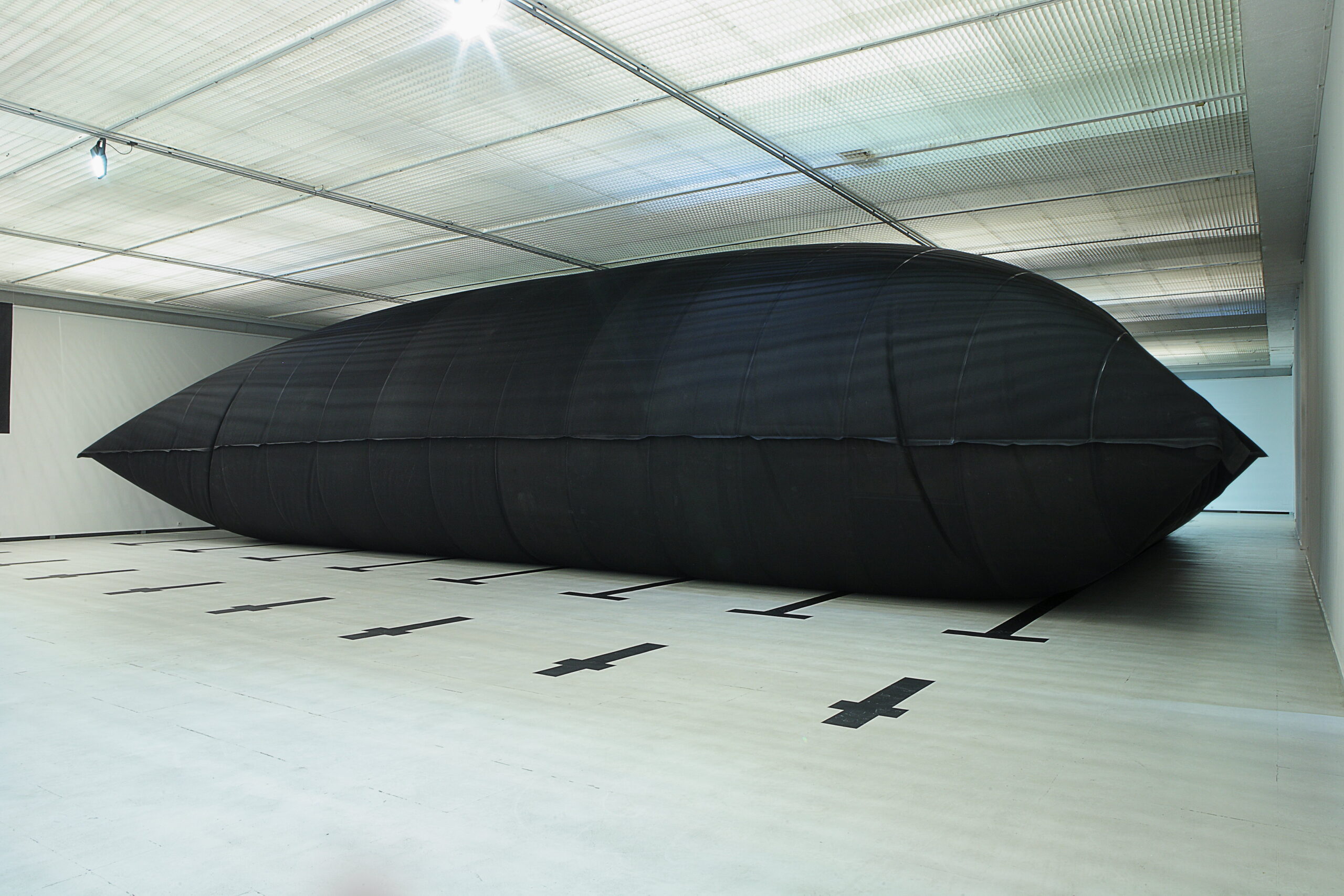
Photo: Contemporary Art Centre Vilnius
The selected architects were tasked with combining three layers of history—elements of the original project (wooden ceilings), bits and pieces from Ozarinskas (industrial, ready-made hints), and their own interventions (red reception shelves). A perfectly fine idea, except for just one problem—all three layers, originating from very different periods, were not integrated but (re-)created from scratch. The wooden ceilings are not original but a copy, a reinterpretation of the old; the furniture pieces tucked under the staircase are a reimagination of Ozarinskas’ works; and the red shelves—well, those are simply no improvement over what was there before. All the ideas of openness and transformation from the 2000s—gone.
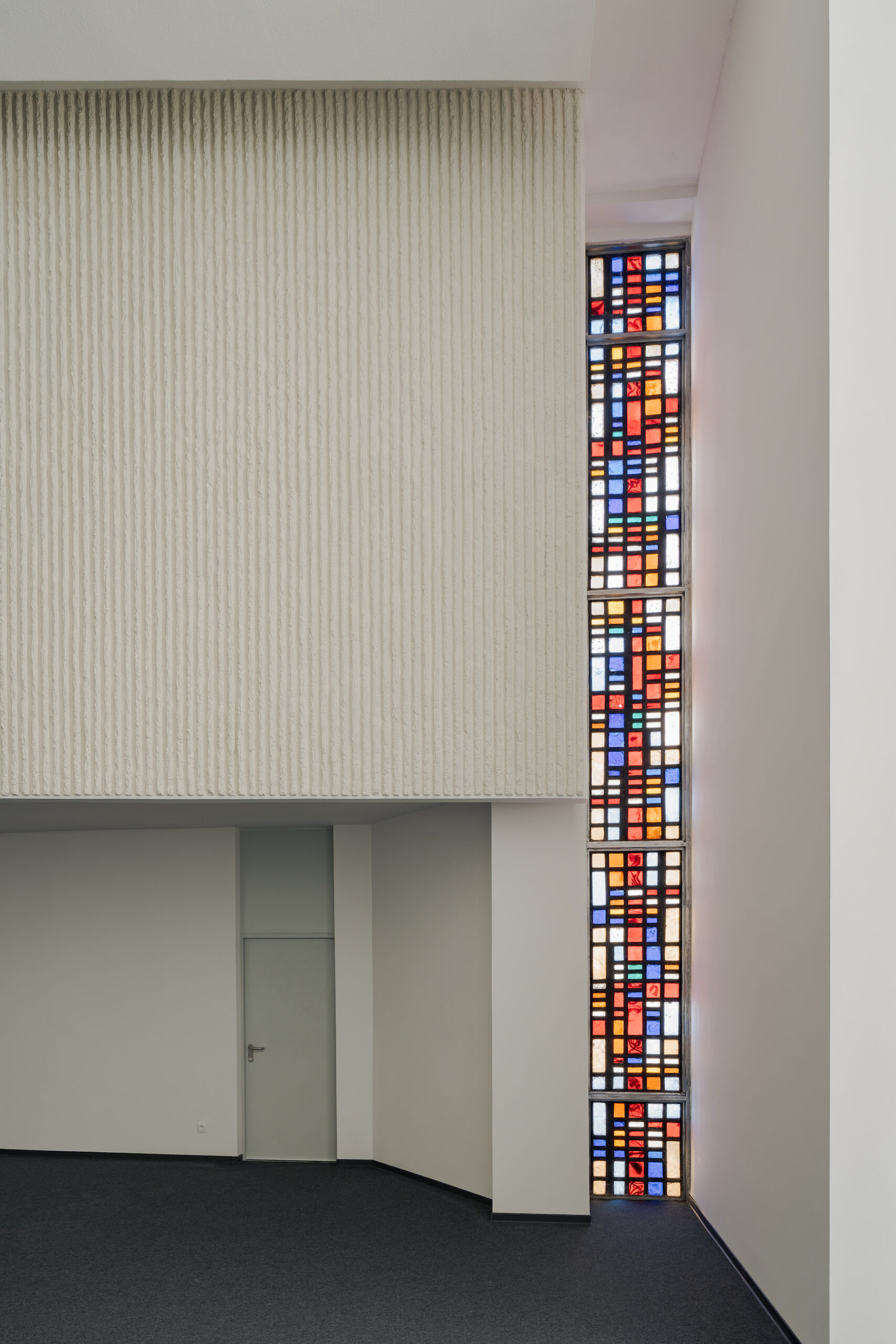
Photo: Andrej Vasilenko
Ozarinskas never imagined that the temporality of his works would mean that they will be destroyed by turning back to the past. In one interview, he talked about natural change, evolution going forward, and adaptability: ‘This place will be „mine“ for only one day. […] If certain objects appear unsuitable for the foyer as a public space, they can be attached to the ceiling, to avoid being in the way’. Moreover, Ozarinskas introduced and explained his changes to the original architect of the CAC building, V. E. Čekanauskas. The building was going through a natural progression, from one architect to another, living and reflecting the aspirations of the time. In 2001, a NATO Assembly was held at CAC, and in 2004, the three Baltic states joined NATO and the EU. In 2006, Ozarinskas redesigned the foyer, and in 2012, he added a black cinema room upstairs. Change was in the air and the future was bright. Now, in 2025, CAC is returning to the year 1967, the building reflects a very different time, and I am not sure if it is a bright one.
ANDRIUS ROPOLAS is an architect who occasionally writes, speaks, and wrestles. He is a co-founder of Office De Architectura.
HEADER photo by Andrej Vasilenko
PUBLISHED: MAJA 1-2025 (119) with main topic BALTIC EXTRA
1 An Architect Without Architecture? A Retrospective of Valdas Ozarinskas, p. 42.