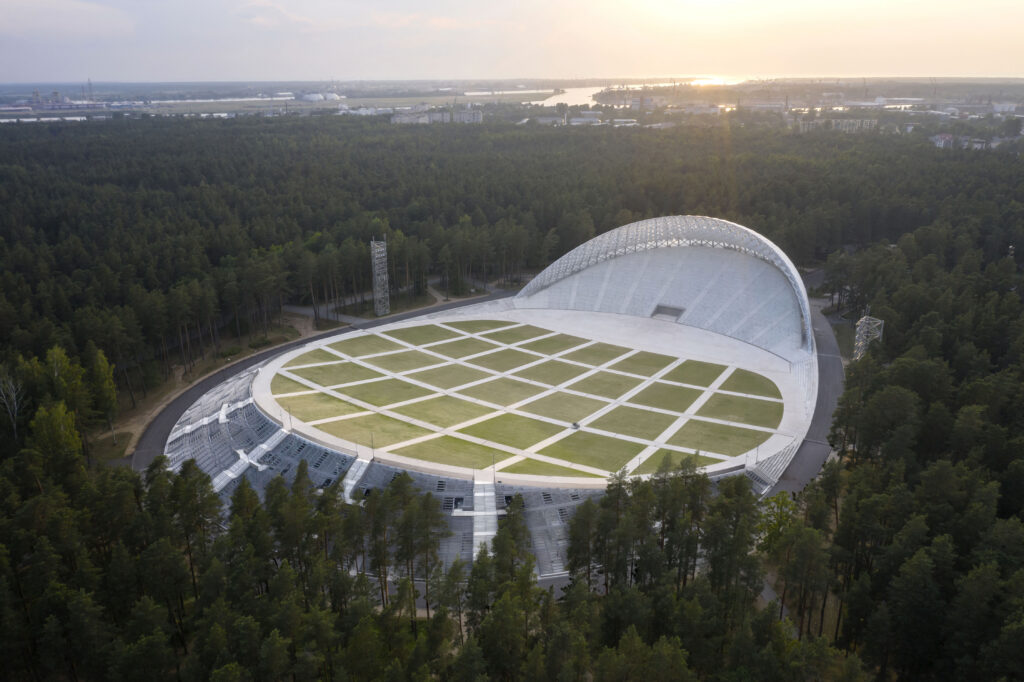
LATVIAN SONG FESTIVAL GROUNDS
Type: open air stage and event space
Location: Riga, Latvia
Architects: Mailītis Architects, Arhitekta J. Pogas Birojs
Commissioned by: Riga City Council
General contractor: LNK Industries
Structural engineers: LVCT, Buvinzenieru Konstruktoru Birojs, Strandeck
Roof membrane: Kiefer. Textile Architektur
Acoustics: RTU, Müller-BBM GmbH, R&D Akustika
Competition: 2007
Completed: 2021
Capacity: 90,000 people
Area: 146 430 m2
Three stars, / Three sisters, / Three song festivals;
One suffering, / One hope, / One liberty.
Let our voices sound as one, / Let our hearts be born as one, / Let the song resound as one.1
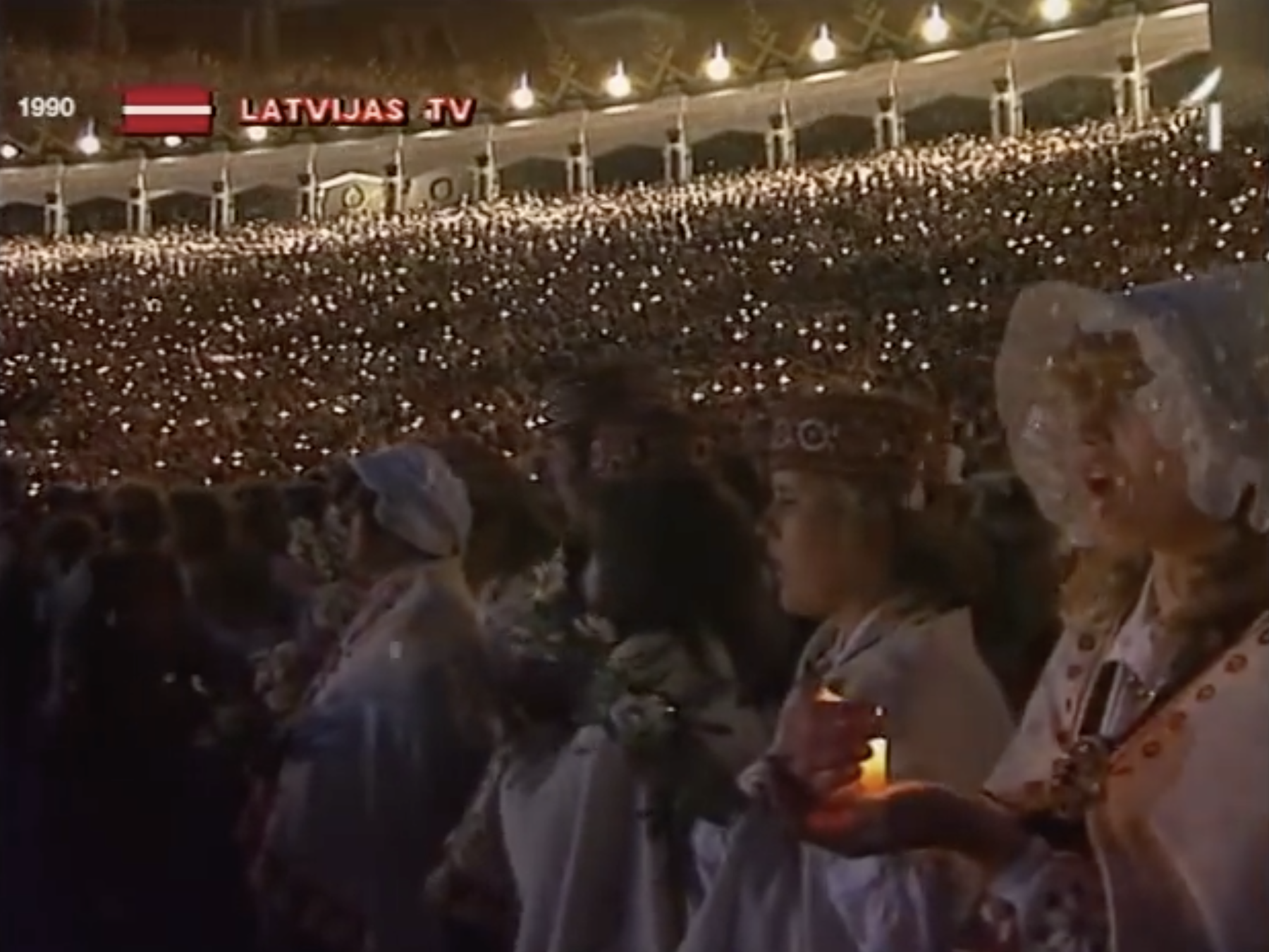
And so we sang ourselves free. We did not have much else besides our voice, so we just let it out of our chests, just like that. We did not even feel cold. And we sang. And we formed a very long line and held hands and sang and the line stretched through forests and across plains, from the sea and wilderness to urban centres. And the Kalashnikov rifles were lowered, withered, and the BTRs turned around and drove away, far away across the border. And they never came back. But we kept singing. And our souls were free. My heart was free. Free as a bird. Yet none to me this way refer.2
There can hardly be a more symbolically charged architectural object in our region than a song festival stage, especially one that can fit almost the entire small nation so they can come together and sing. It is a vehicle of nationhood and identity, a space where independence was both forged and restored. But the most powerful and spectacular of these arched stages in the Baltics were built during the Soviet occupation—strangely enough, the Soviet authorities underestimated the power of independence in singing. Although the song festival is something collective that brings together the masses, and thus seemingly something working class-oriented that could lead us toward the sun of communism, it is also ambivalent, rich in meanings, and a strong linchpin of national identity. The tradition of song festivals was borrowed from 19th-century German cultural sphere;3 it was a manifestation of national romanticism that became huge in these parts probably due to the hidden potential for resistance that it carried. It became huge in all the Baltics, but there were also differences—oddly, the song festivals in the three countries do not share any repertoire and the only song common to all is ‘The Baltics Are Waking Up’, an anthem of the Baltic Way demonstration.
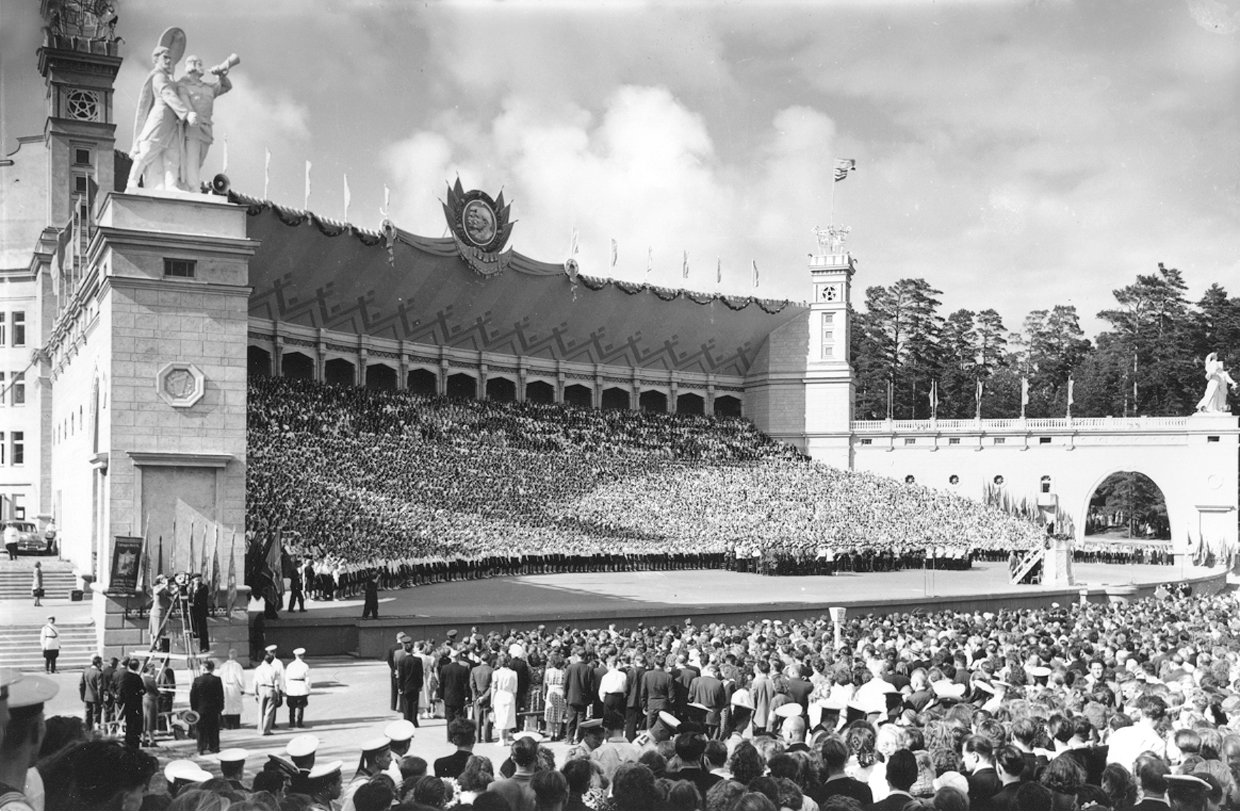
New song festival grounds in Vilnius and Tallinn were built for the song festivals of 1960. The stage in Vilnius was an adapted copy of the one in Tallinn. Latvia’s older, Stalinist-style arched stage, built in 1955, was so small and meek that it had to be replaced with a larger, more potent and modern one in the early 21st century. The new stage is a symbolic update—an architectural interpretation of contemporary song festival culture as well as a nation’s independence in the very centre of the Baltics.
Forest
Latvians have their song festival grounds in Riga’s Mežaparks. ‘Mežaparks’ is Latvian for ‘forest park’. The Estonian word of the same meaning (‘metsapark’) has the same root that goes all the way back to the very beginning of our language and a hunter-gatherer culture. In the Finno-Ugric family, we also find the Hungarian word ‘messze’ (‘far, to far away, away, to away’), whereas in the Proto-Balto-Slavic, there is the word ‘medjas’ (‘between something’). Forest is that interminable and mysterious entity that always needs to be traversed when going somewhere, vast and boundless, starting from the sea and ending who-knows-where. The end is much further away than can be perceived. The song festival stage in Mežaparks strongly embodies this sort of mythopoetic quality—it is a manifesto of nationhood, but an unburdened, gentle, and forest-oriented one.
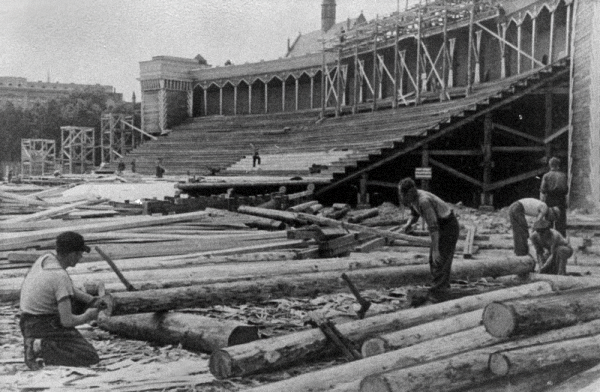
Photos: National Archives of Latvia
Wild acoustics
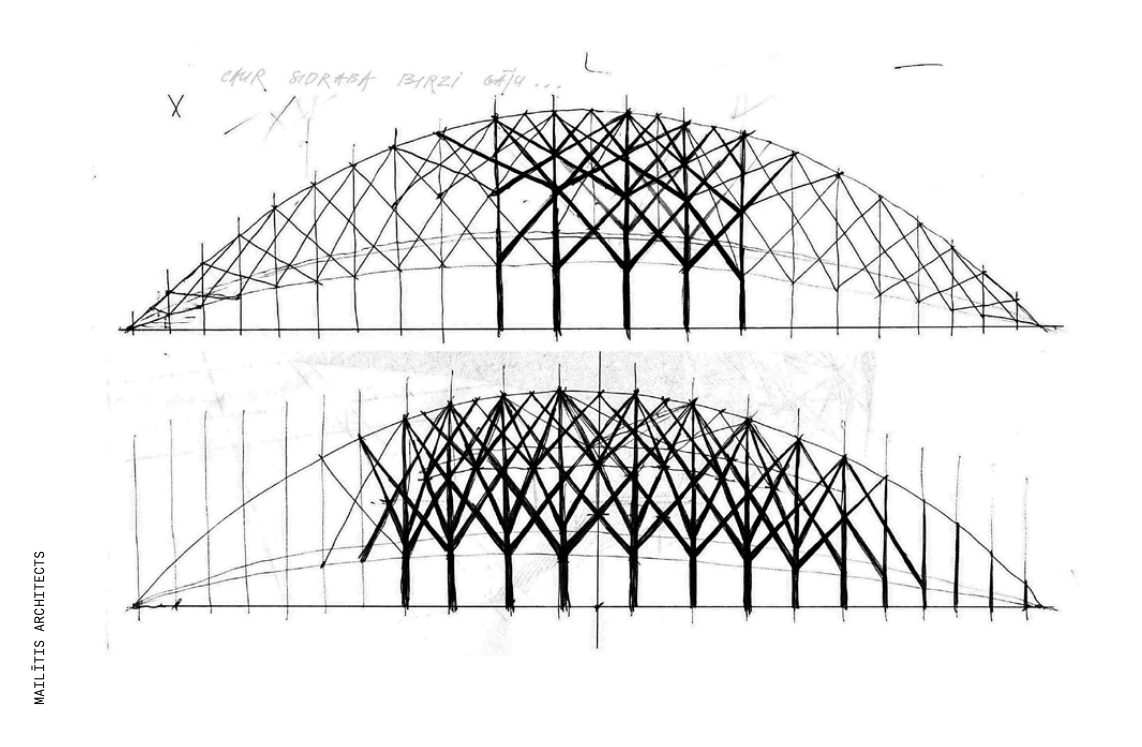
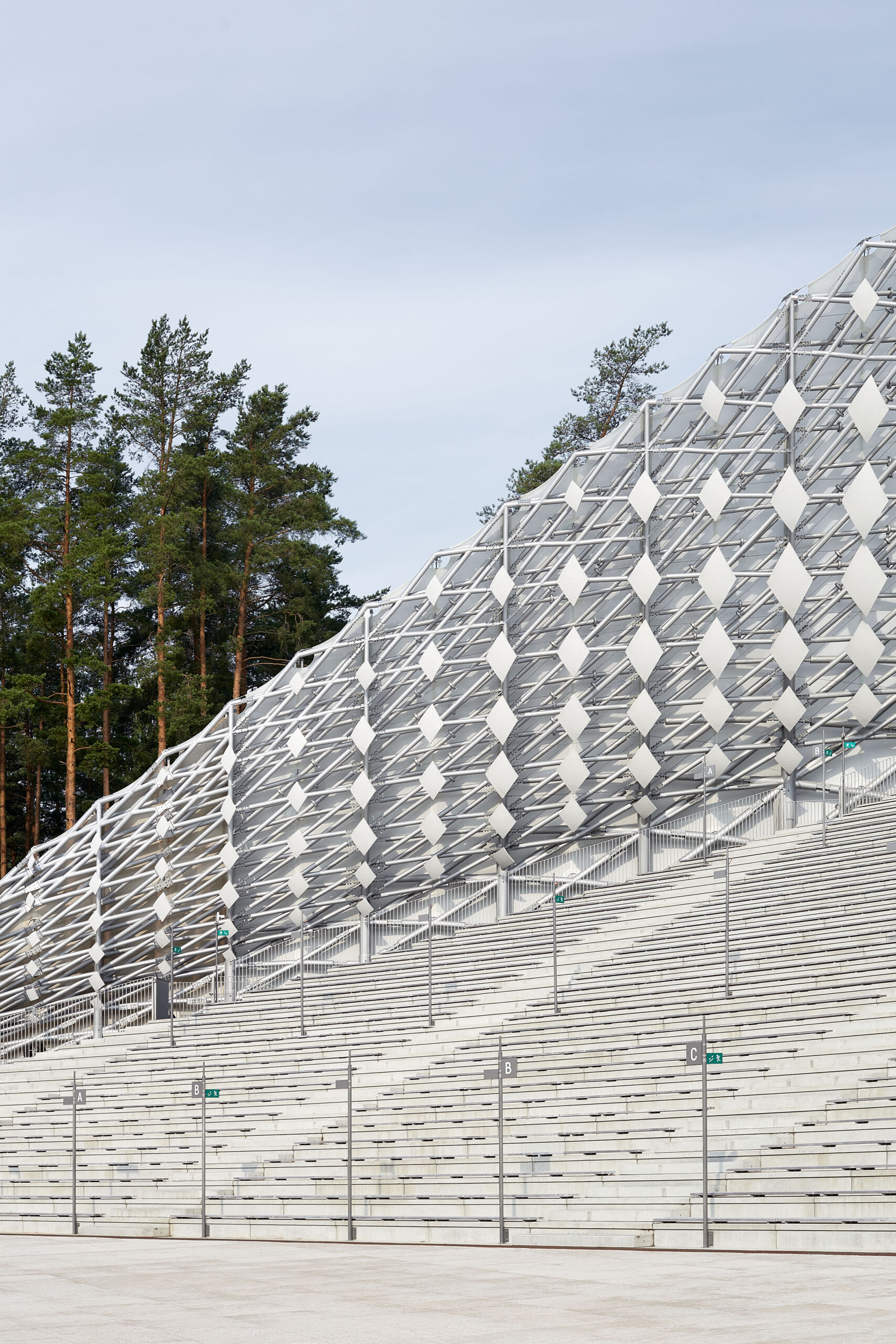
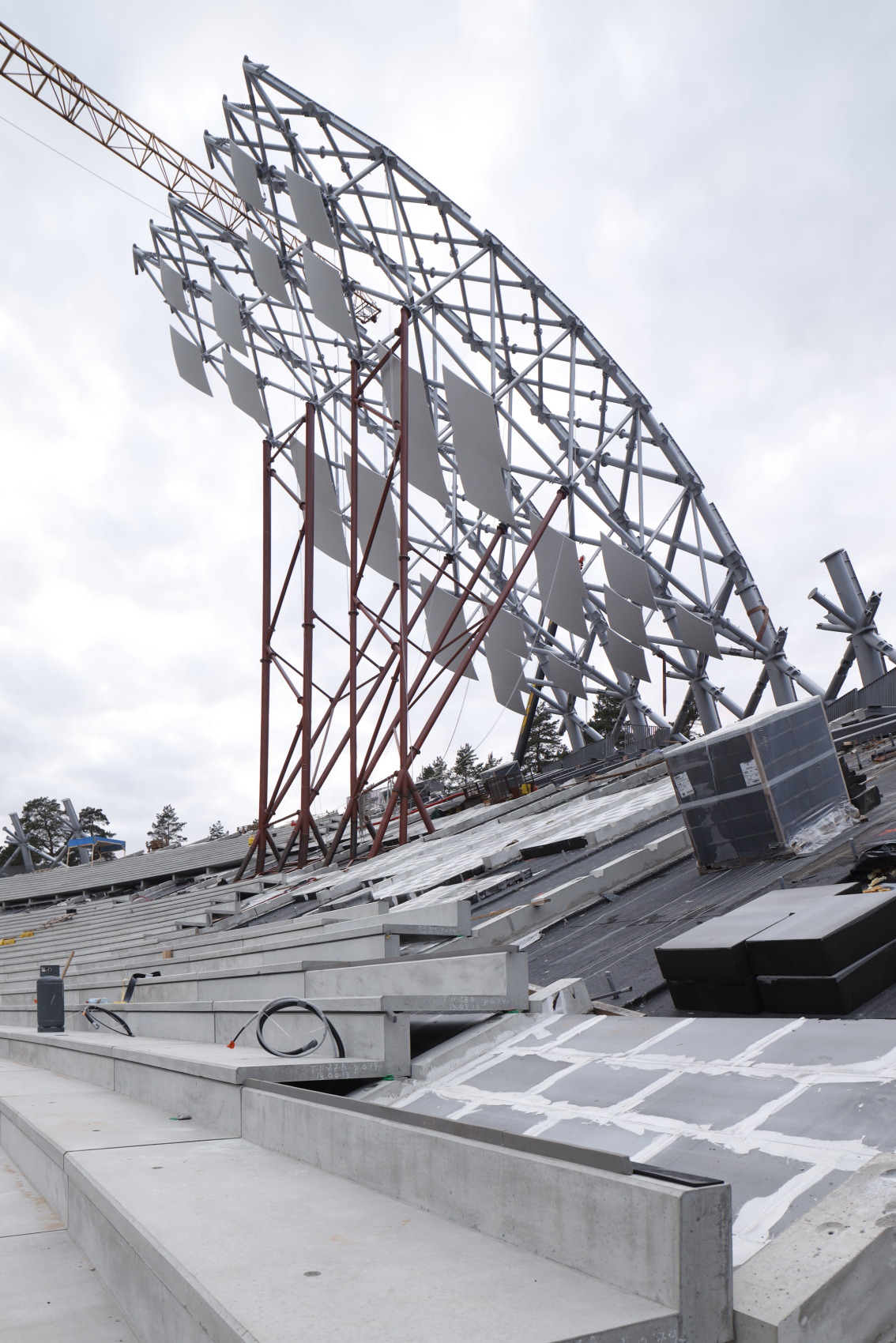
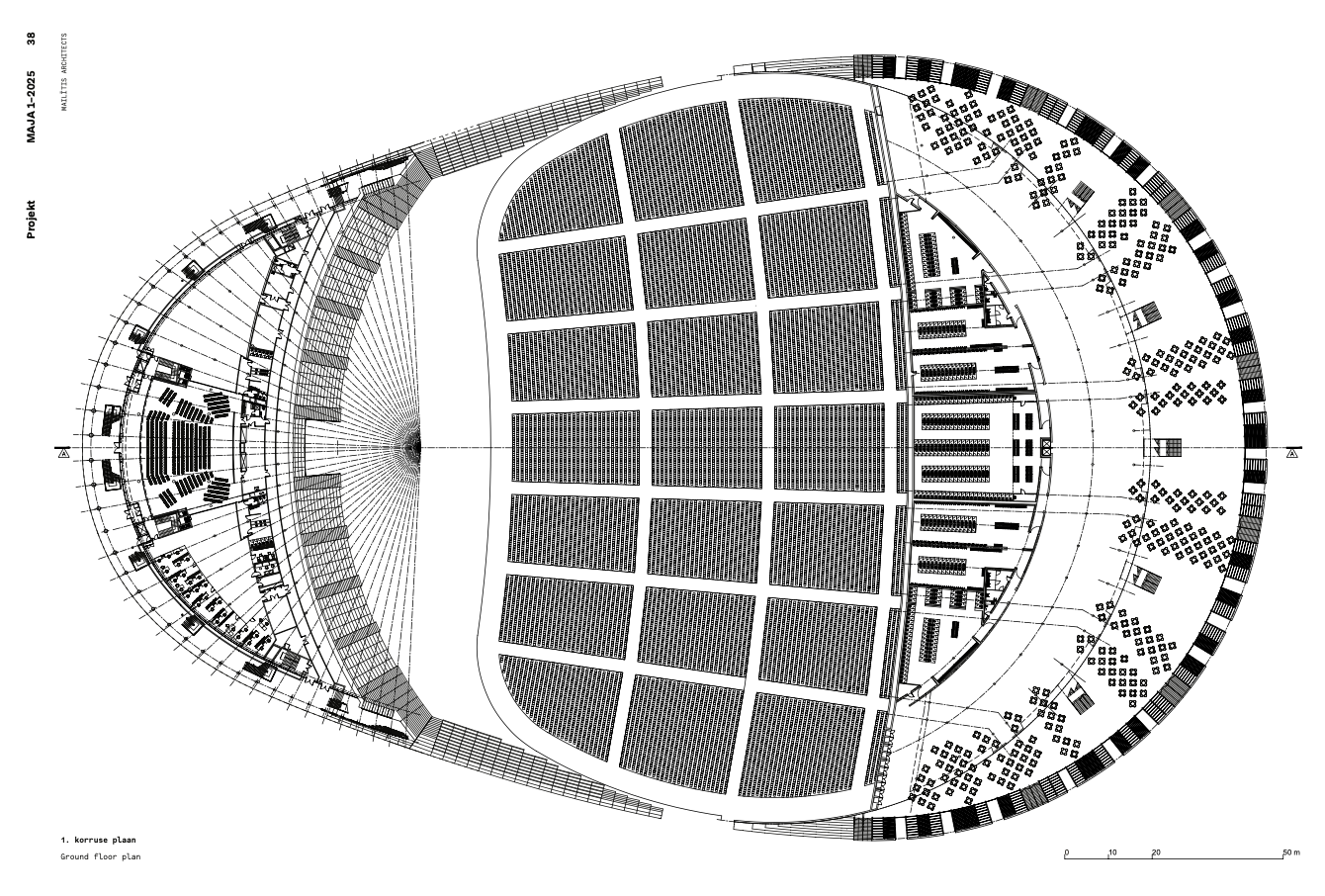
‘In the Forest Park, architecture becomes music, but not the petrified kind of music that architecture is sometimes said to be, but simply a musical instrument—indeed, the song festival stage is probably the largest musical instrument in the world. Quite a wild typology. The acoustic solution looks very much to the forest—the authors call their concept ‘wild acoustics’. The forest processes sound in its own way, creating reverberations in the wild as a flurry of tree trunks and leaves reflects acoustic waves in a concerted manner while also refracting and scattering them. Thus, the back wall of the festival stage is not a traditional sound-reflecting membrane, but composed of many small parametric elements supported by a fabric membrane at the back. As an architect, I am not qualified to assess the resulting acoustics or how this strip of artificial forest compares to more traditional solutions in making thousands of voices ring out on a large field, but it was supposedly designed specifically for choir singing and large masses, and minding the fact that part of the audience is very far away from the performers. Nowadays, we are spending our time in increasingly noisy spaces anyway, and thus, all the song festivals are supported by amplification so that even club-hardened ears could grasp the softer runic songs from the other end of the stadium. The visual eloquence of a space as well as its diversity and suitability for a wide range of events are nowadays considered more important than acoustics, unfortunately.
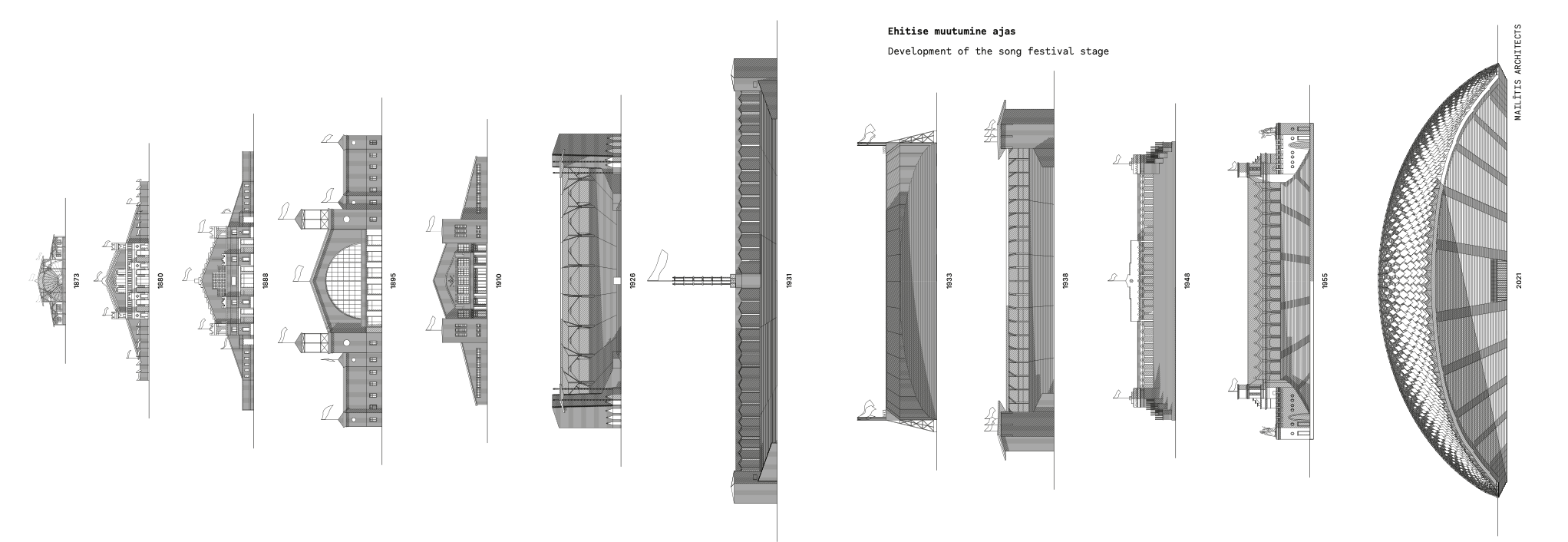
Landscape
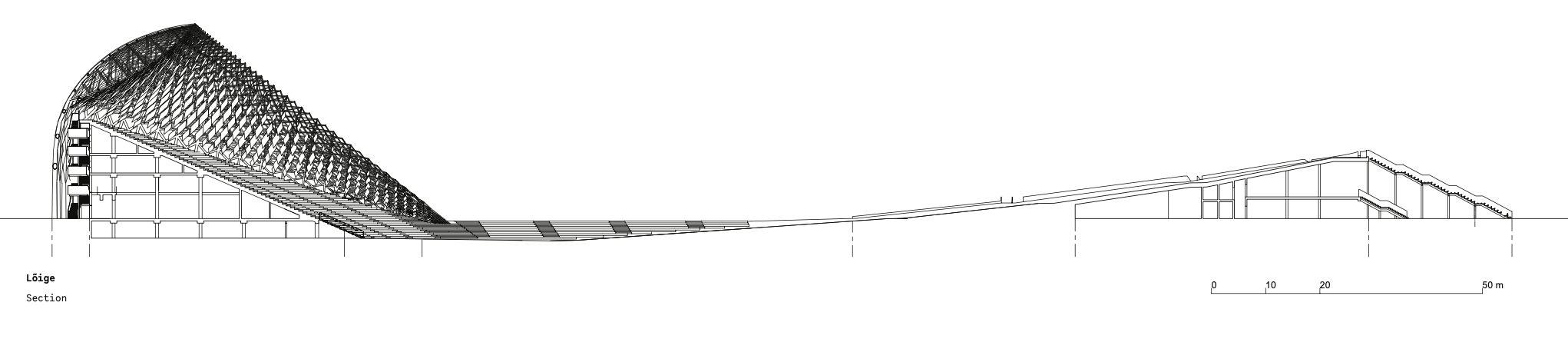
Although Baltic song festival stages have typically been arched—directing sound and fending off precipitation, towering up and over the choirs—the one in Riga is spread out instead. The smaller roof is attenuated, shifting the emphasis to the stairs. Who cares about the rain! The stage and the spectator area form a consistent whole—the former is not really towering at all and the latter gradually rises. The result is a solemn bog island, distinct from its surroundings, with a range of colours that makes it look like it is stuck in an eternal winter. It stands out in the summer, when bright nights bring people together to the festivities, and blends into the environment in the winter, when it is time to burrow up and wait patiently for the days to get longer again. It is both unusually contrast-rich and hide-and-seeky, complementing its abundance of meanings with an archetypical identity-related pearl. It could pass as a frozen lake, a bog island full of blueberries that crops up from the landscape, or a large primeval egg of the Latvian nation from which a warbling songbird hatches in the summer.
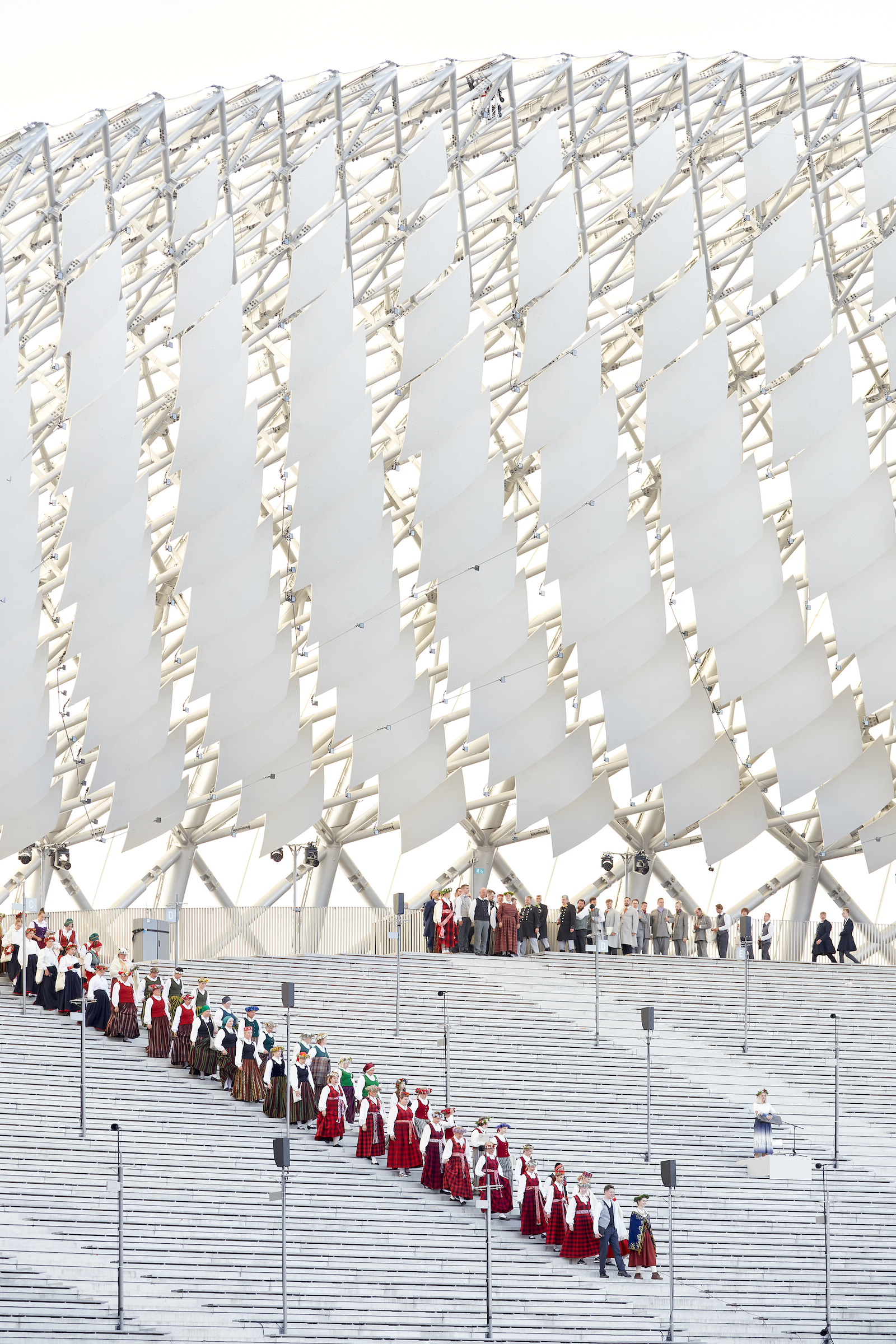
Photo: Madara Kupla
Boreal postmodernism
I have a vague gut feeling that postmodernism is undergoing a certain renaissance in our region. Or at least that it should—for it is time. Last year, we were walking with a small group of architects in sunny Venice through Ex Saffa, a postmodernist residential development in Cannaregio designed by Vittorio Gregotti, when we acknowledged this moment for postmodernism and decided that we should join forces in this regard. The emerging grouping, so far on hiatus, called itself the Villem Künnapu Association of Tallinn Postmodernists. I would venture to say that the very same sensibility is embodied in the architecture of the Latvian song festival grounds—the same minimalist postmodernism in the style of Mailītis.
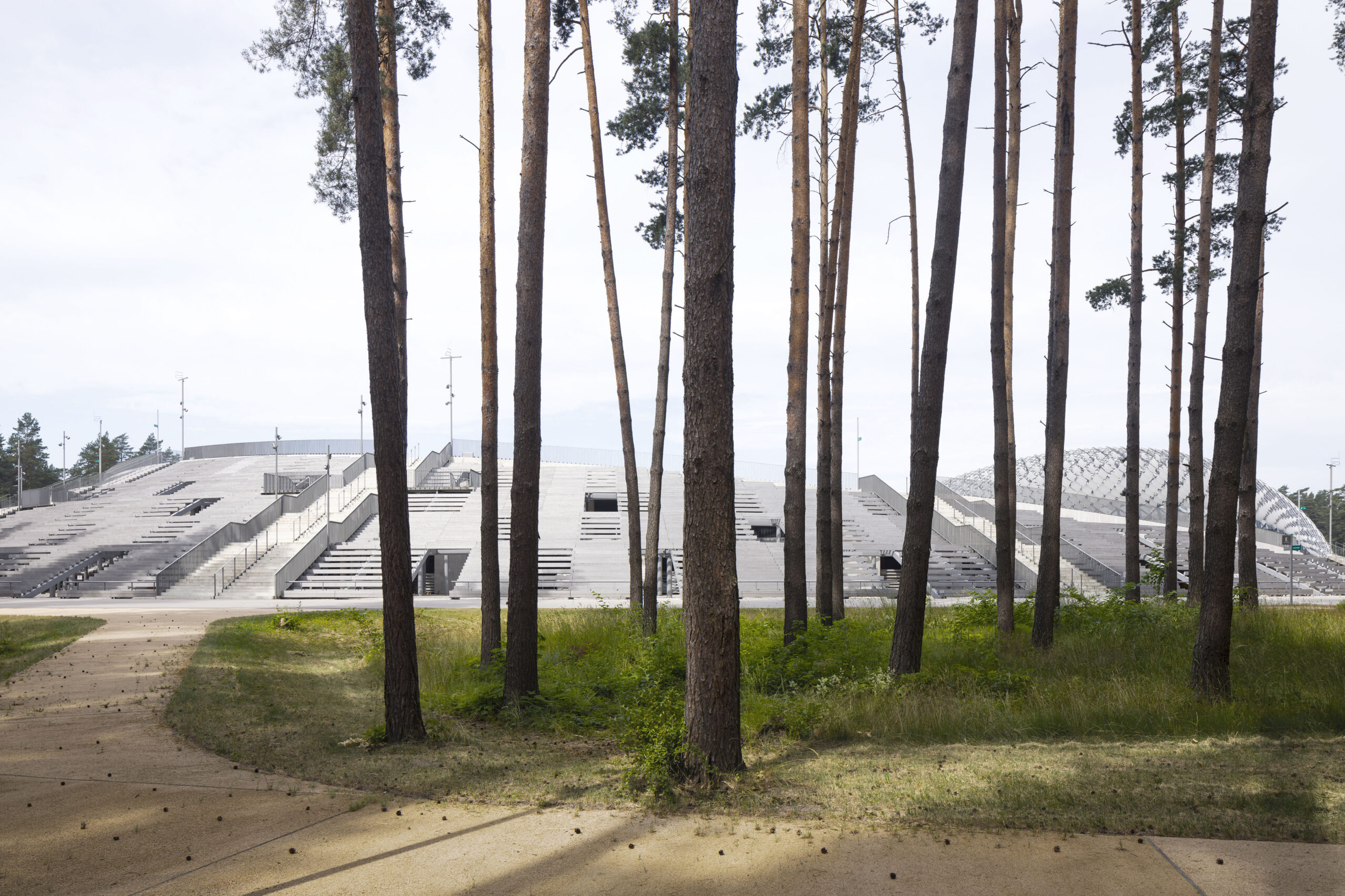
Photo: Ansis Starks
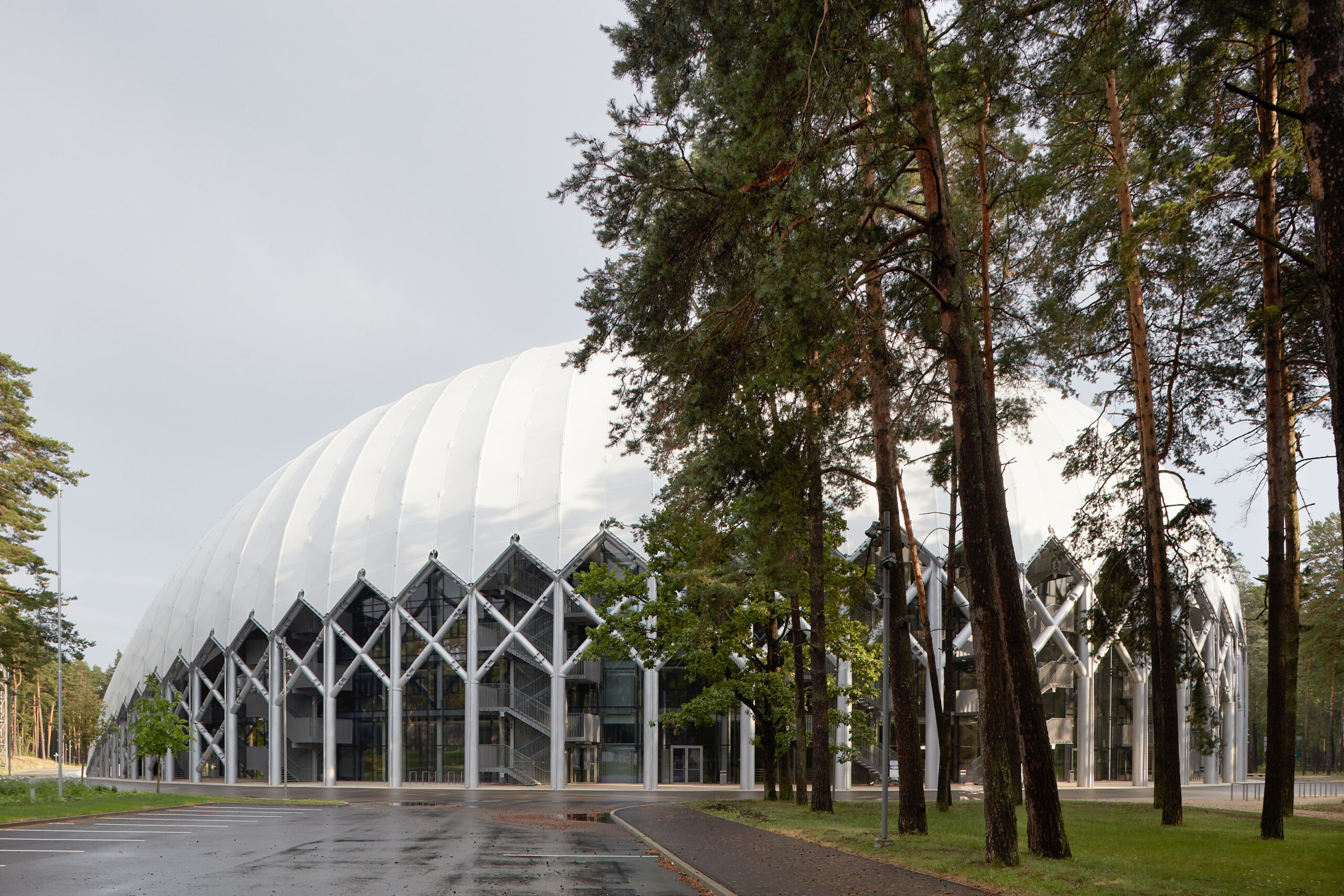
We generally perceive postmodernism as an exaggeration, a slapdash scattering of symbols and references, but the modest and delicate mythopoetic references at the song festival grounds in Riga could be called boreal postmodernism. It is the sort of architecture that functions primarily on the level of indexicality—the references here are not one-to-one; rather, this architecture refers, in the manner in which smoke refers to fire, to a certain recognisable spatial quality. It interprets, but the meaning is still discernible. It is a little like freezing winter, a little like budding spring, a little like buzzing summer, a little like colourful autumn. Only slightly towards the forest, but deliberately in broad brush strokes. Comprehensible, but not intrusive. This is indeed the way to turn forest into architecture—forest becomes great and significant again.
KARLI LUIK is an Estonian architect working in the architecture office molumba.
HEADER photo by Ansis Starks
PUBLISHED: MAJA 1-2025 (119) with main topic BALTIC EXTRA
1 Veljo Tormis at the Latvian Song Festival in 1990, after the choirs had performed his song ‘Trīszvaigznes’ (‘Three Stars’) in Latvian. Guntis Šmidchens, ‘Baltimaade üldlaulupidude laulutraditsioonid ja pärand’ [‘Singing Tradi- tions and Heritage of the Baltic Song Festivals’], Mäetagused 63 (April 2016): 29. Translation of the verses: Guntis Šmidchens, ‘A Baltic Music: The Folklore Movement in Lithuania, Latvia, and Estonia, 1968–1991’ (PhD diss., Indiana Universi- ty, 1996), 38.
2 A paraphrase of a verse from the Estonian poem ‘Minul on karvased sääred’ [‘I Have Hairy Legs’] by Kalju Lepik.—Ed.
3 The first song festival took place in 1843 in Zurich. In the Baltics, the song festival tradition goes back to 1869 in Estonia, 1873 in Latvia, and 1924 in Lithuania.—Ed.