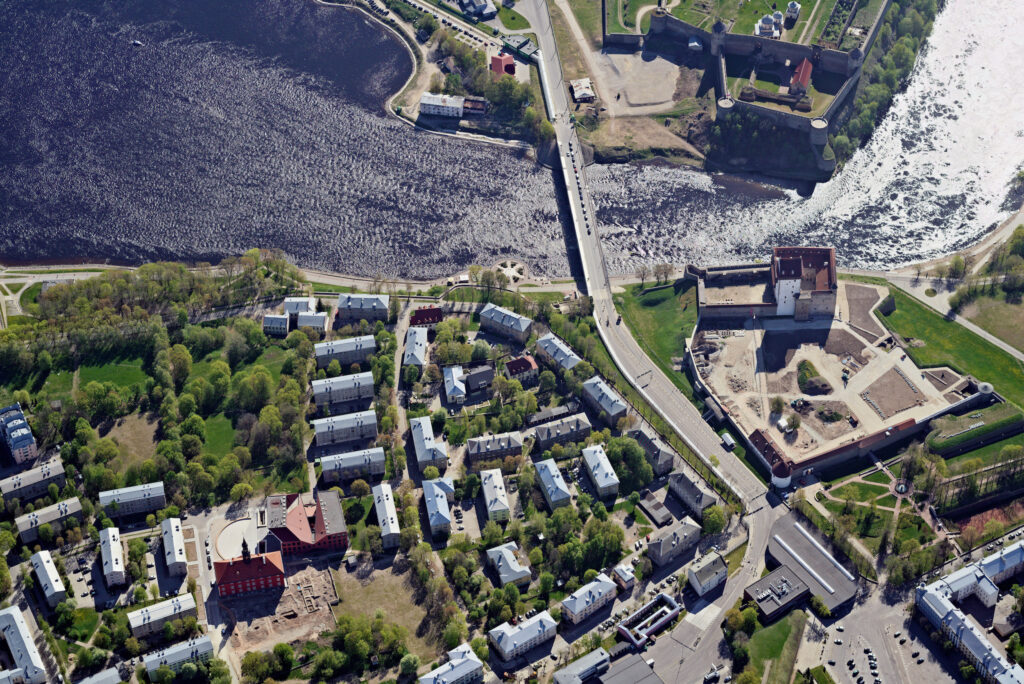
Francisco Martínez’s and Joosep Kivimäe’s inventory of spatial objects in Narva, a city on the Estonian border with Russia.
Any representation of a borderland is a way of negotiating power and acting upon the territory. For instance, we could look at the frontier between Russia and Estonia from the air—from the viewpoint of a drone or through the eyes of Mikhail Bulgakov’s Margarita. We could also follow the wild geese during their migration like Nils Holgersson did in his wonderful adventures, as recounted by Selma Lagerlöf. Alas, this article is not based on any such flying experiences. Rather, it is an inventory of spatial objects in Narva, a city on the Estonian border with Russia.
Since its founding by the Danes and its days in the Hanseatic League, Narva has appeared as a centre out there. In its recent history, we can point out three particularities: a frontier location, radical demographic changes, and intensive industrial activity—most of Estonia’s electricity is generated there using oil shale. The city was completely destroyed during the Second World War when the frontline passed over it in 1944. After the war, Narva was rebuilt on the backdrop of expanding energy infrastructure and heavy industry and repopulated with workers from all corners of the USSR. After the restoration of Estonian independence in 1991, the reality of Narva has revolved around de-industrialisation, a transnational border, and also ethnic issues—Ida-Viru County has become the Other or the shadow of Estonian society.
In 2022, the municipality organised an online vote to choose a new motto for Narva. More than 700 people participated in the poll, choosing ‘Narva—Europe Starts Here’ as the new slogan for the city to replace the previous one ‘The City of Good Energy’. Within a single century, Narva was ruled from St Petersburg, then Tallinn, then Moscow, and then Tallinn again (with some input from Brussels). Still, the city is characterised by a resilient effort to keep multiple relations open. Over the past decade, the town has turned into a hub of expedited Europeanisation. We can see this in the EU-funded promenade around the bastion walls, where all the member states and their years of accession are listed on the pavement. We also encounter Europeanisation in the retrofitting of apartment blocks through the KredEx funding programme.
Being at the border means standing on an edge. Indeed, the border in Narva does not simply evoke two sides of a picture but a transnational connection point at the intersection of different capital and energy flows, legal regimes, religious faiths, languages, and currencies. A border serves to designate a nation-state’s entitlement to a territory (including aquatic and subterranean spaces) but also produces a particular kind of connectivity through which both difference and contact are intensified. It generates a performative antagonism that affects wider relations and representations, as well as an ambivalent material culture.
Spatial objects
Alexander’s Cathedral:
Before the Second World War, there were 15 religious buildings in Narva. Alexander’s Cathedral was built in 1884 and named after the Russian emperor who was killed in an act of terrorism. The bell tower was destroyed in the Second World War and rebuilt only in 2008. Over €2.5 million in public funds, with 40% contributed by the EU, were spent on restoring the church. Part of the renovation cost was financed with a loan. In 2015, the congregation went bankrupt and repairs were left unfinished. A year later, the Estonian state and the Estonian Evangelical Lutheran Church stepped in and purchased it together.
Bastions:
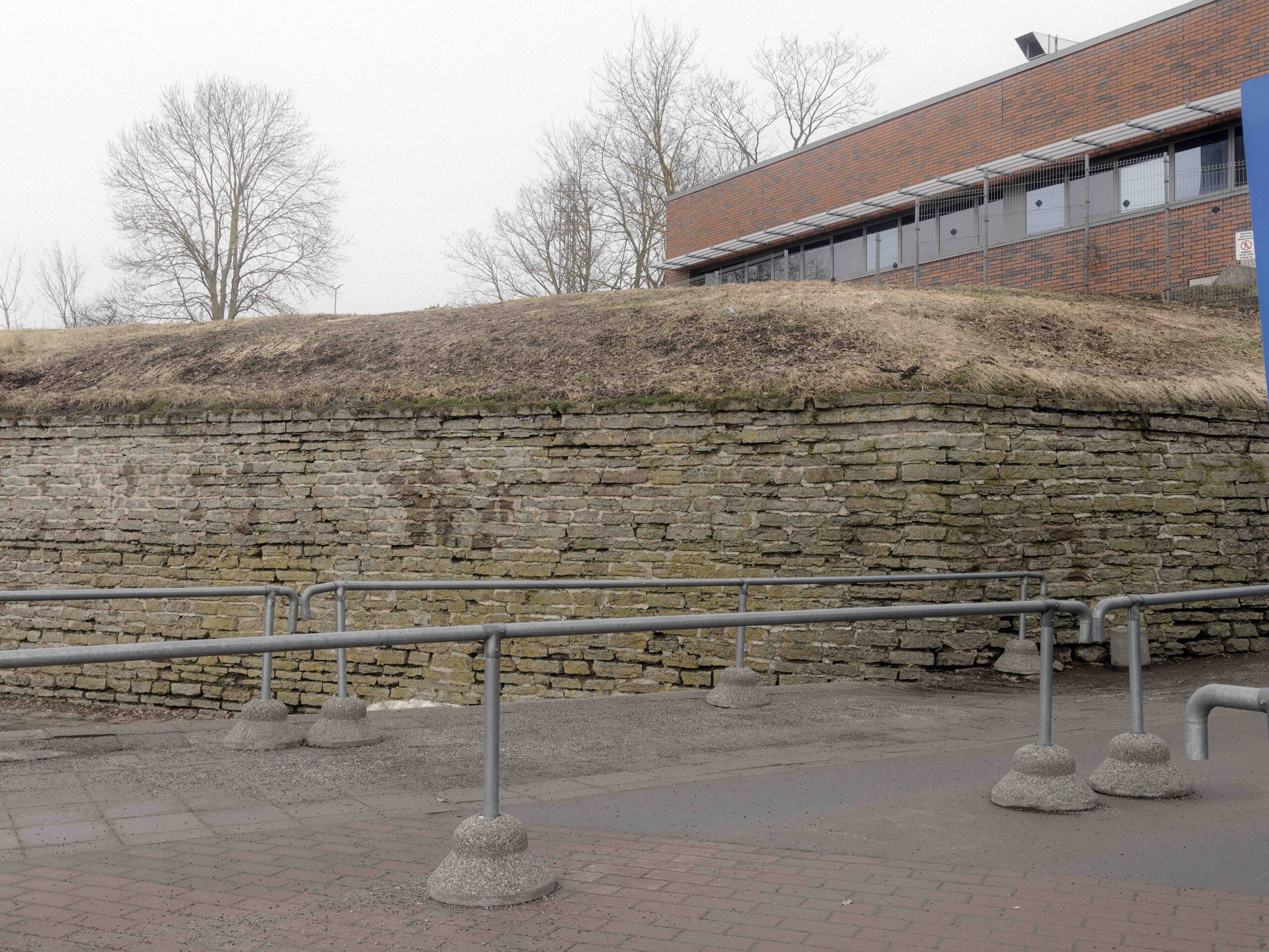
In the Baltic provinces of the Swedish Empire (1629–1721), Narva was the second most powerful fortress after Riga. Given the strategic significance of the place, it is no wonder that bastions and a castle were built here: key battles of the Livonian War, the Great Northern War, and two world wars took place in the region.
Bat houses:
The abundance of bastions and caves makes Narva rich in bats, to the point that the municipality installed a series of ‘hotels’ for these nocturnal mammals. These boxes are made of wood and filled with narrow chambers where bats can rest and stay warm during the day.
Basements:
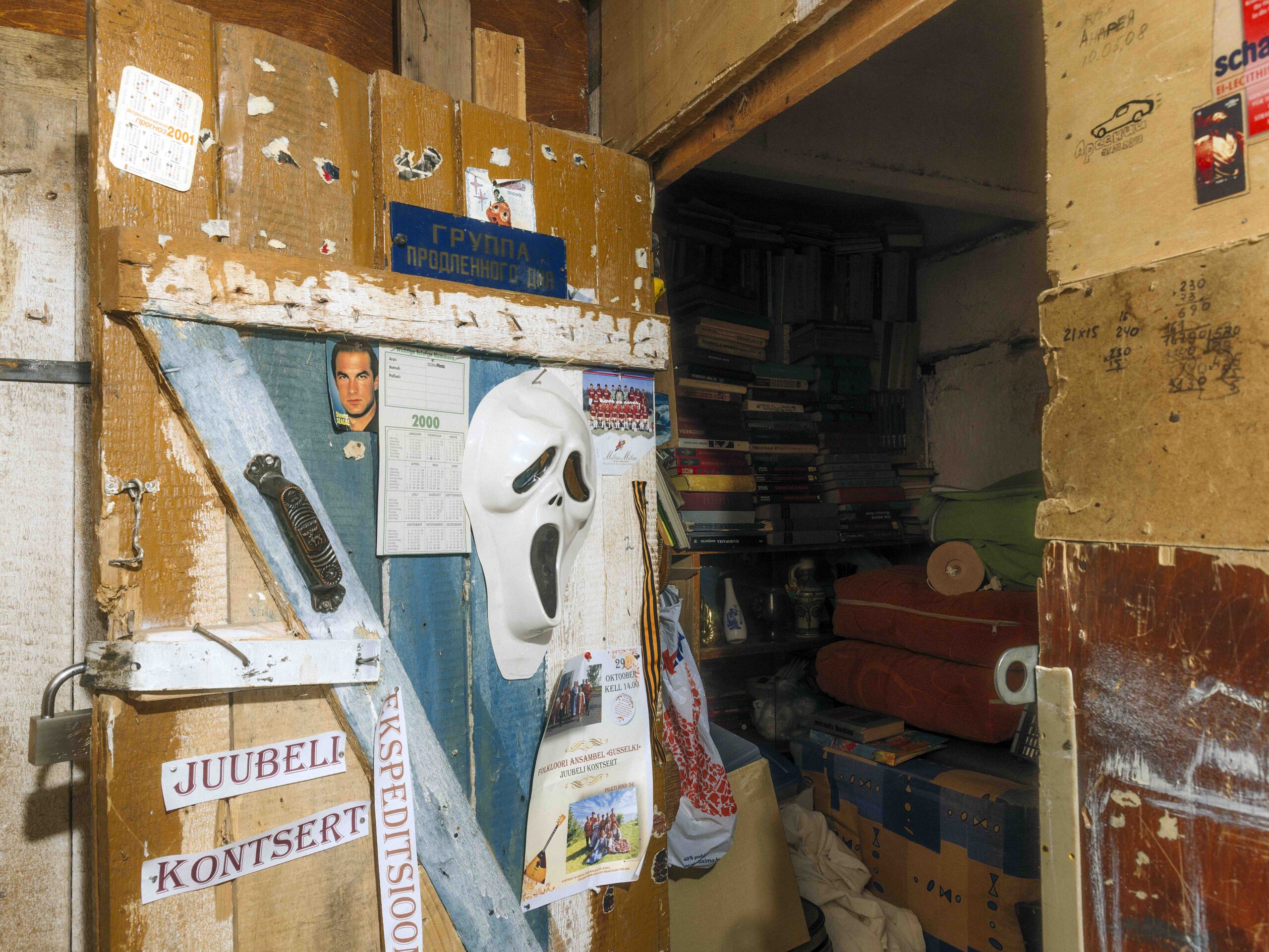
A basement serves as the backstage of a home, whereby the dialectic between what is concealed and what is shown to others unfolds. It can be used as a family archive, a material manifestation of subconscious desires, a playground for what is repressed, a corner for self-expression, a room for historical and material density, and also a temporary technological solution. The possibility of keeping things in the shadows is central to the construction of a sense of self in a liminal region, as identity and memory are performed not only with regard to what is actually in plain view, but also around the presence of what is not.
Bunkers:
Narva was rebuilt from scratch based on modernist principles of urbanism as well as Cold War military scenarios. Once Estonia regained its independence in 1991, many of the bunkers were abandoned or demolished. For decades, there was no need to prepare for a total war; the situation has changed, however, and these fortifications are once again attracting attention. The Estonian government plans to build 600 new bunkers along the border, creating a Baltic defence line with Latvia and Lithuania. Authorities have also started to investigate what lies beneath the cities. As a side effect of the Russian invasion of Ukraine, Andrei Mitkovets’ underground gym Albatros, located a few meters from the border, started to receive repeated visits by various state and municipal officials. After having rented this underground shelter for 30 years, he left the gym behind and moved to Jõhvi.
The erection of bunkers is usually meant to convey safety. For that purpose, military engineers have used diverse means of camouflage to blend these structures into the landscape. However, bunkers cannot gracefully become ruins and be incorporated into nature afterwards because of their political negativity.
Buoys:
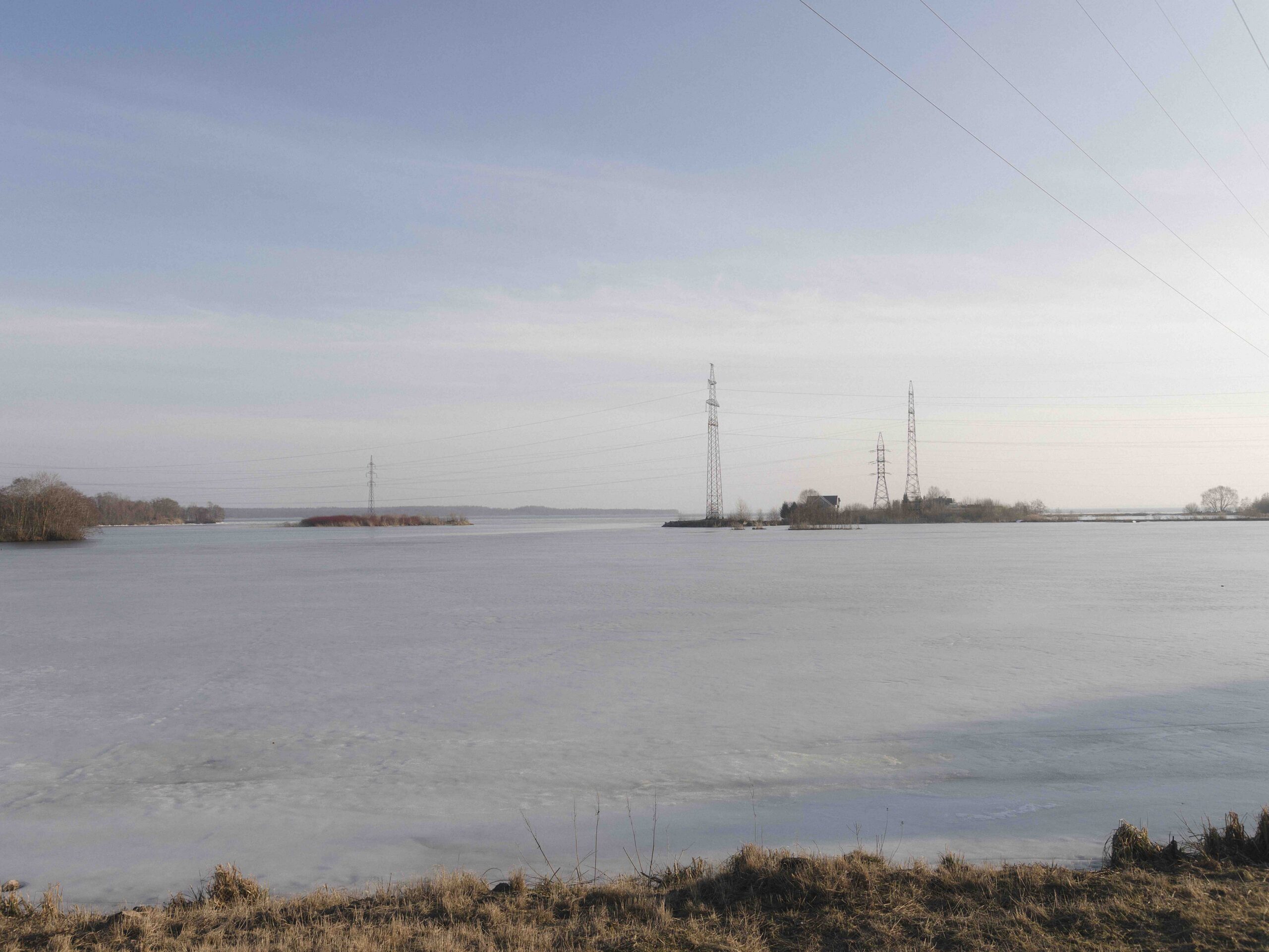
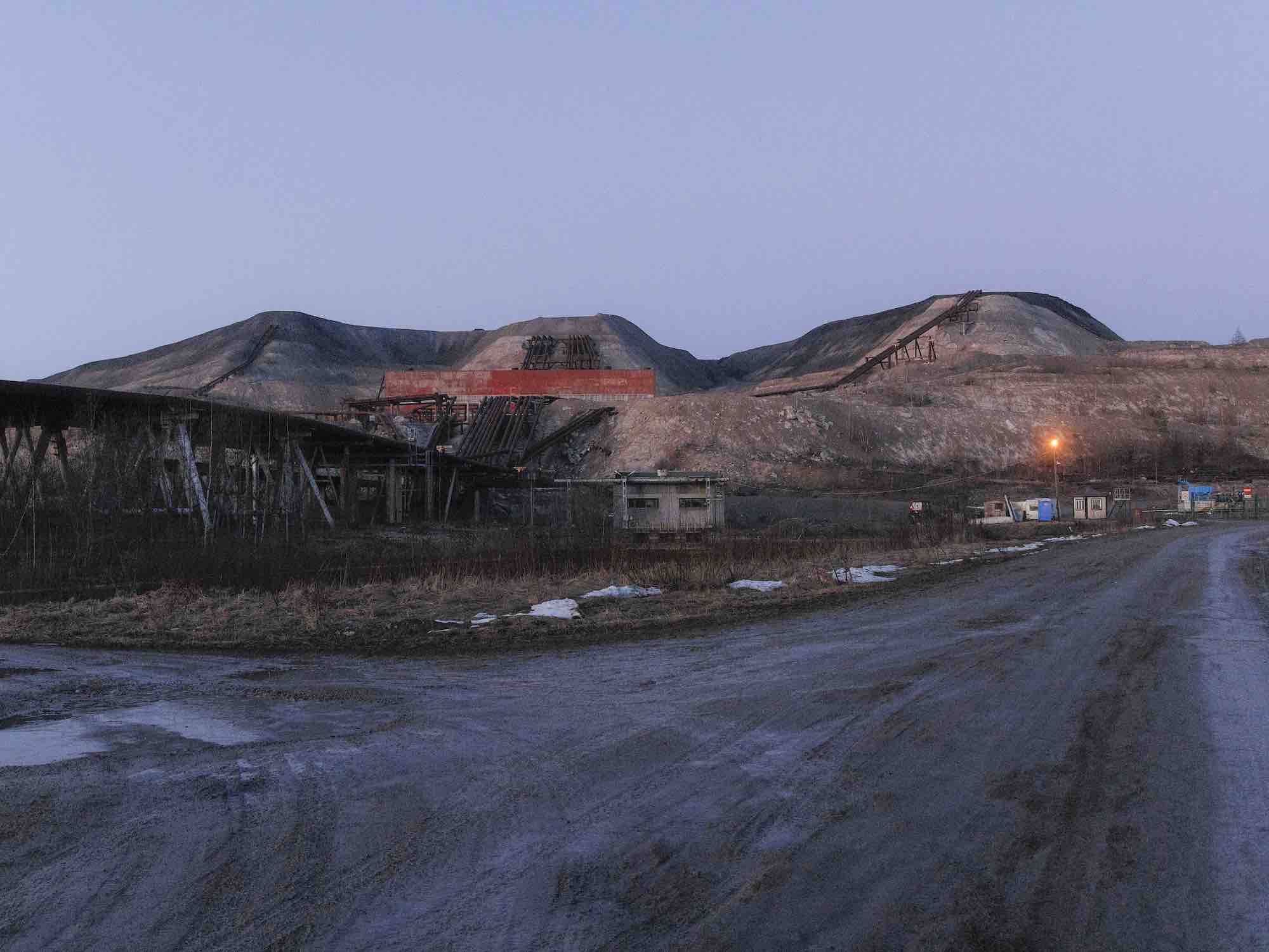
For an hour and a half, Dmitri and I passed through the canals of the water reservoir on a boat, looking at the forest and contemplating the ash hill generated by oil shale processing. It is a plateau of 800 hectares, produced by 230 million tons of residual ash, a byproduct from the nearby power plants. On the way back, I asked Dmitri to pass closer to the border with Russia, demarcated on the water with a series of yellow buoys, which indicate the beginning of the buffer zone between the two countries. When we were a hundred meters away, our engine broke down, so Dmitri had to repair it right there on the water. Less than ten minutes after our floating standstill, and after he had already managed to fix the engine, a patrol sailed past the yellow buoys.
On 23 May, 2024, Russian border guards removed 24 buoys demarcating shipping lanes from the river, thus threatening to redraw the shared borders between the two countries.
Cryptomining:
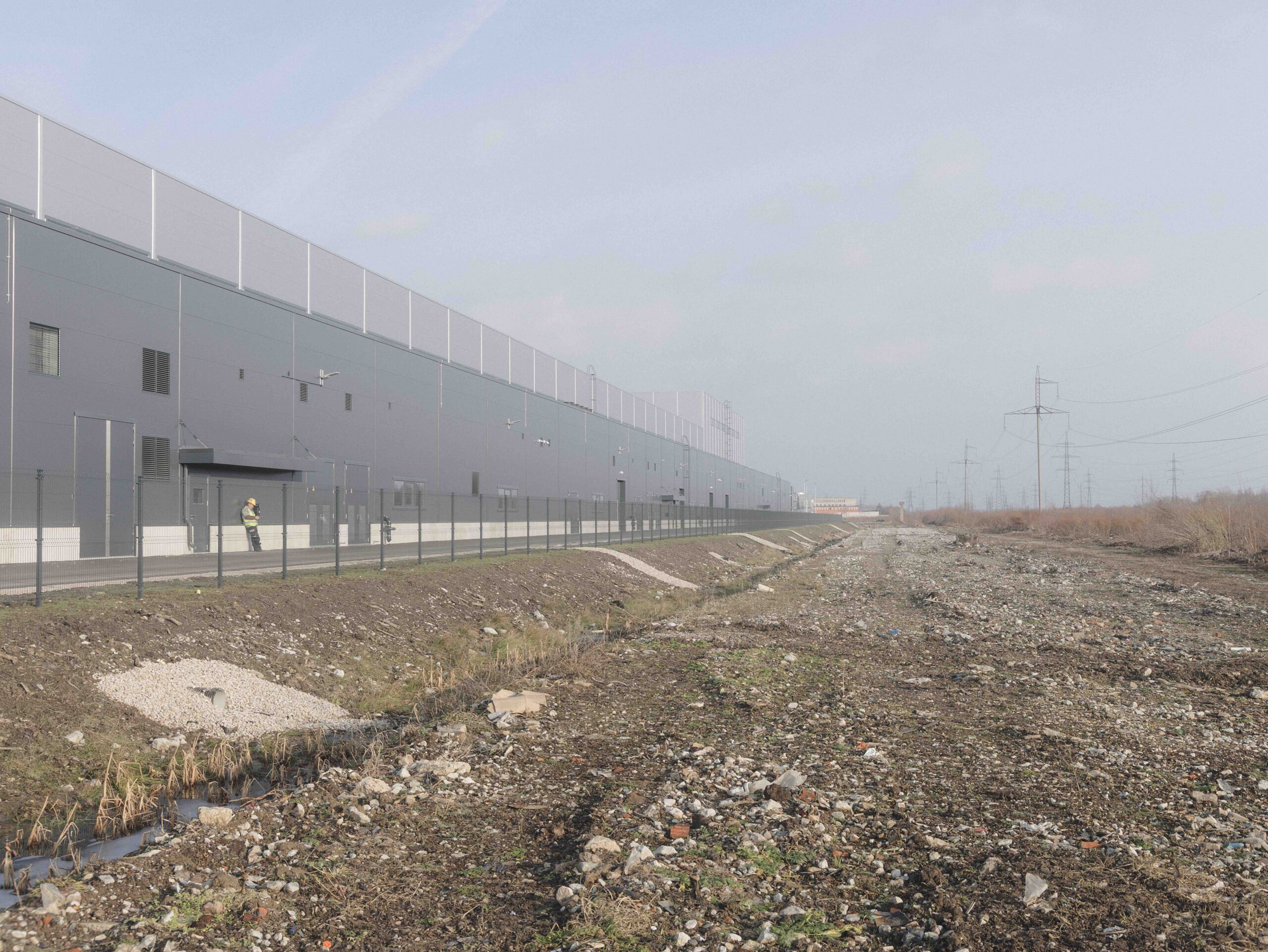
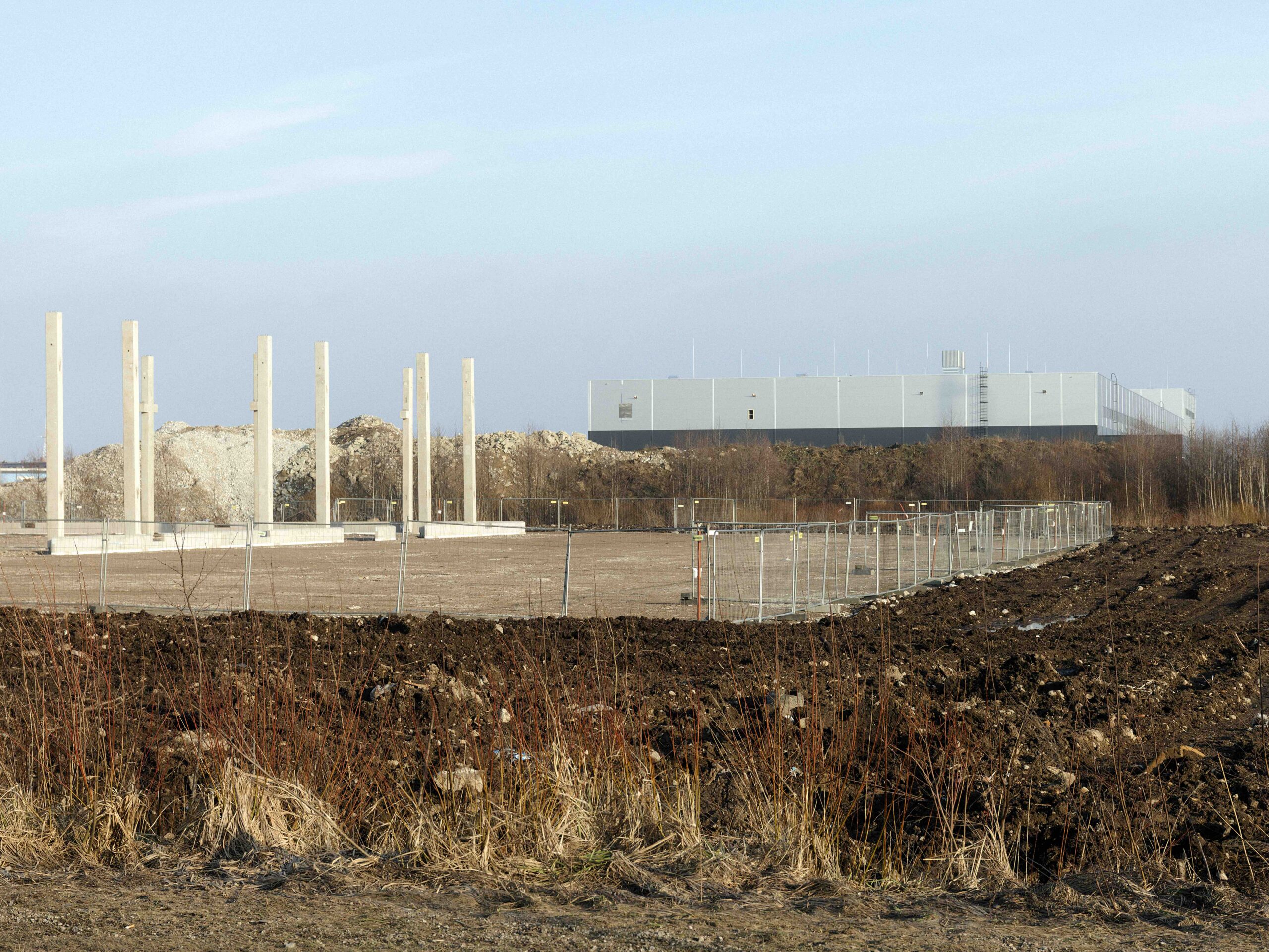
While energy production always takes place at a particular location, data storage seems to be something that is disentangled from localities, and scaled into a global and virtual technological zone by combining corporate secrecy and local invisibility. Cryptomining in Ida-Viru County is making new use of old Soviet infrastructure but demands also new infrastructure—it is estimated that the activities consume over 1% of the electricity of the whole country. This year, two Estonians pleaded guilty to a $577 million cryptocurrency fraud scheme.
Dachas:
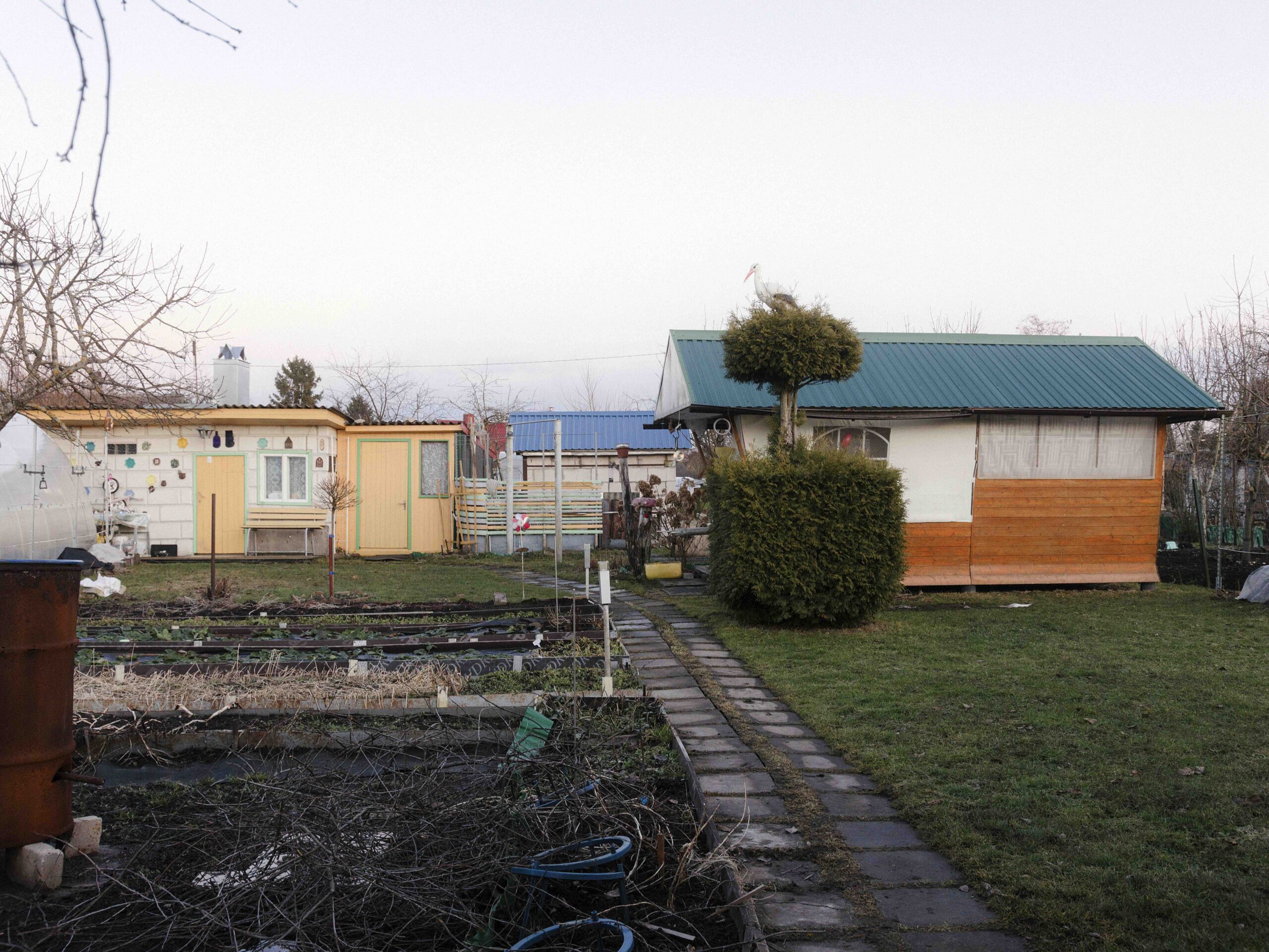
Dacha culture in Estonia dates back to the Russian Old Believers who settled around Lake Peipsi in the seventeenth century. After the Bolshevik revolution in 1917, the dachas were nationalised and used by leading communists. However, the dacha culture got a new lease of life after WWII. In the 1950s, allotment gardens began to be distributed to factory workers to address the chronic food shortage and provide a space for spending free time.
Around Narva, there are over 10,000 dachas that belong to 50 gardening cooperatives of various sizes. The plots are usually 600 m2 in size and host a self-built summer house (officially up to 40 m2). In the dacha season, the municipality increases the frequency of buses so people (many of them elderly women) can work their garden plots. Yet life in a dacha is not always easy. Common issues include limited access to drinking water, occasional flooding, and the lack of a proper sewage system.
Energy infrastructure:
The 1,520 mm gauge railroad (different from the European standard) coming from Russia runs through the city, effectively dividing it. However, oil, gas, and electricity transit from Russia seems to be losing its importance, since the Estonian state has been making strategic efforts to integrate the country into European networks.
Façade (of the Narva College):
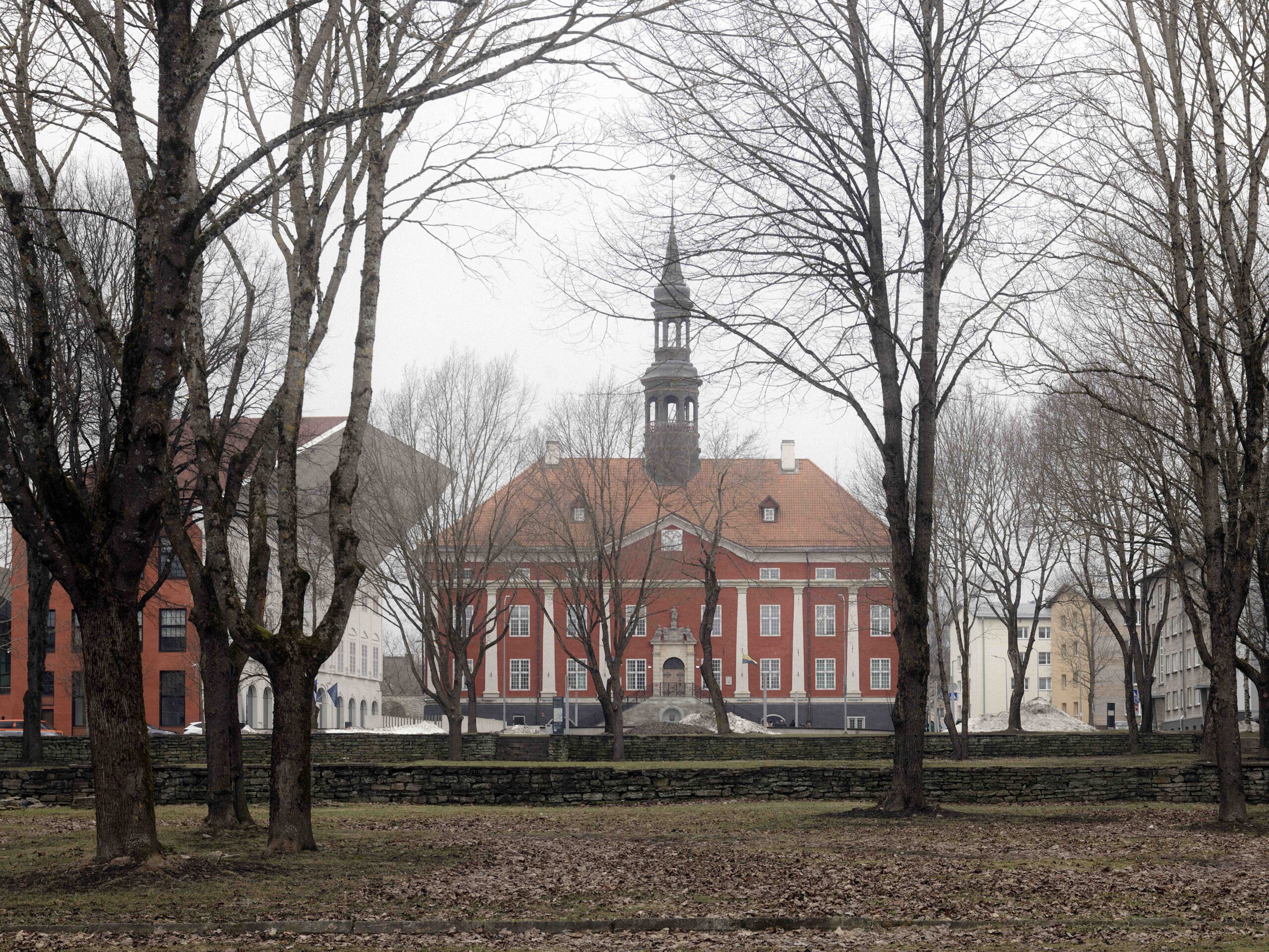
Built in 2012, this was one of the earliest public investments in the spatial regeneration of Narva. The design tells us about the multi-layered past of the place by referring to the seventeenth-century stock market building that used to stand there.
Fences:
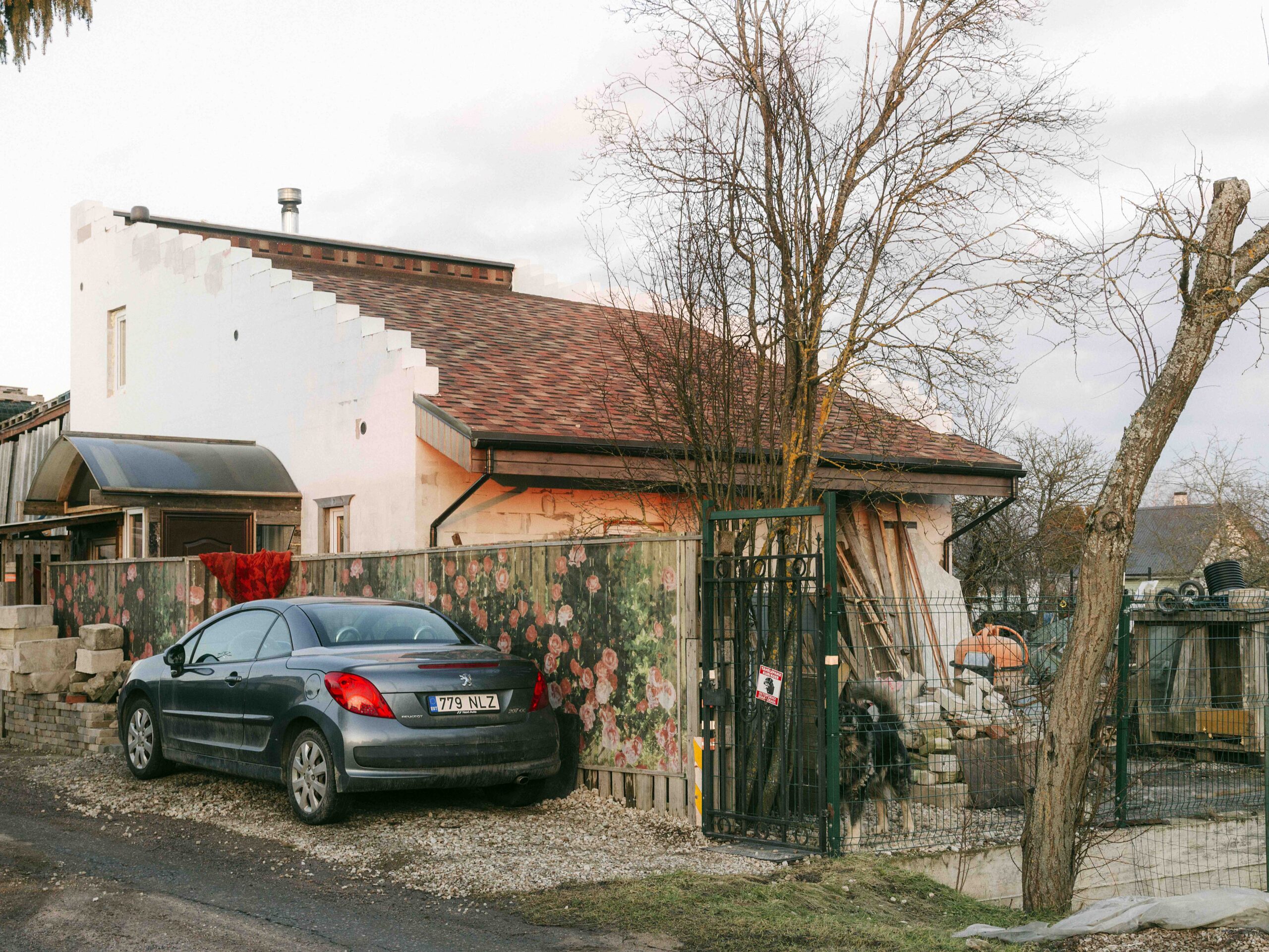
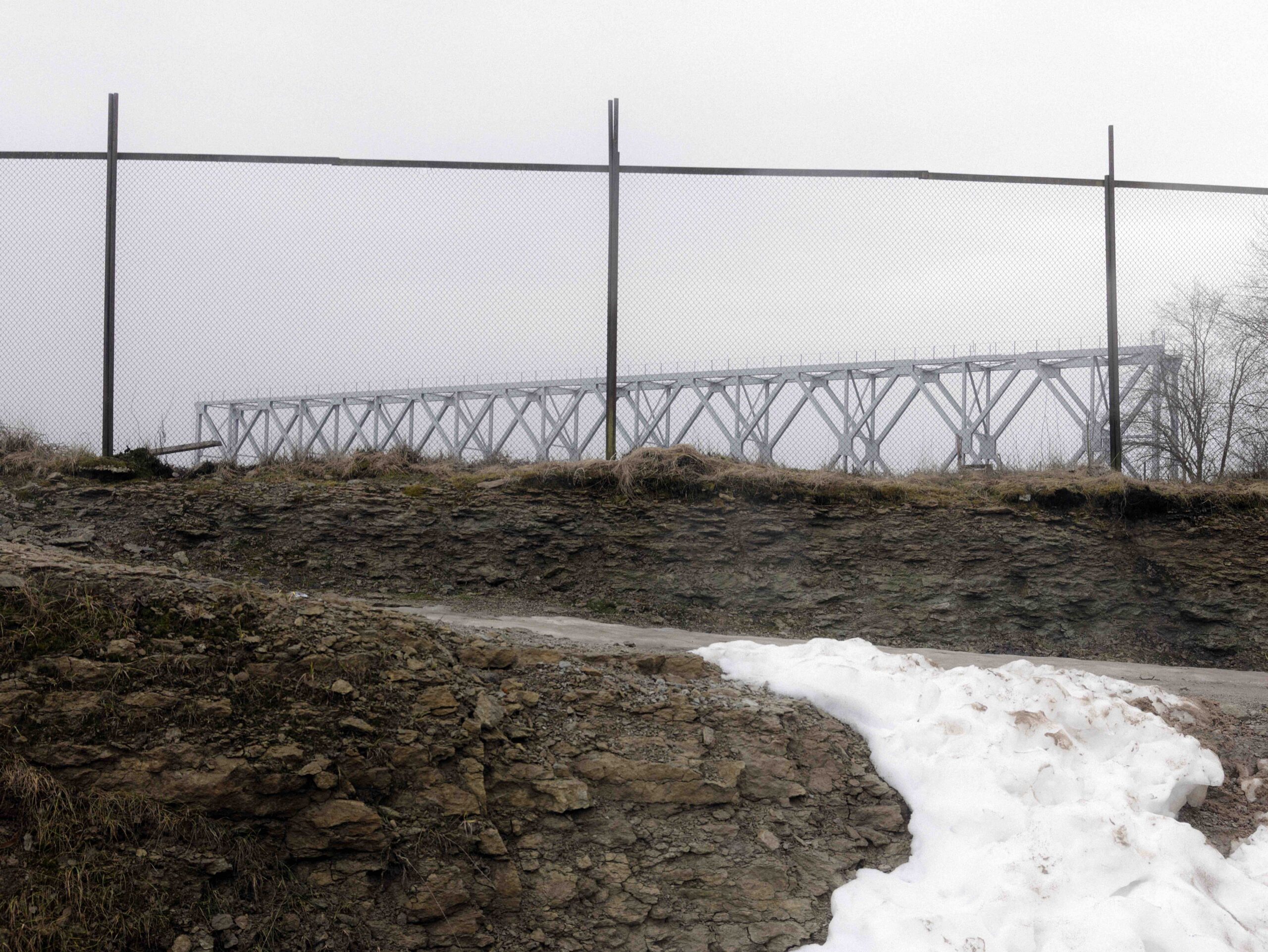
We can find two kinds of fences: weak ones, such as those surrounding the cottages, and hard ones, such as those marking the international frontier. In the dacha areas, agreed separations are valid as long as the neighbours get along well. Some of these fences do not coincide with the official lines in the property registers.
Friendship Bridge:
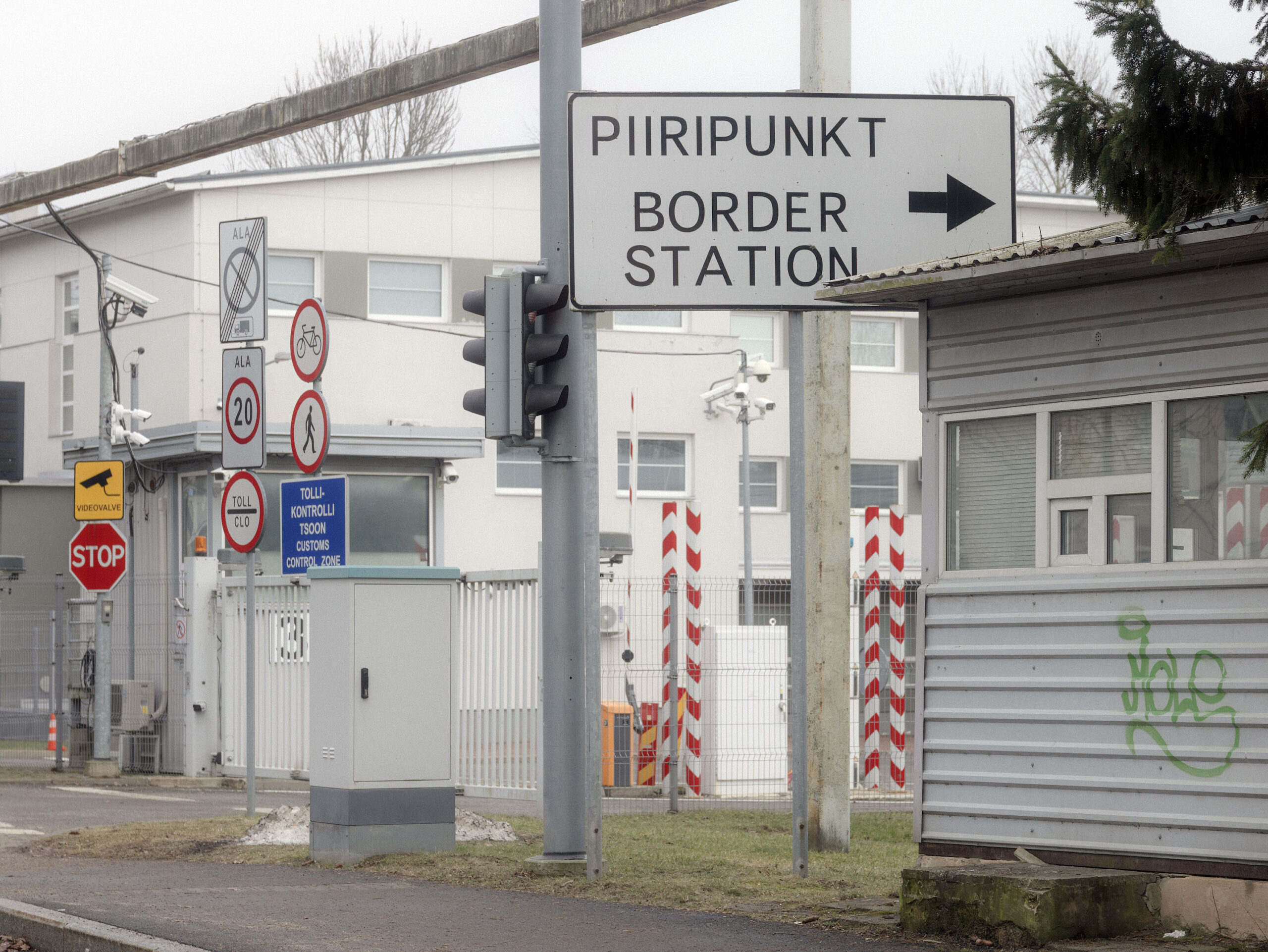
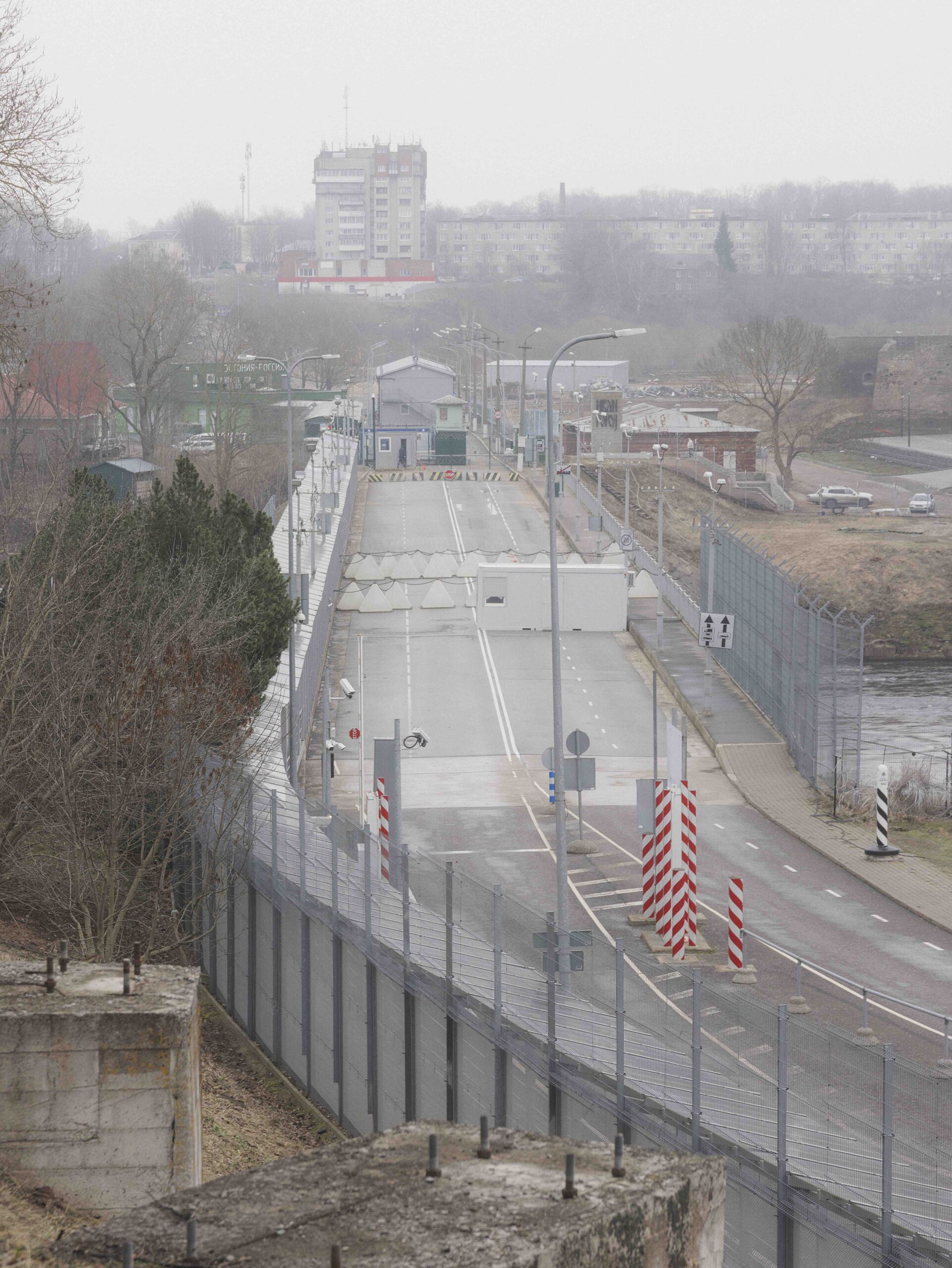
Bridges are spaces of crossing that simultaneously unite and separate. Every day, over 1,500 people from either side of the border walk through the checkpoints between the two castles. Before the Russian attack on Ukraine, the number was three times higher.
Garages:
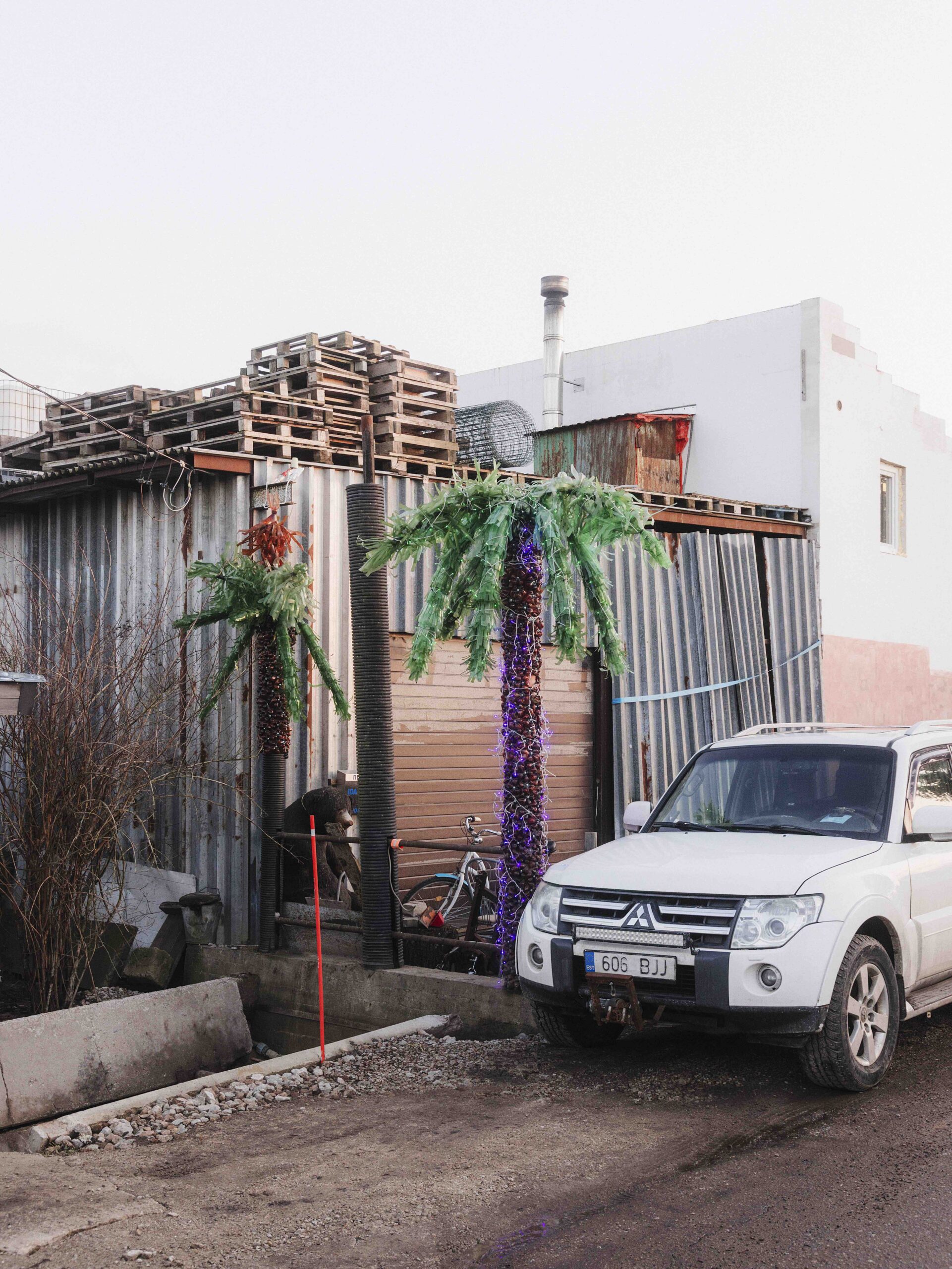
In the Soviet culture, garages were places for disconnection, individual enterprise, and trying out other forms of being in the world—places where people could take part in activities that felt independent of the state. In Narva, however, we can find two kinds of urban garages: the regular ones on land and the amphibious ones standing alongside canals. For the last sixty years, the canal area has been referred to as Kulgu, but people have been increasingly calling it ‘the Venice of Narva’.
Kulgu has a seasonal occupancy, mostly limited to summer months. But there are also those like Alexandr who live here all year round. Fifteen years ago, he sold his apartment and moved into a garage, which is styled with an eclectic taste. ‘I decorate my garage just as you decorate your apartment’.
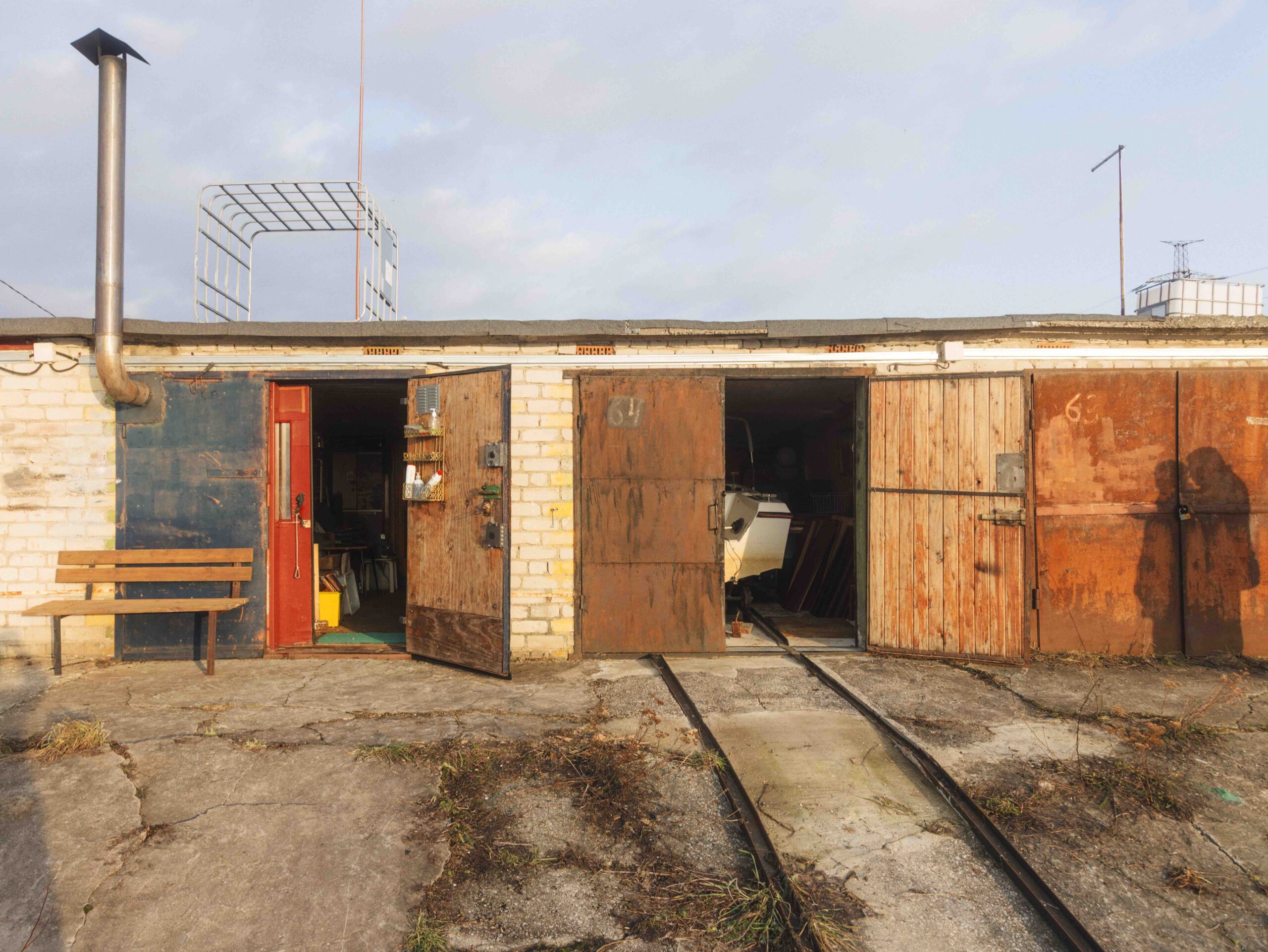
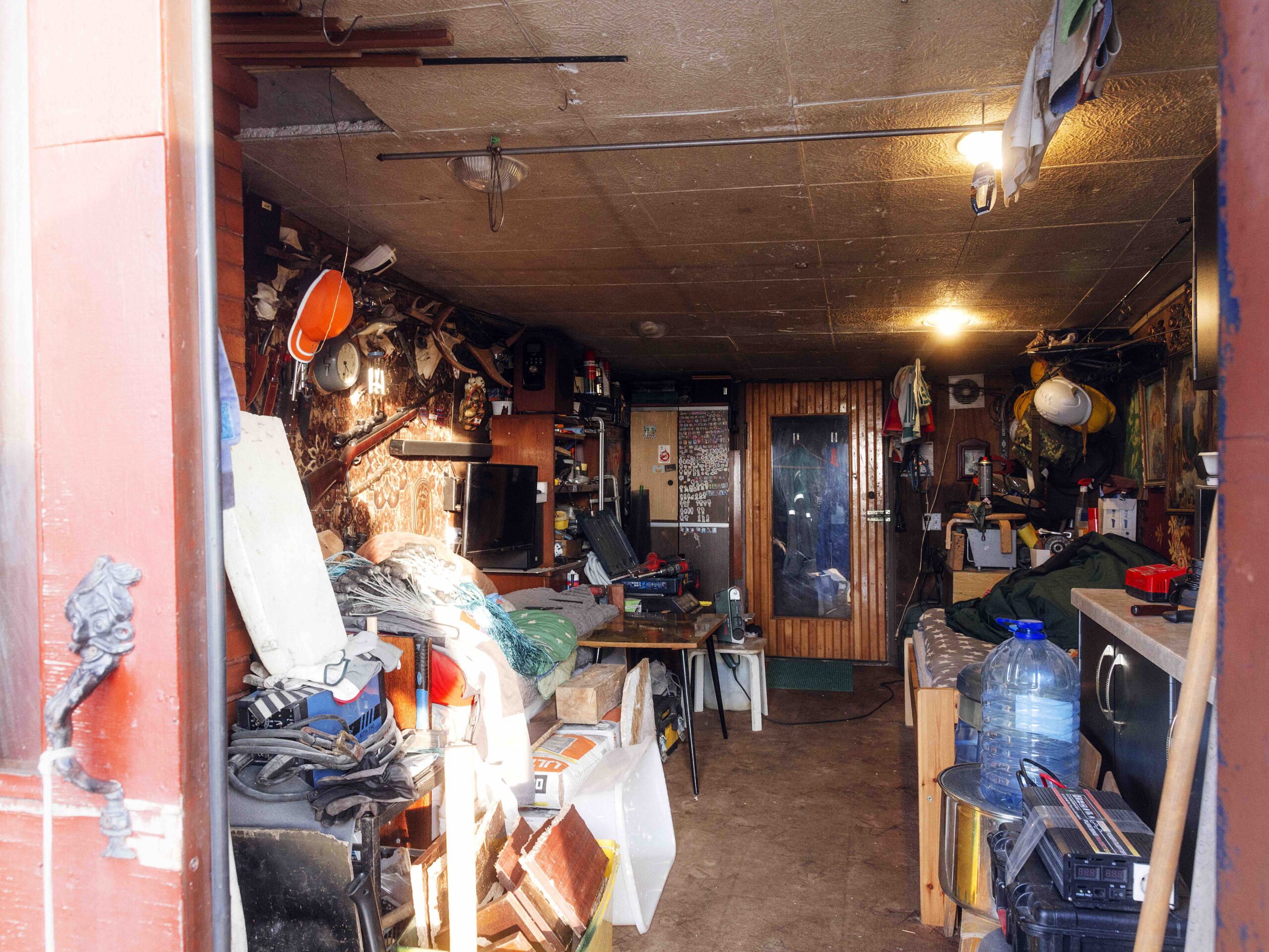
‘A sofa, a TV, a fridge; all that is a must. Also a mangal (barbecue) or a microwave, to prepare food,’ says Dmitri. He has all those appliances in one of the garages, while his tools and boat are stored in another. ‘Here, women are not needed,’ notes Vladimir with a quirky smile. ‘Sometimes we just watch TV together. Other times, like last night, we drink a bit of whisky, beer, and rum. You should have joined us yesterday,’ says Vladimir while pointing at Ivan, who adds that he likes to come here because ‘here, no one controls me.’
Igor kindly shows me his two garages—one for hanging out and the other for the boat and repair tools. He works as a welder and has built a metal dock with a bench on the top. He has been coming to Kulgu in the winter season ‘to prepare things for the spring’. In one of the garages, piles of things, tools, and materials with no evident usefulness keep accumulating. The other one reminds me of what Bachelard wrote about garages: a half-box resembling a nest. A hoarding nest, to be precise, since it is packed with different religious icons on the wall, next to six industrial helmets, a microwave, a bed, water tanks, cleaning products, clothes, and variously sized pieces of broken furniture.
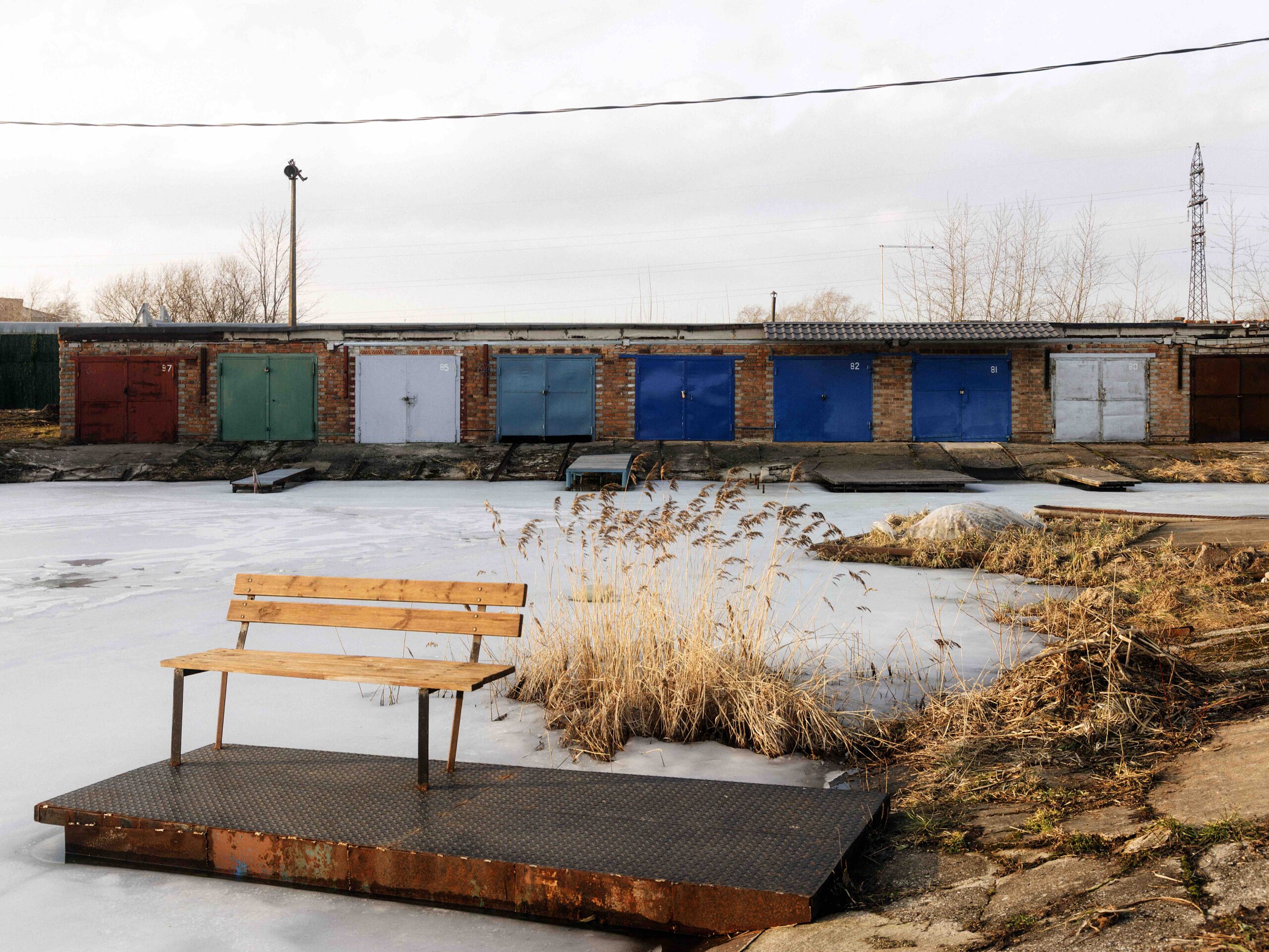
The ‘you can stay for now’ form of occupation began in the 1960s and has now lasted for more than sixty years. To buy an officially registered garage, one has to pay at least 3,000 euros. However, a garage with an uncertain legal status could be had for half the price. Sources differ on the actual number of users. The cooperative claims to have 242 members, while those who spend time here say that there are over 600 people making use of the garages.
Maquette of pre-1940s Narva:
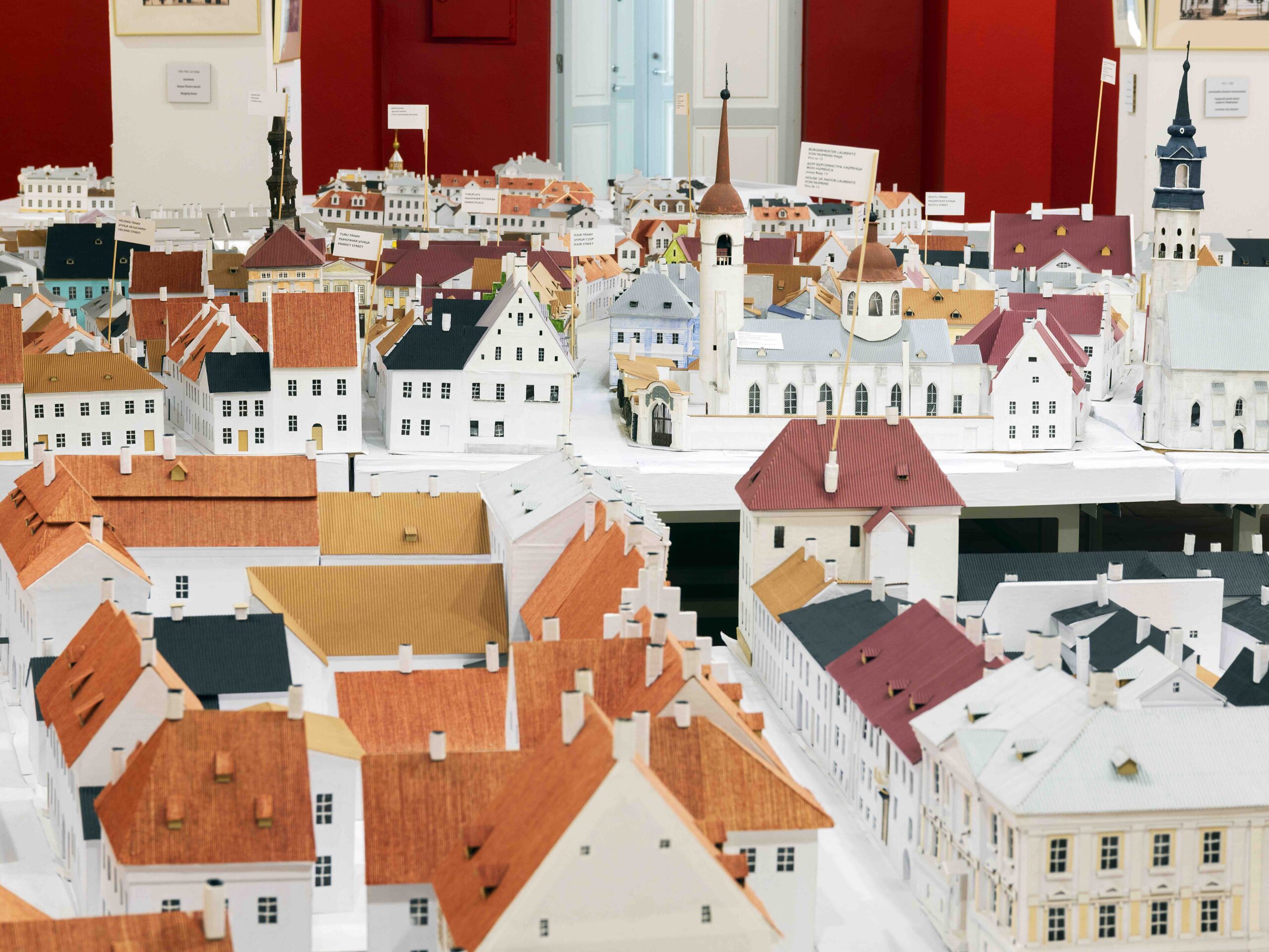
Fjodor Šantsõn has created a 1:100 scale model of the old town destroyed during the war. He started to prepare the layout in 1992, at home. In 2008, he was invited to bring the model to the town hall. Nowadays, the maquette can be visited at the Narva Museum. ‘It is sad to work with something that is lost,’ admits Fjodor.
Pushkin’s bust:
Erected in 1999 by local residents. The second monument in Estonia to this Russian cultural figure is in Kadriorg Park in Tallinn.
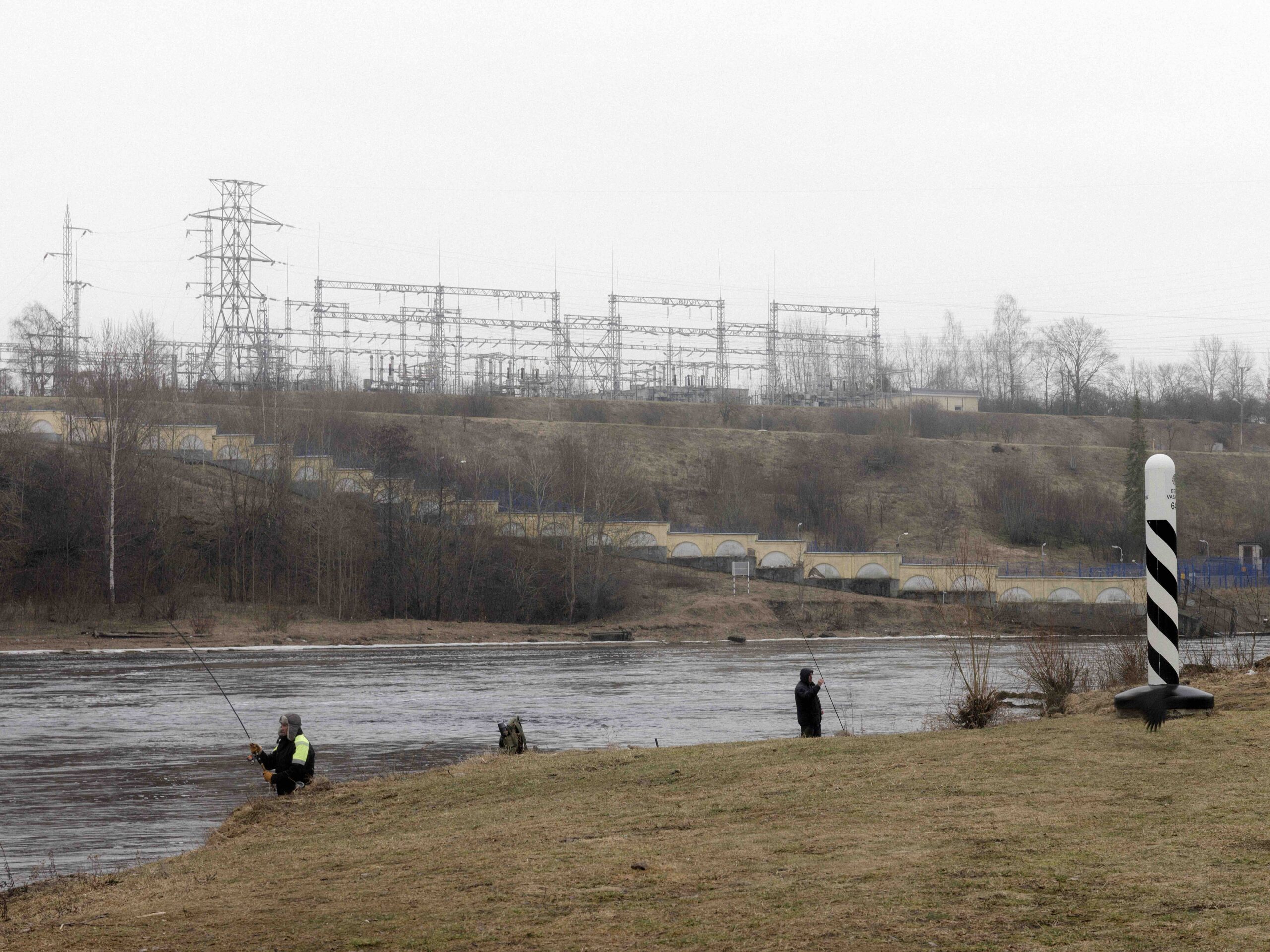
Narva River:
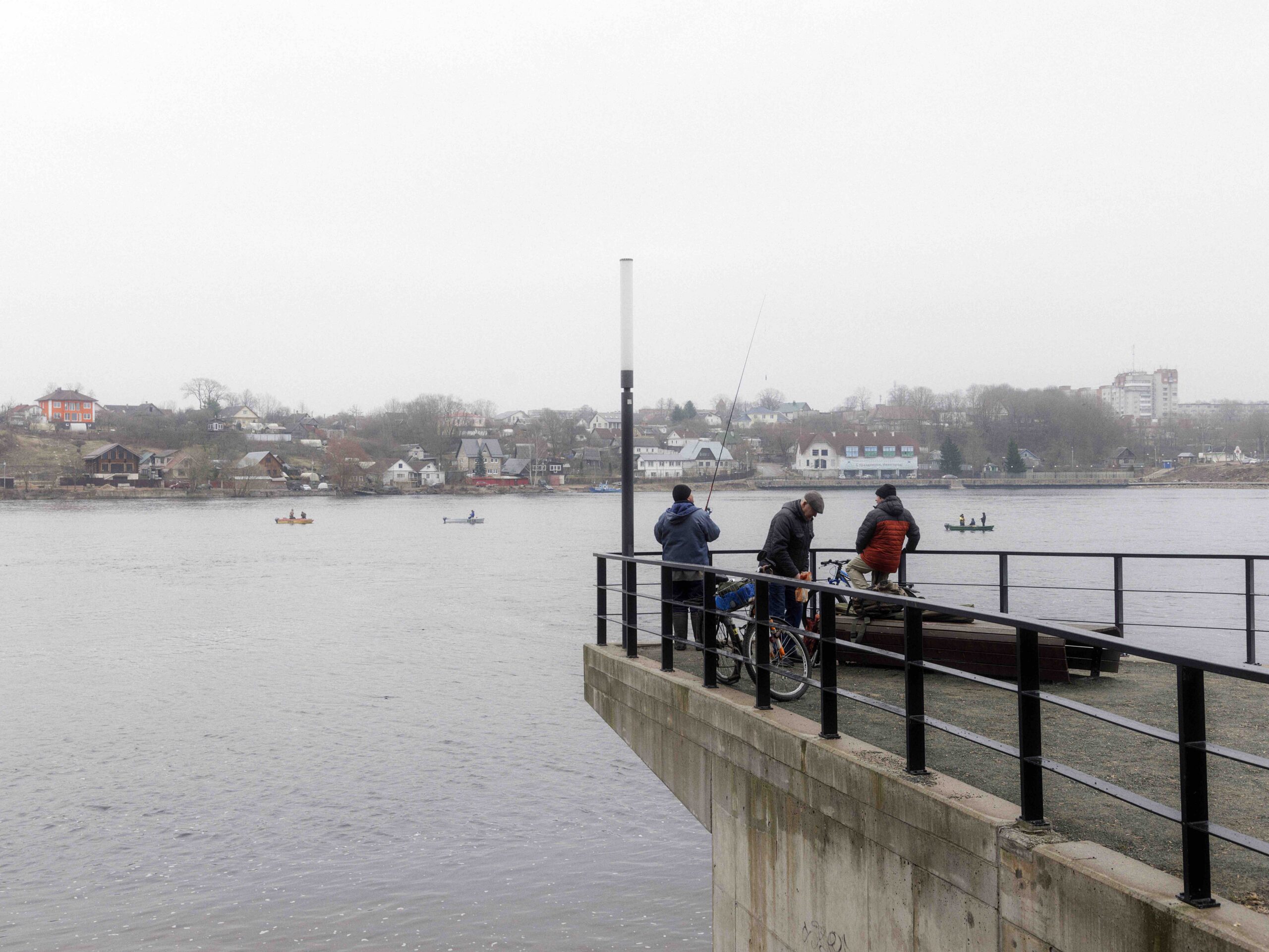
It is a zone of interference, hosting complex water infrastructure. It also facilitates a particular form of contact between fishermen on both sides of the border. For more than 150 years, the river, along with its infrastructure, has been part of diverse circuits that support human life and economic activity in the region. For instance, it provided hydropower for the Kreenholm Manufacturing Company. Founded in 1857, Kreenholm became the largest textile factory in the Russian Empire, employing 5,400 workers by the end of the nineteenth century. In the 1970s, it employed more than ten thousand workers and exported many of its goods. In the 1990s, however, the company was privatised and ultimately faced bankruptcy in 2010. This marked a significant chapter in Narva’s de-industrialisation, affecting its sense of urbanity and causing the city to lose some of its function and people (the population decreased from 83,000 in 1989 to 53,000 today, many of whom still hold ‘grey passports’, i.e., their citizenship is undefined).
Water reservoir:
The reservoir was created by Soviet engineers in the 1950s, covering the village of Kulgu, where there used to be a brick factory. The Narva River was tamed with a 206-metre-long and 9-metre-high overflow dam featuring 11 locks. In addition to a system of dikes, channels, locks, pumps, and pipes, the engineers constructed an earth dam with a total length of more than 1.5 km. The dam lies partly on the Estonian territory (40 km2 out of the basin’s total 191 km2), but it is managed by a Russian state-owned company. Due to its shallow depth (1.8 metres on average) and the water discharged from the power plants, the reservoir warms up excessively, causing an overgrowth of flora. In 1971, a plan was designed to reduce the negative environmental impact but never implemented. After the collapse of the USSR, with antagonistic countries on either side of the reservoir, mitigating the damage has become increasingly difficult.
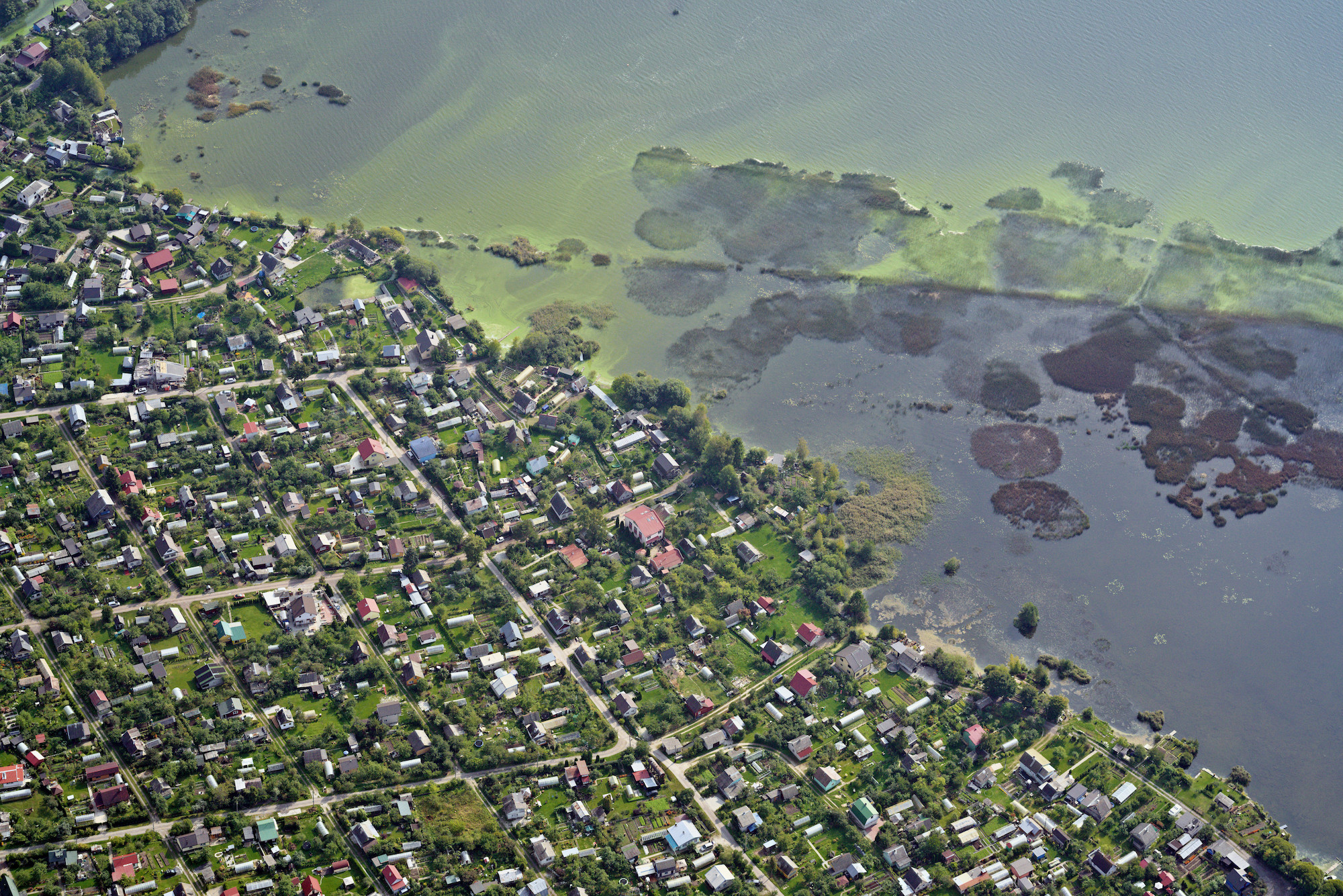
Locals talk of going ‘to the sea’ (на mоре) when referring to the reservoir. Alas, they complain that there are fewer fish every year. Translocation processes continue across the geopolitical border. For instance, birds and seeds constantly crisscross the reservoir. Another element ignoring the frontier is waste since the two energy plants on the Estonian side use water from the reservoir for their cooling and cleaning circuits.
Read more:
Eléonore De Montesquiou, Na Grane: Narva/Ivangorod (Argo, 2010)
Madis Tuuder and Karin Paulus, Narva: Daatšast paleeni (Narva City Museum, 2020)
FRANCISCO MARTÍONEZ is an anthropologist working on contemporary issues in material culture through ethnographic research. His work is known for its critical insights and experimental style. Currently, he holds the position of Ramón y Cajal Senior Research Fellow at the University of Murcia.
JOOSEP KIVIMÄE is an artist and photographer waiting for the grass to turn green.
HEADER photo by Maa- ja Ruumiamet / Fotoladu
PUBLISHED: MAJA 1-2025 (119) with main topic BALTIC EXTRA