Pretensions in the Basement
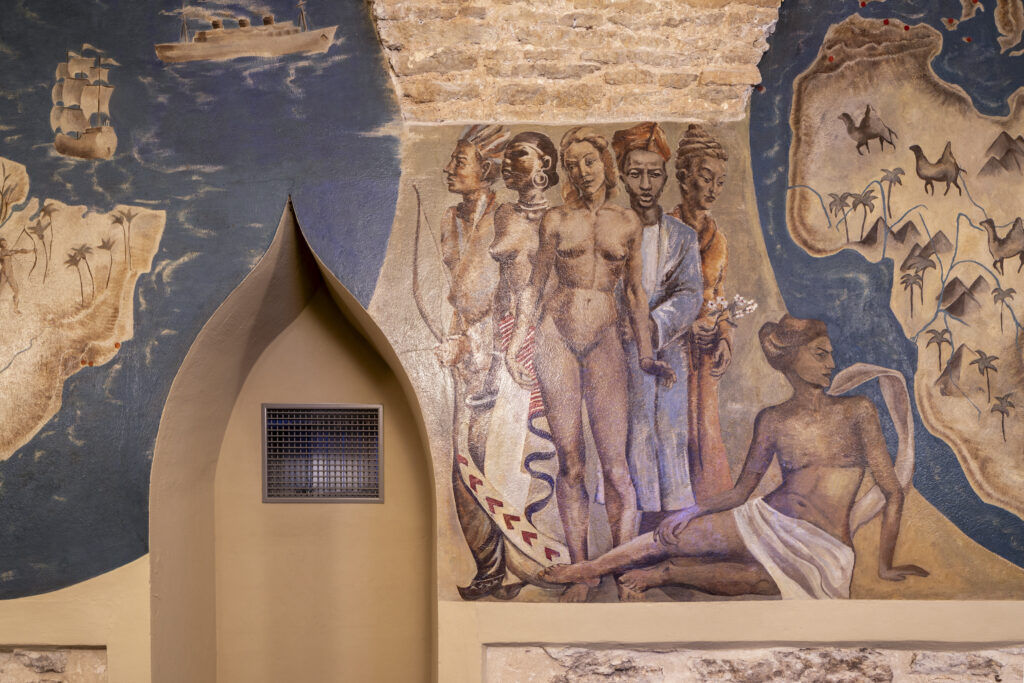
During the interwar period, the Knighthood House accommodated the Foreign Ministry of Estonia. In 1939, a mere 25-year-old Oskar Raunam painted a bizarre fresco in the basement, next to the sturdy fireplace in the parlour. Ignoring its non-uniqueness (Raunam did monumental paintings elsewhere) and artistic quality (which is not great), there is still something to be said about it—namely, the pretensions expressed in this fresco are quite strange. Between two arches lies a rather fanciful world map, covered with dots that mark the diplomatic missions of the Republic of Estonia at the time.
Generally speaking, maps on the walls of power corridors have a direct iconographic meaning—‘See this here? All of this is ours, ours to gaze at’. When such a pose is struck by some merchant prince of the Medici family, it is fair enough and we can write it off as a Tuscan peculiarity. However, for interwar Estonia—even the Era-of-Silence Estonia—this is a very funny thing to do.
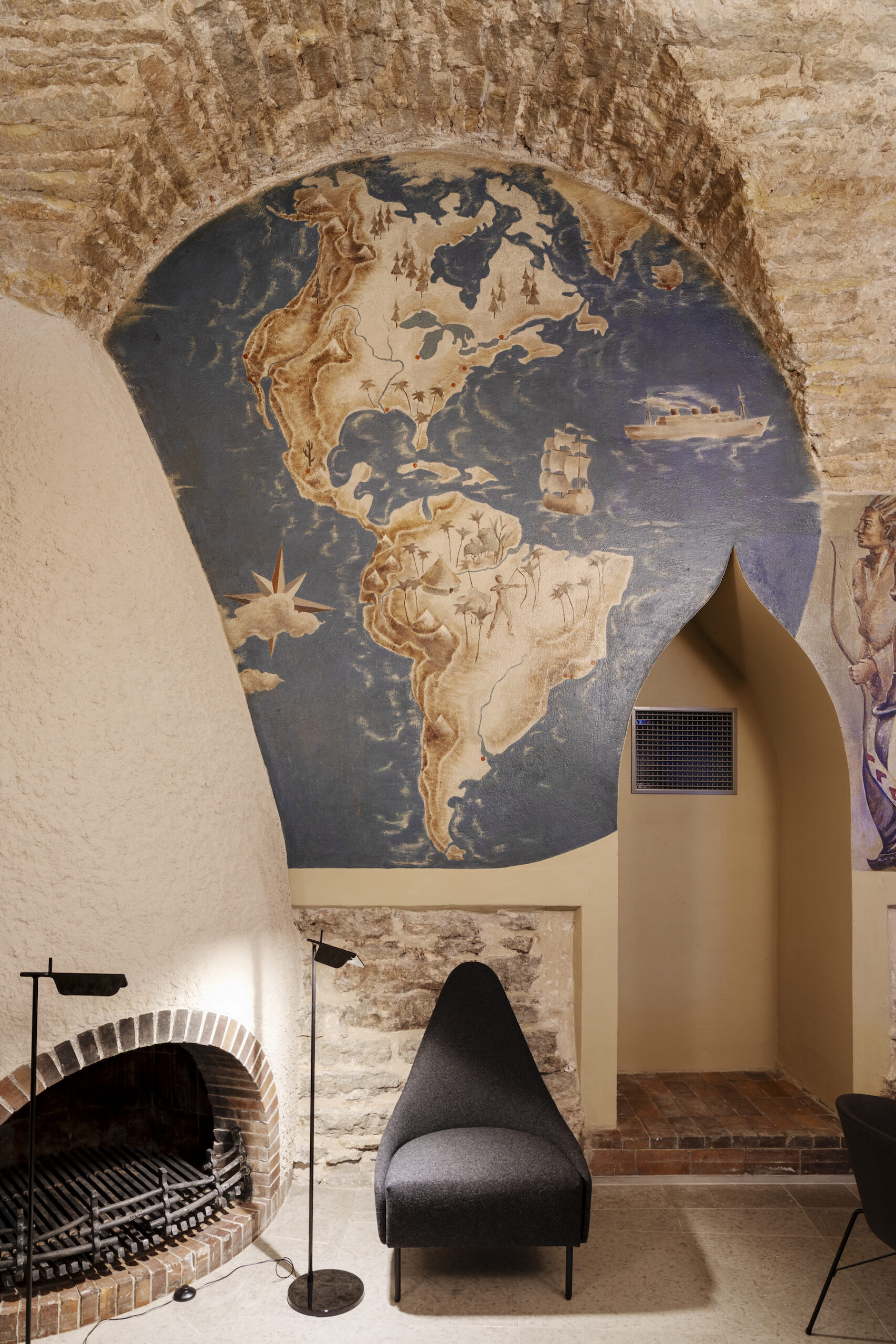
The world map with its heavyset anthropomorphisations of the continents between the poles would make more art-historical sense if placed in the foyer. Placed in the basement, away from the public rooms, this fresco represents a certain two-faced blend of shame and self-indulgence. It is a delightful historical document of the kind that tries to say, „Oh dear, look at what they have done!“
This basement room is today once again used as a sort of family recreation room, where the current keepers of the Knighthood House are digging into their microwaved lunchboxes, and outsiders are usually not welcome there.
The least seen floor in Terra Mariana
In the Estonian Knighthood House, there is a room we have all seen through our TV screens—the press conference room, both the ceiling and floor of which remain mostly invisible, as they are never in the camera’s field of view. Watching a presser on TV, you might even forget that these rooms are real, rather than theoretical ersatz places whose sole purpose is to generate another fake reality—the TV reality. Funnily enough, the wood flooring of the Knighthood House press room plays on the same theme in its own quiet and particular way. Simple wide floorboards are covered with two (!) layers of grained parquet. The more recent one is so well preserved that the high quality of the painter’s masterly lines can be grasped even by a layman.
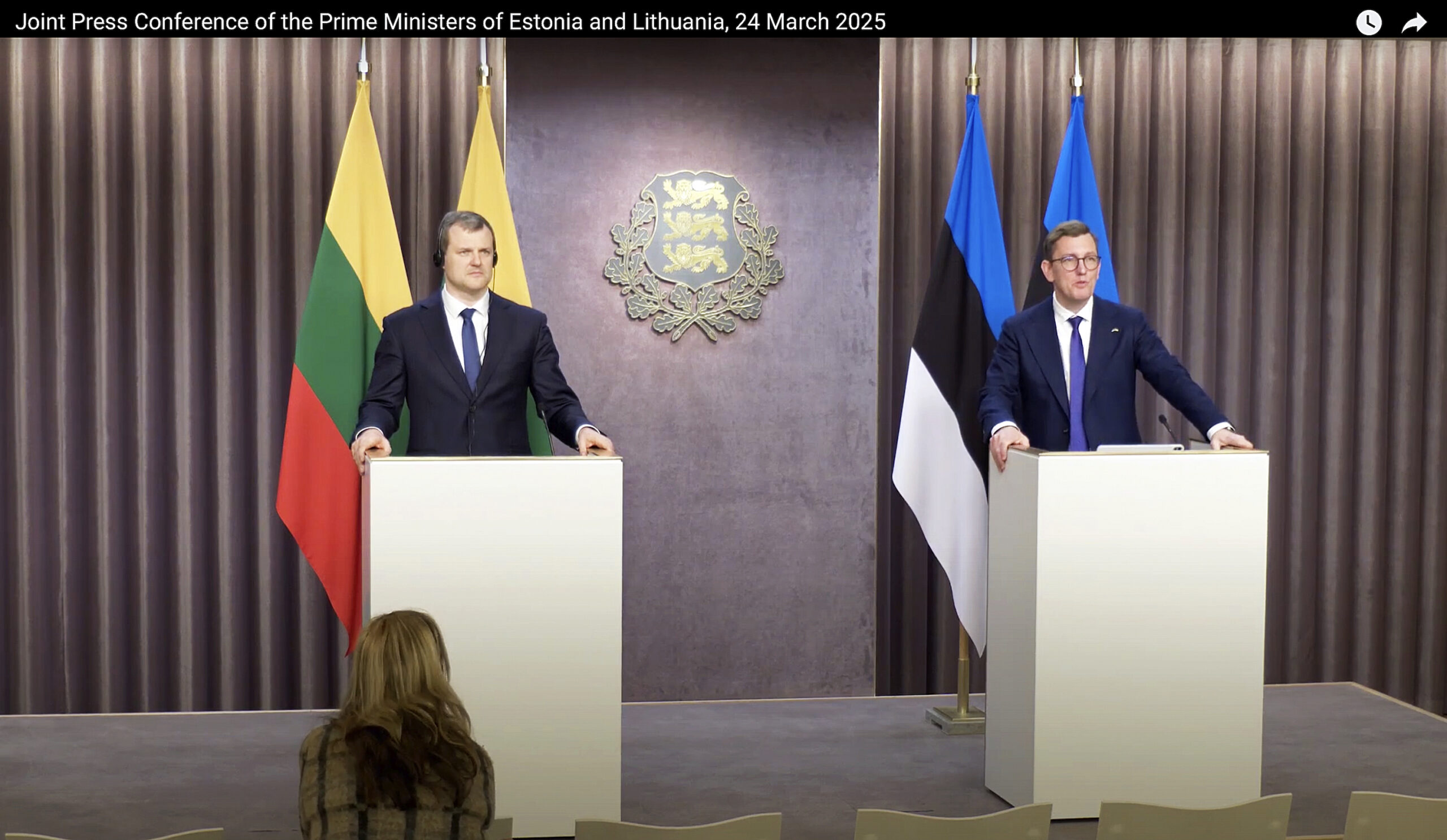
Photo: Government News
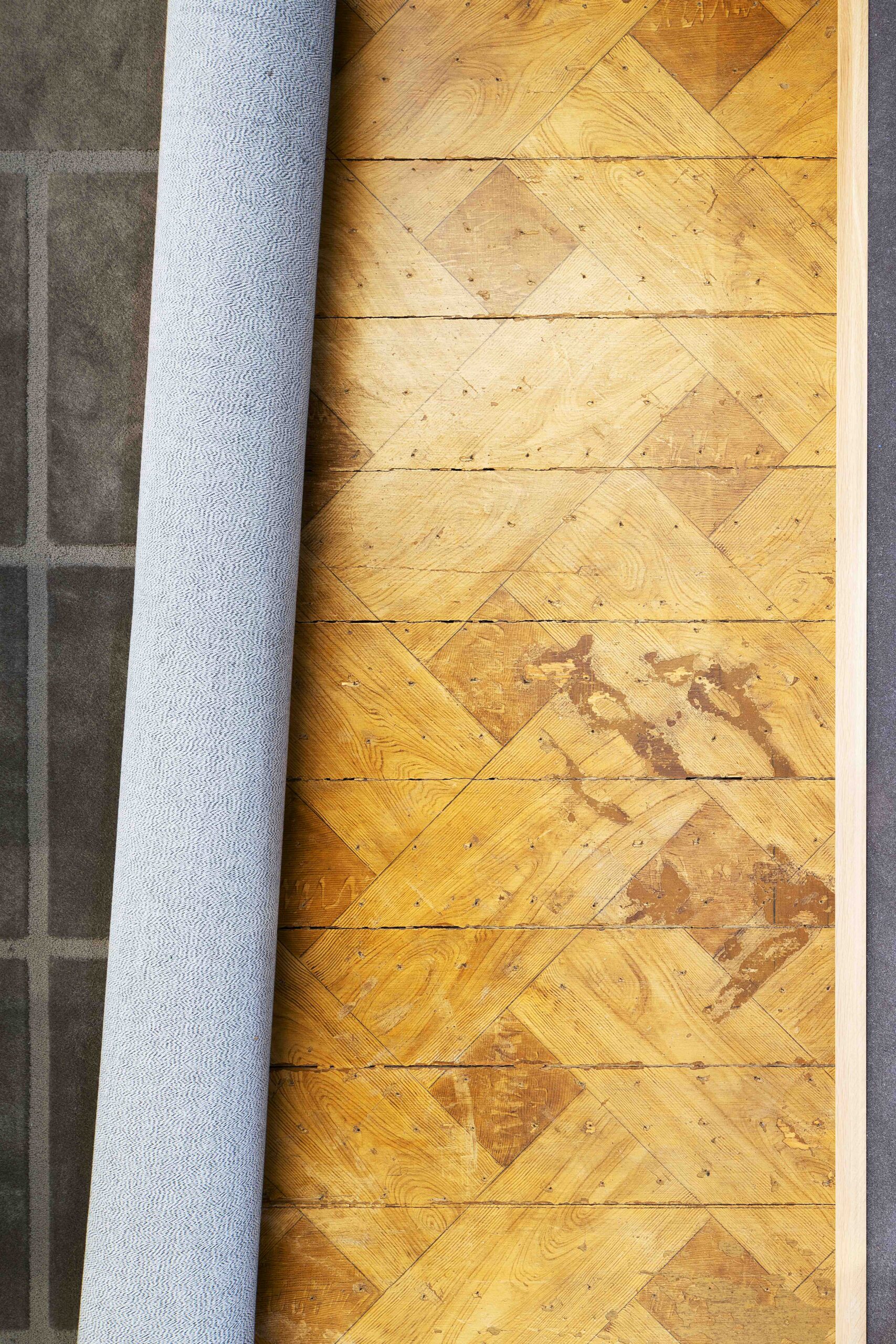
Someone who appreciates all sorts of fakeness and artificiality will find much that is exciting here. The two layers of grained parquet with their precious wood patterns have been delicately conserved and then covered with an extra-thick carpet. A boot heel can be quite detrimental when it comes to heritage protection, and no one is going to be handing out slippers at the door. Standing on the top of this three-layered biscuit of fakes, people in this so-called representative office building (a title which is a fib of its own) are generating the press room ideology, exercising hegemony, and telling nice stories (i.e., propaganda) about ourselves.
HANS ALLA is an omnivorous art critic. In his work as an art historian, he studies the history of imaging technologies, more specifically how the coming of smartphones has transformed the world of images beyond recognition.
HEADER photo by Martin Siplane
PUBLISHED: MAJA 1-2025 (119) with main topic BALTIC EXTRA