Balticness as a fragment of identity is a bit like a curiosity forgotten in the back pocket, only to be rediscovered from time to time. We asked a number of Estonian, Latvian, and Lithuanian architects, architectural offices, and other spatial practitioners for their favourite spaces, spatial situations, or features that appear unique to the Baltic countries (or one of them).
Merle Karro-Kalberg, Karin Bachmann, Anna-Liisa Unt, landscape architects, curators of the project ‘Curated Biodiversity’, Estonia:
Wasteland is representative of the state of things where everything is still ahead and the environment can be adjusted to one’s own liking. The Soviet occupation and its end left many such spaces across all the Baltic cities—incomplete, still cooking, open to ideas. Although these places do not exist in official city plans, unless only as potential development sites, they remain an important part of everyday life for the locals. They also serve as oases for urban nature, where plants, animals, and landscape thrive on their own terms. Wasteland is democratic and flexible, allowing everything that is otherwise restricted in regulated urban environments.
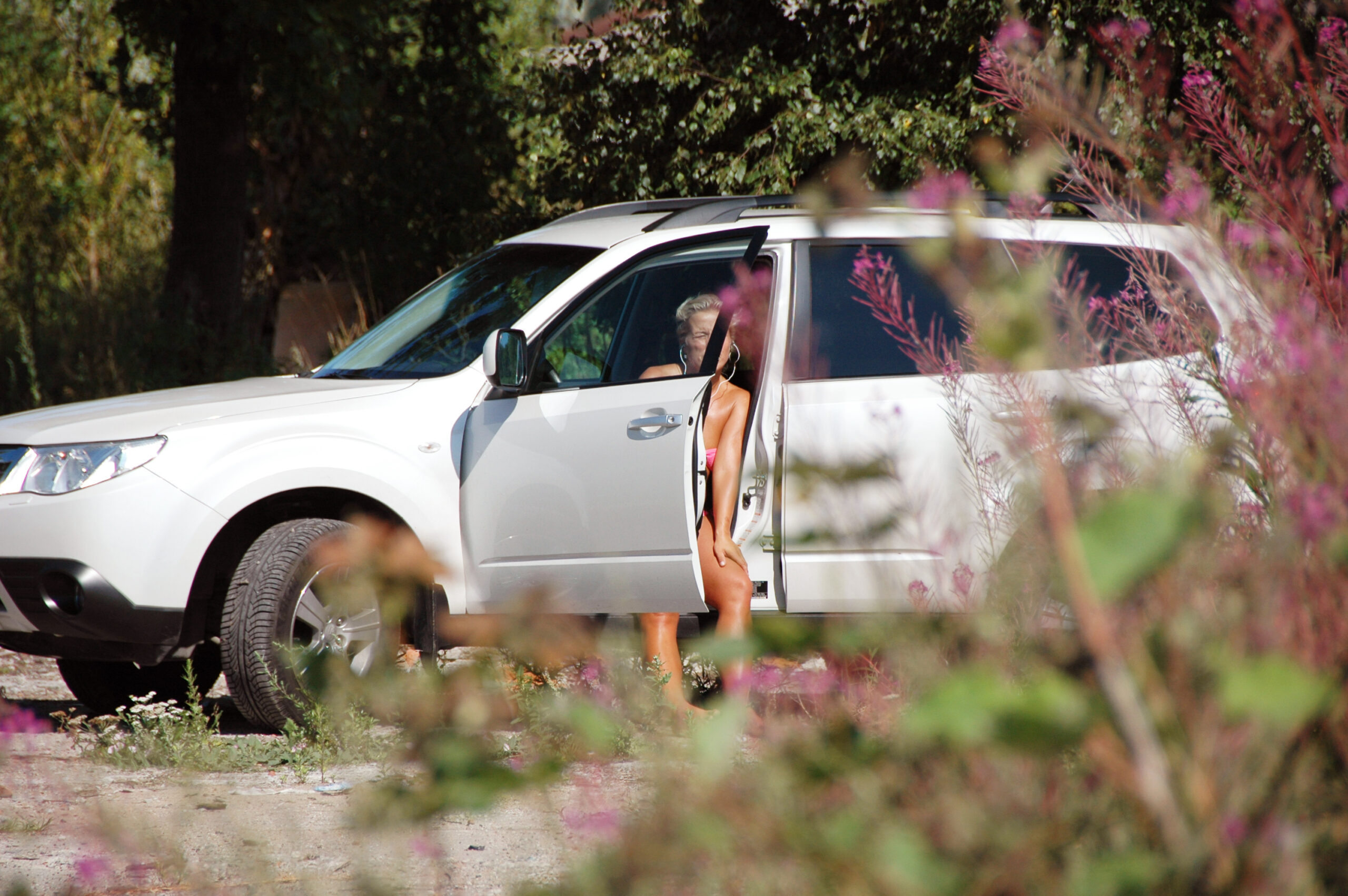
Photo: Merle Karro-Kalberg
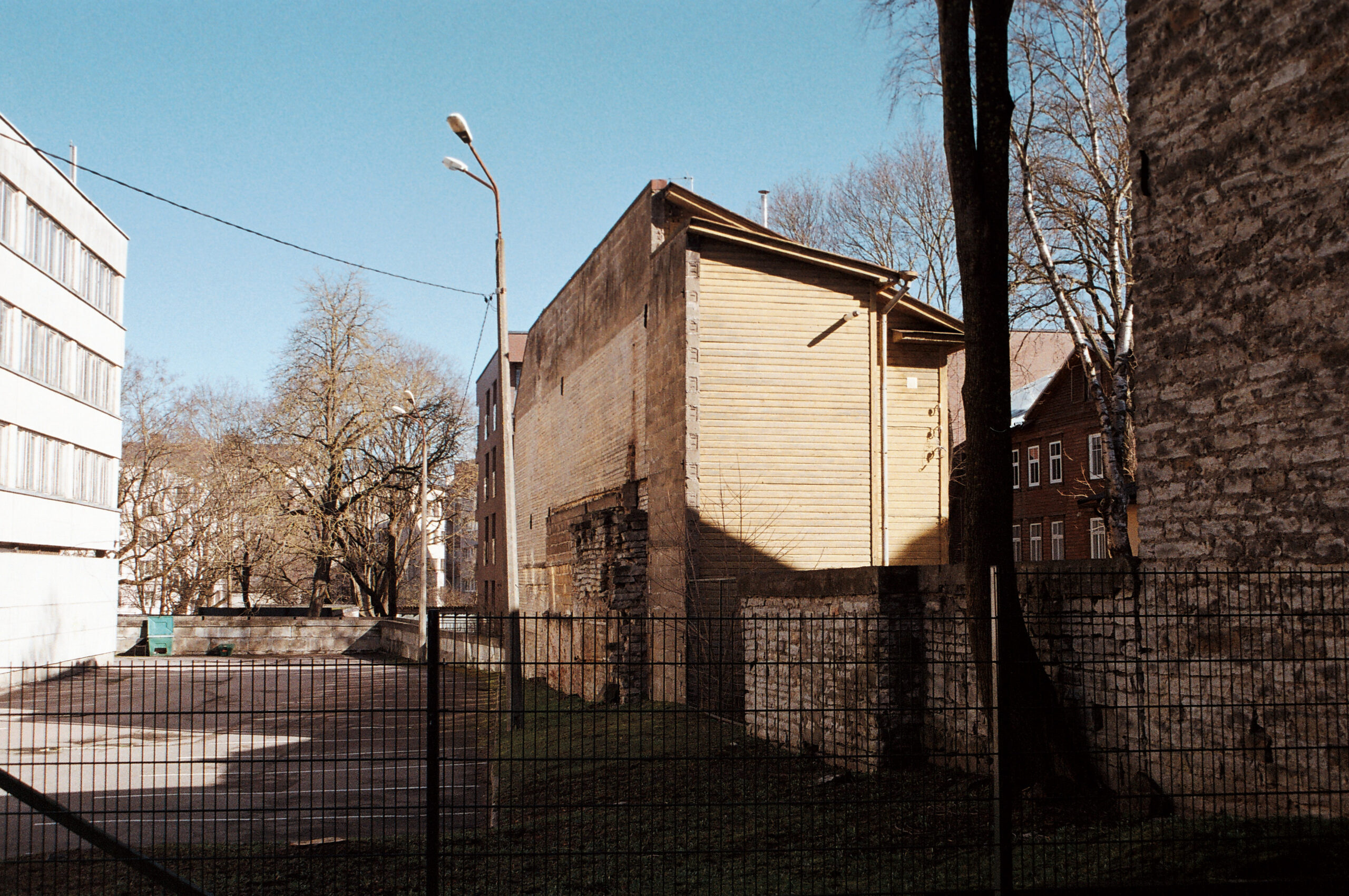
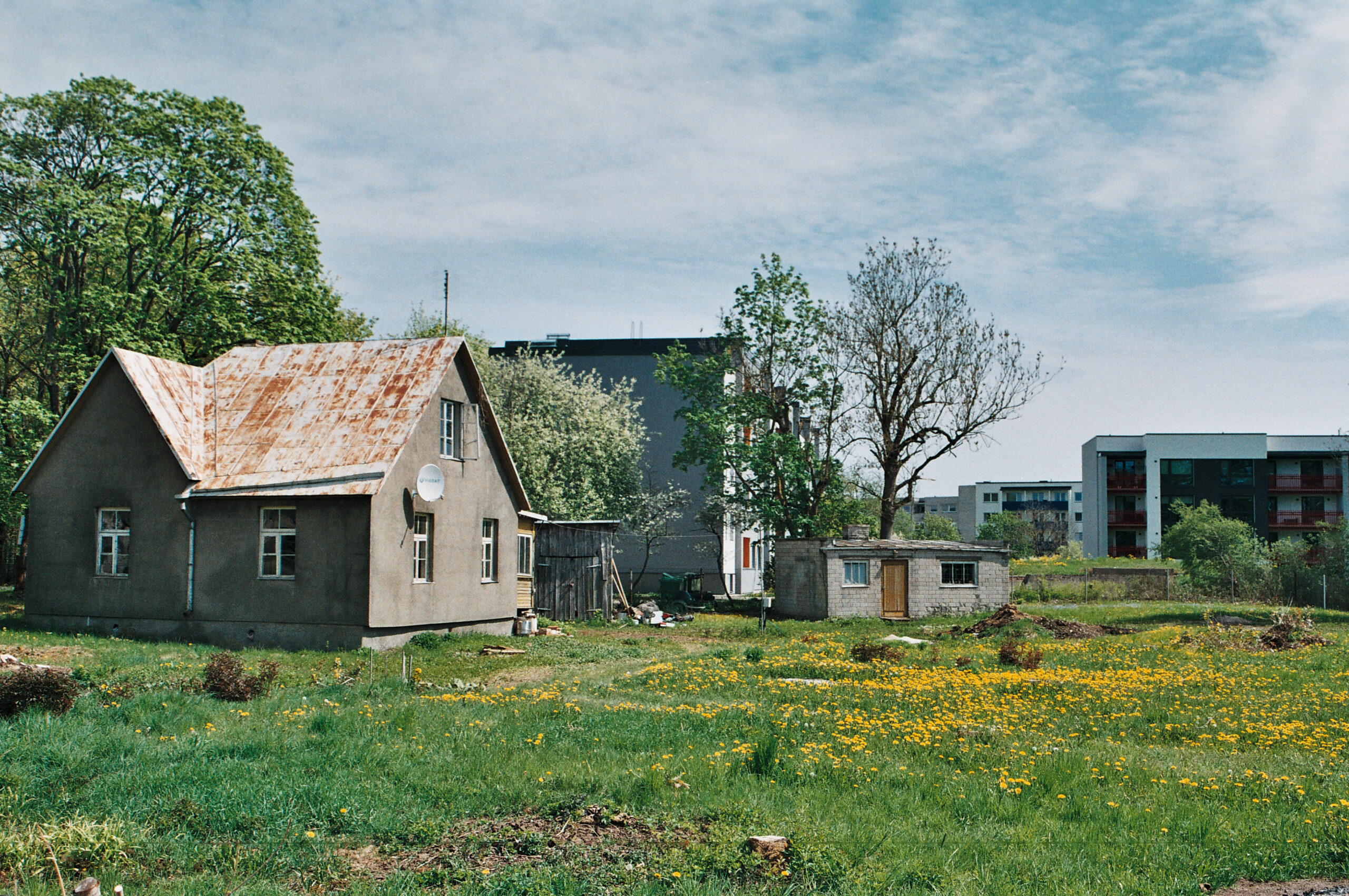
Kertu Johanna Jõeste, Tristan Krevald, Ra Martin Puhkan, Siim Tanel Tõnisson, Studio Täna, Estonia:
Ruptures, reversals and continuations have woven very rich and diverse spatial situations into the Baltic landscapes. Incompleteness always contains potential continuations and meaning-laden voids, opportunities to go forward, use your imagination, and find space for your thoughts. These voids and continuations in our towns form very diverse and dynamic spaces, places, and homes, reminding us that no one really has the final word, but everyone has a say.
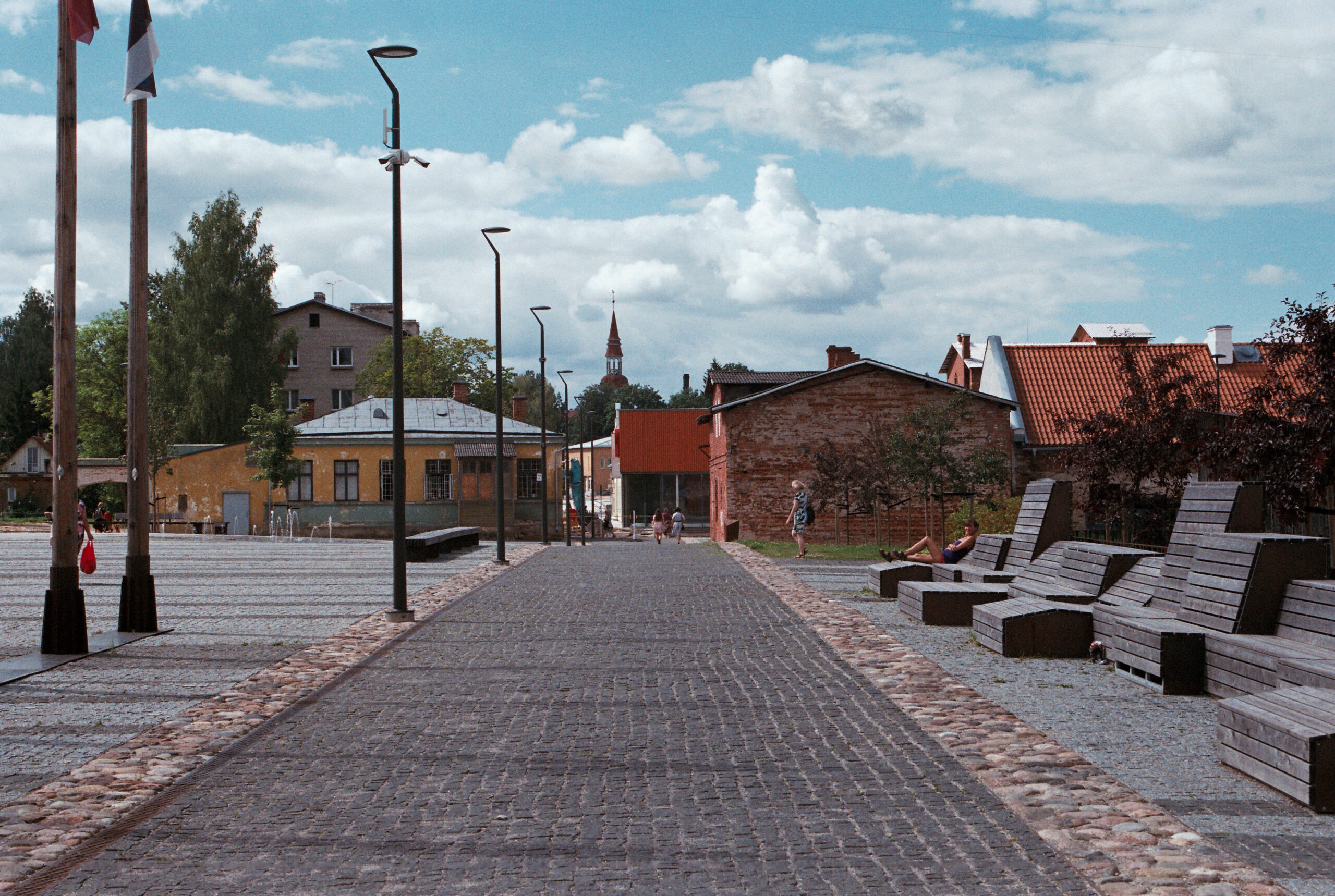
Photos: Siim Tanel Tõnisson
Julija Čiapaitė-Jureviienė, Karolina Ciplyte, Case Studio for Architecture, Lithuania:
We think of resilience—withstanding and even embracing hardship—as a special Baltic virtue. Naujoji Vilnia is a former industrial district in the Lithuanian capital of Vilnius. In recent decades, it has become known for its neglected environment and challenging social climate. We designed a new family house that could emerge as a resilient fresh start in this setting. While new developments continue to invade untouched territories, this house was a conscious decision to address the scars of the past—restoring, integrating, and rediscovering the beauty of torn landscapes.
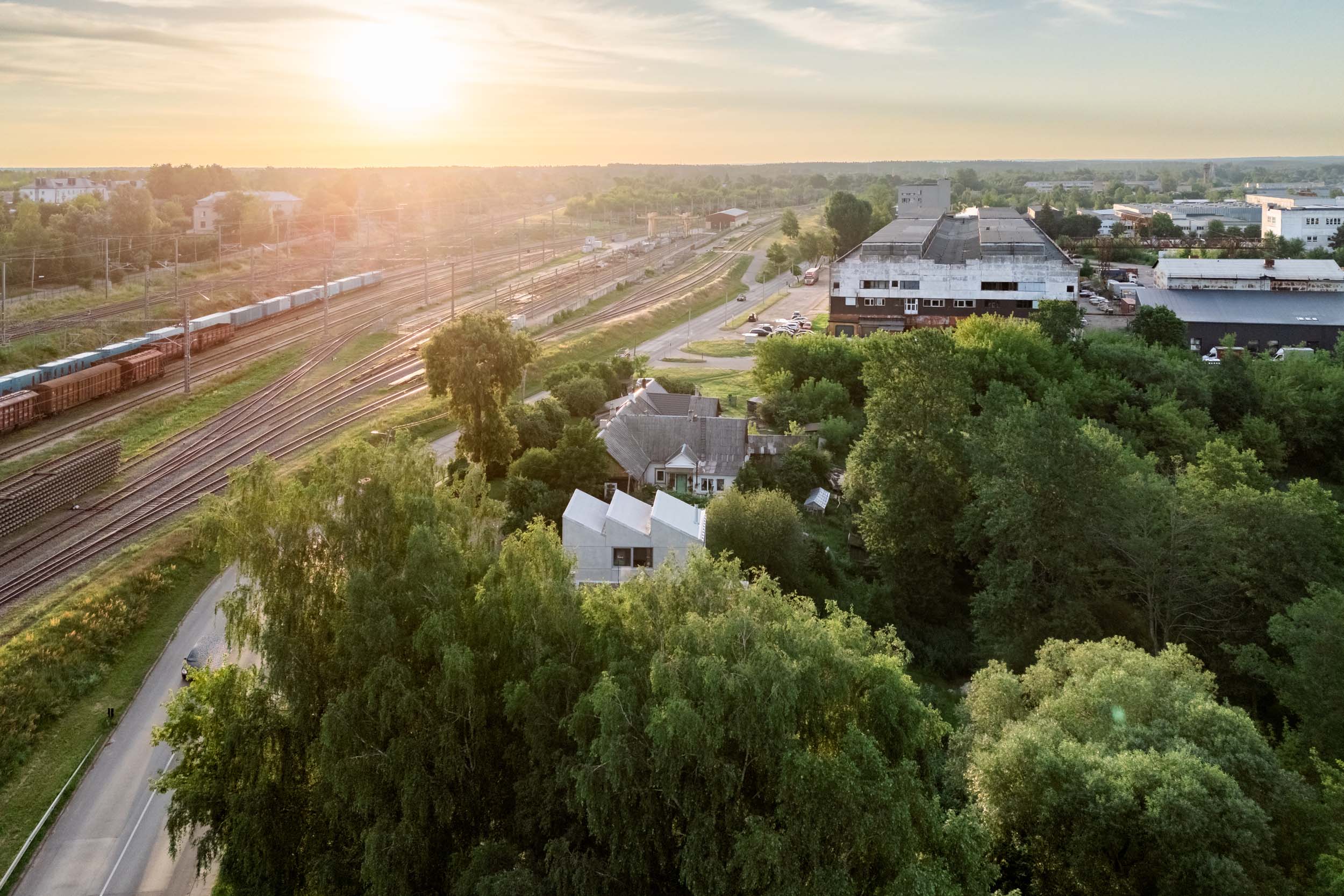
Photo: Norbert Tukaj
Petras Išora, Ona Lozuraitytė, Išora x Lozuraitytė Studio (IXL), Lithuania:
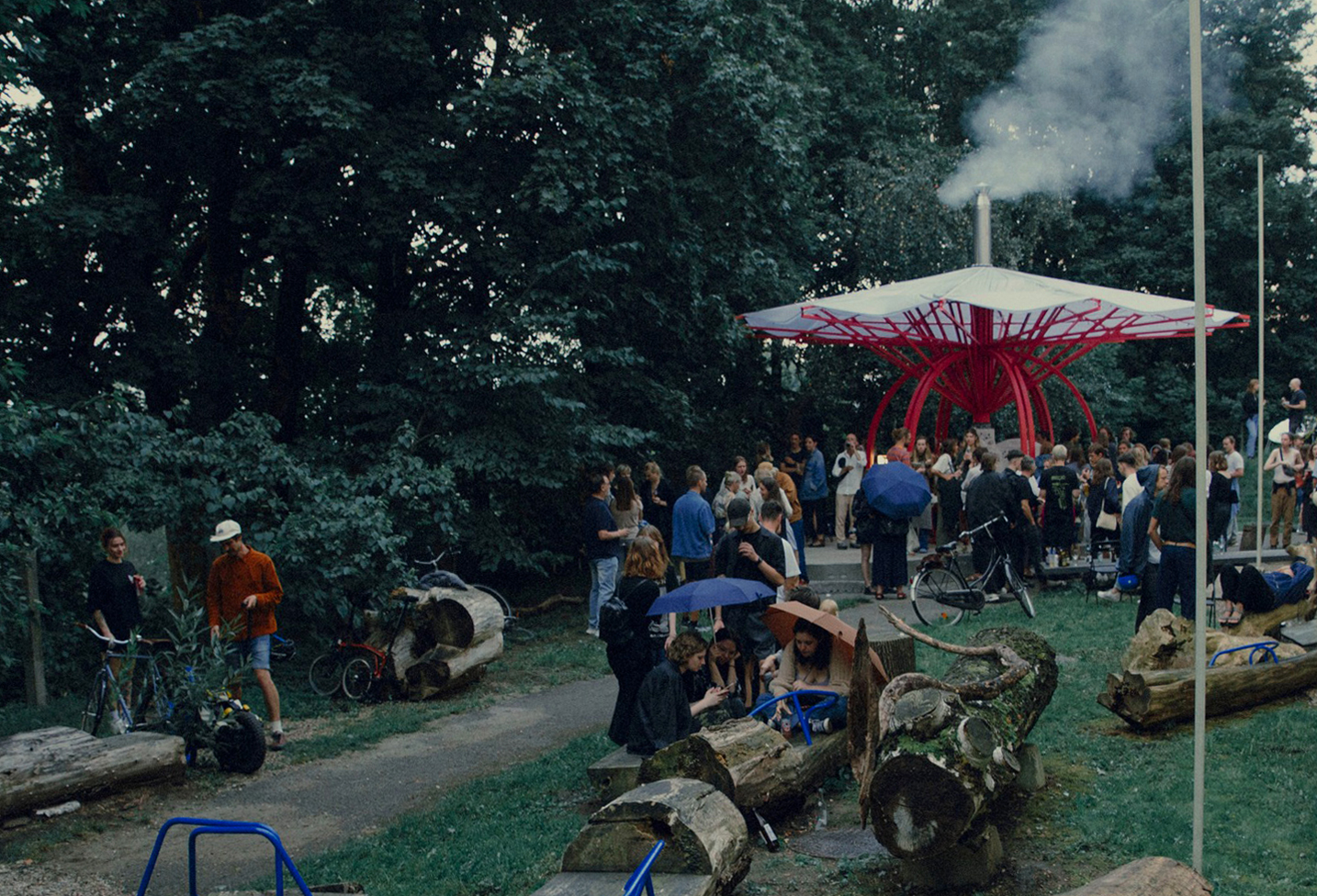
The Oven Pavilion is an example of experimental, hybrid, bottom-up forms of healing architecture set atop the defunct modernist infrastructure left behind by Soviet-era masterplans that were mechanically superimposed on the organic forms of Baltic cities. The pavilion functions as one of the epicentres for an emerging community garden. It could be seen as a reimagining of an archetype—gathering around a fire, making bread, and a public oven—that dissolved with the onslaught of modernism during the occupation period.
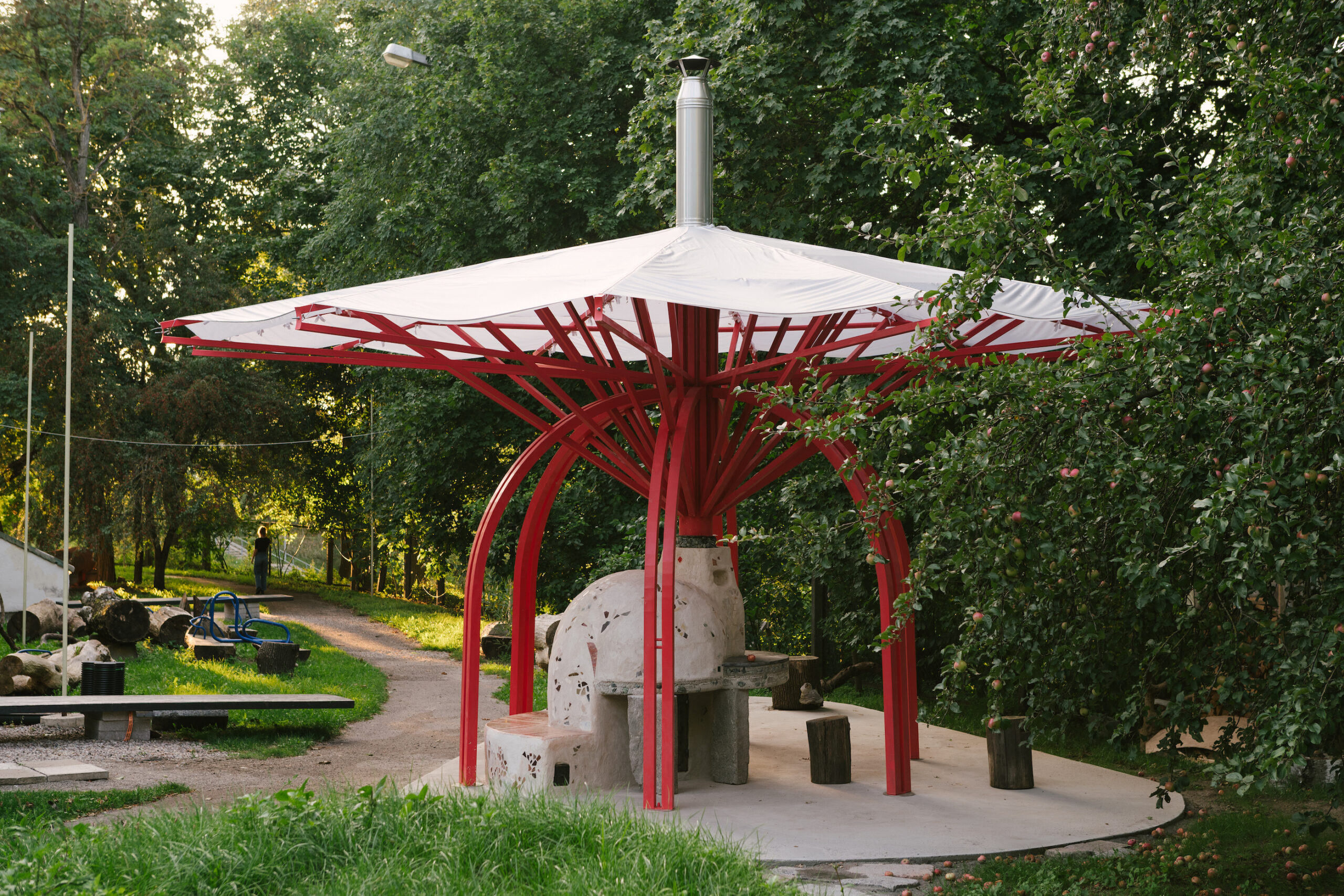
Photos: Laurynas Skeisgiela
Dina Suhanova, architect and researcher at the Art Academy of Latvia, Institute of Contemporary Art, Design and Architecture, Latvia:
It is only recently that I have come to appreciate the Baltic landscape in its full range of seasons: its bleak greyness, its many hours of darkness, its cold and rain, mud and snow. The Baltics evince a state of perpetual transition, wherein the verdant hues of summer yield to the gloomy rains of autumn and the misery of winter. How do you survive the cold seasons and find joy in the dark times, I have always wondered?
My perspective on the Latvian landscape changed significantly upon encountering the series of paintings Through the Darkness by Latvian artist Andris Eglītis. Utilising a mobile studio set up in a van, the artist captured on canvas a series of moments in real landscapes with unassuming scenery at various times of the year: snowmelt in a field, morning chill at a petrol station, muddy rails driven into the snow, and the view through a car windshield as windscreen wipers attempt to disperse drizzle.
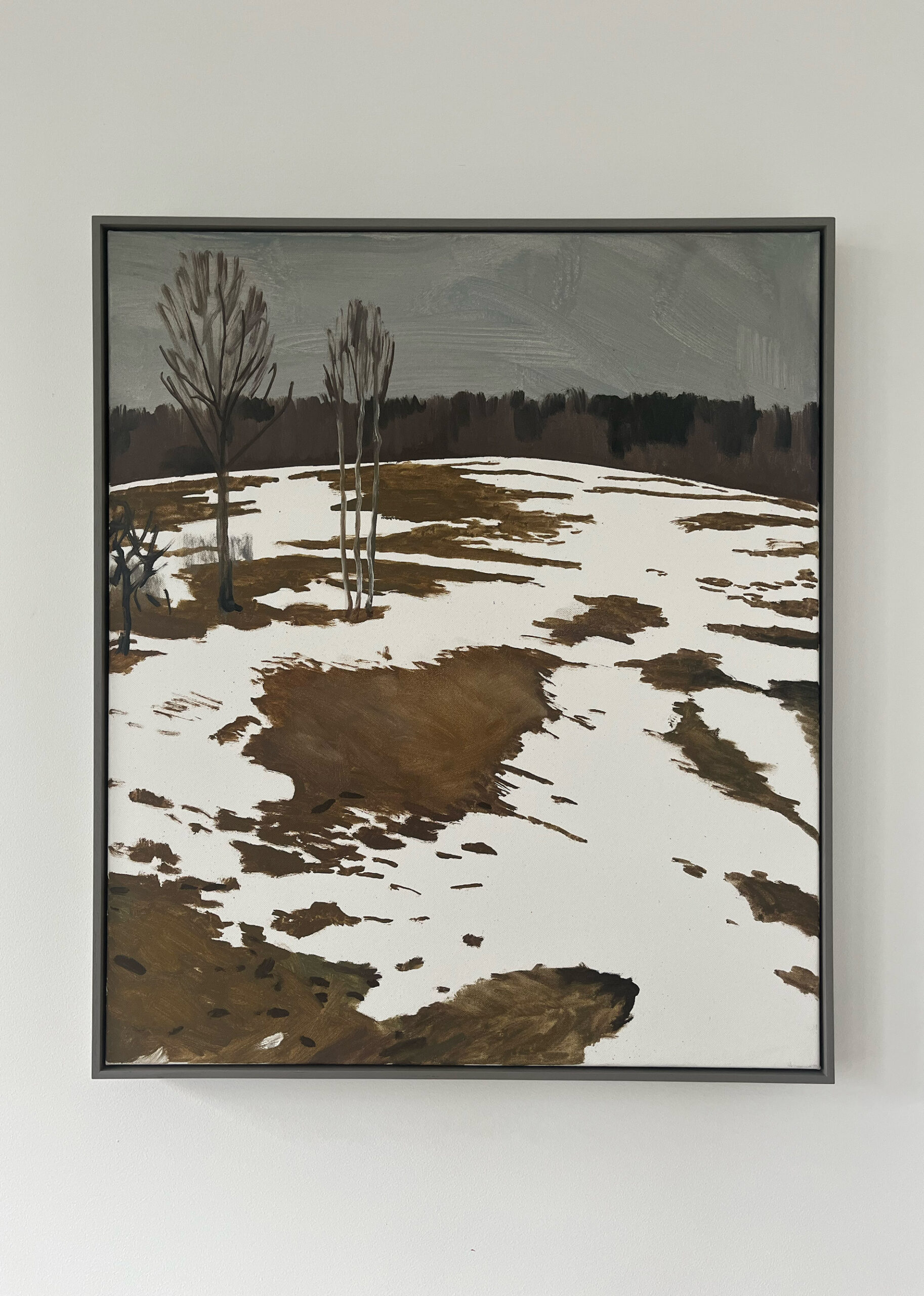
Photo: Dina Suhanova
Linda Krūmiņa, MADE arhitekti, Latvia:
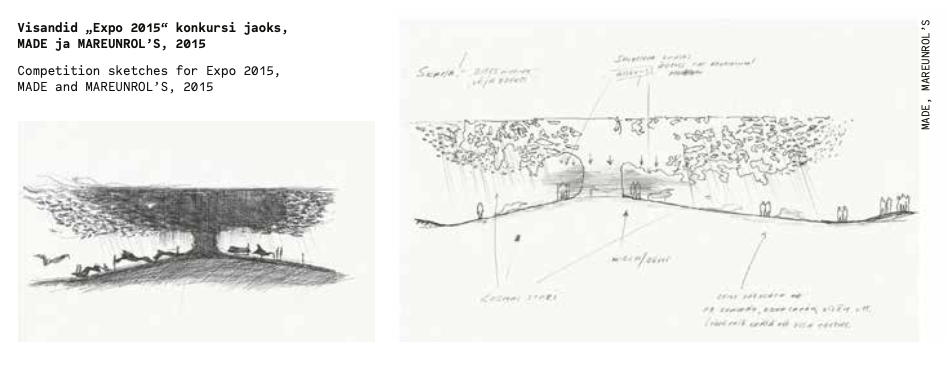
The space beneath the branches of a cherished or revered tree offers a unique microcosm. Sunlight filters through the foliage that casts a gentle moving shadow. It is an opportunity to engage with the natural world through all the senses. This space, whether it is a tree in your own backyard or a centuries-old tree in a manor park, serves as a safe and somewhat sacred refuge. A decade ago, we undertook a project for the Latvian pavilion at the World Expo 2015 hosted by Milan. The design featured a space beneath a grand oak tree, symbolising a healthy ecosystem where both material and immaterial values coexist in harmony.
MADE and MAREUNROL’S, 2015
Andrė Baldišiūtė, Emilija Martinkevič, DO Architects, Lithuania:
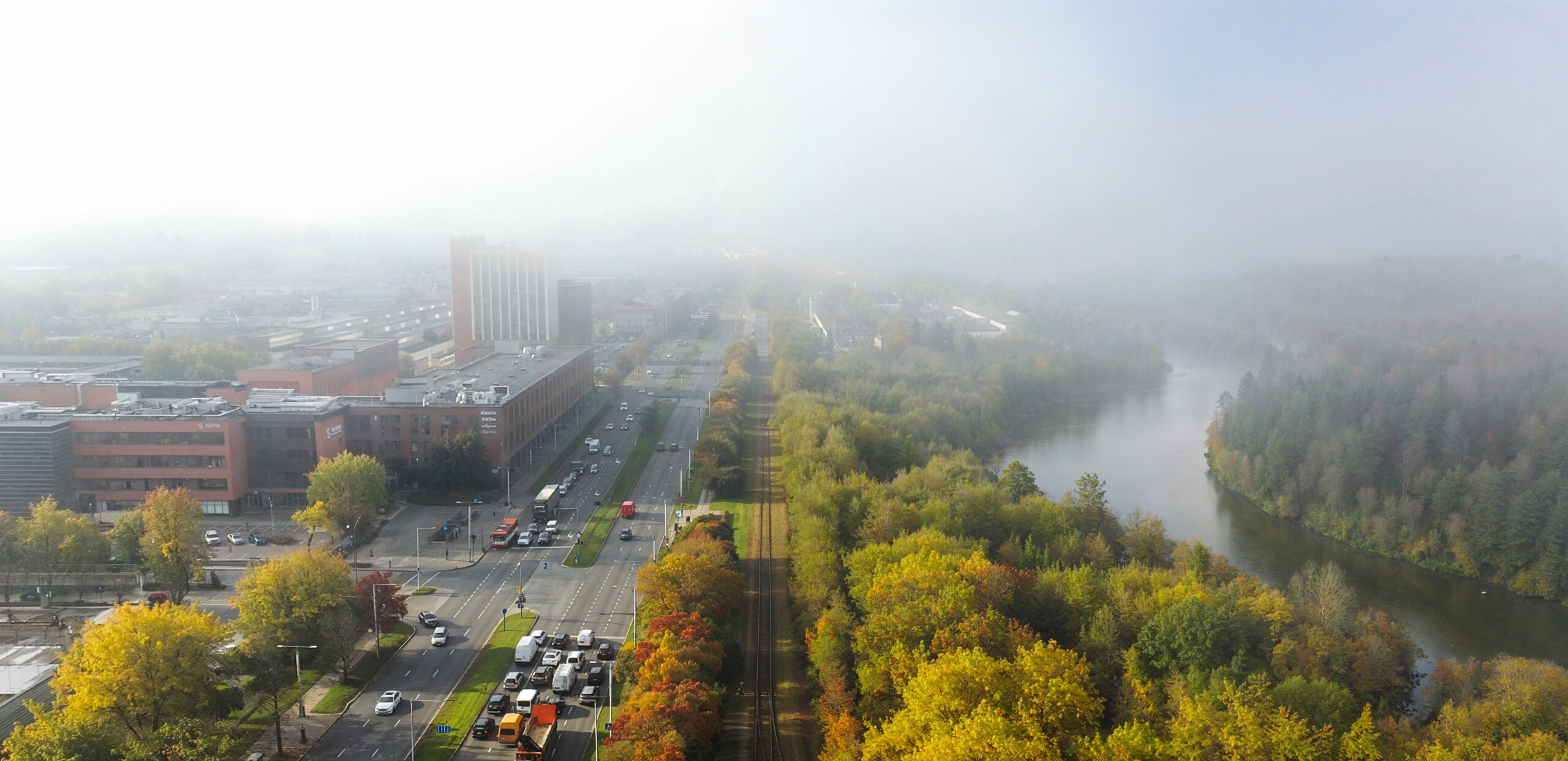
For centuries, the Vilkpėdė area in the Lithuanian capital of Vilnius had abundant natural beauty. Here, water from the springs of forested hills once flowed through the valley in streams, reaching the bends of the Neris River. However, in the last century, Vilkpėdė’s valley became a convenient site for industrialisation, its streams were made into canals, and the Neris was largely forgotten. But why not bring that stream back into the valley and the valley back into the city? Our office settled here a few years ago and invited dozens of other businesses to the neighbourhood. A bush, a wooden bench, a patched-up pothole, a renovated workshop façade, a new office, an art storage space, a medical centre—all these small additions, drop by drop, are bringing Vilkpėdė closer to that critical mass after which the big changes become inevitable.
Eva Abdulina, Gateris Works, Latvia:
Haystacks are utilitarian, somewhat architectural structures that are now increasingly rare in the Baltic countryside. They are a manifesto of the uniqueness of our region—not yet fully industri- alised, not yet overwritten by progress—where the oddness and naiveté of rural customs are still present. Beyond their practical purpose of drying hay, haystacks serve many secondary functions. They offer shelter from the midday sun or a sudden shower, a quiet getaway for a nap, and even cause sneaky grins when two are headed toward a hay- stack on a Midsummer night.
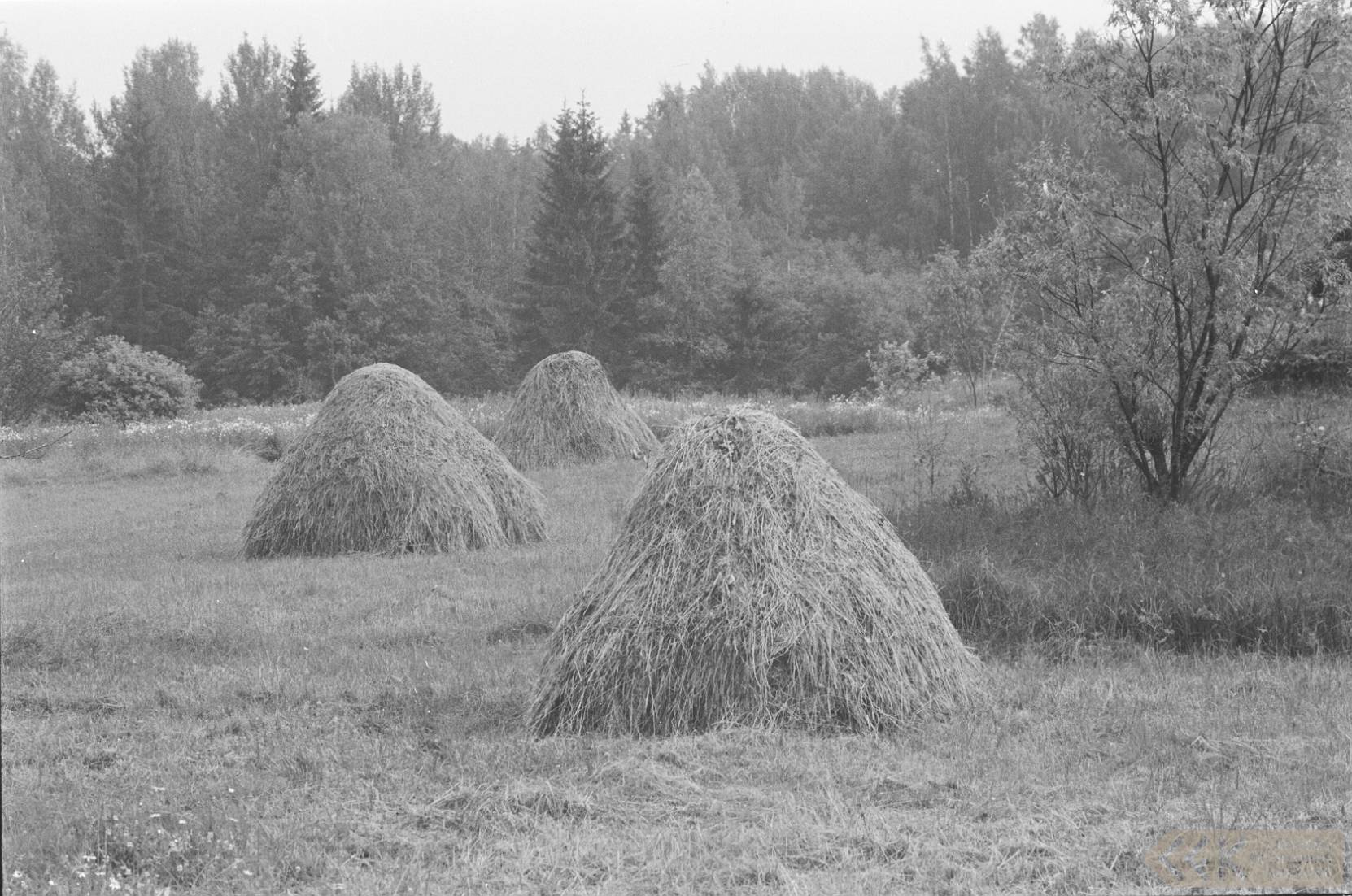
Photo Collection of Andris Eglītise
Marija Katrina Dambe, Florian Betat, NOMAD Architects, Latvia:
Over the last year, our work has focused deeply on the rural territories of Latvia—whether it be in the form of planning spaces or preparing for the Latvian National Pavilion at the 19th Venice Architecture Biennale. Thus, the feature we want to highlight is the freedom of creativity in the rural parts of Latvia. In a country with a rapidly shrinking population, the countryside can become a site for experimentation—a potential that has been insufficiently explored. The typical homestead typology is a microcosm. It reflects an ever-present way of life, influenced by place, available materials, as well as limited financial means. These lead to creative experimentation with salvaged and local materials. At one such site, we contributed to this tradition, building with what was available and blending into the surroundings—we made structures of railway sleepers, bitumen sheets, and bottle cap fasteners.
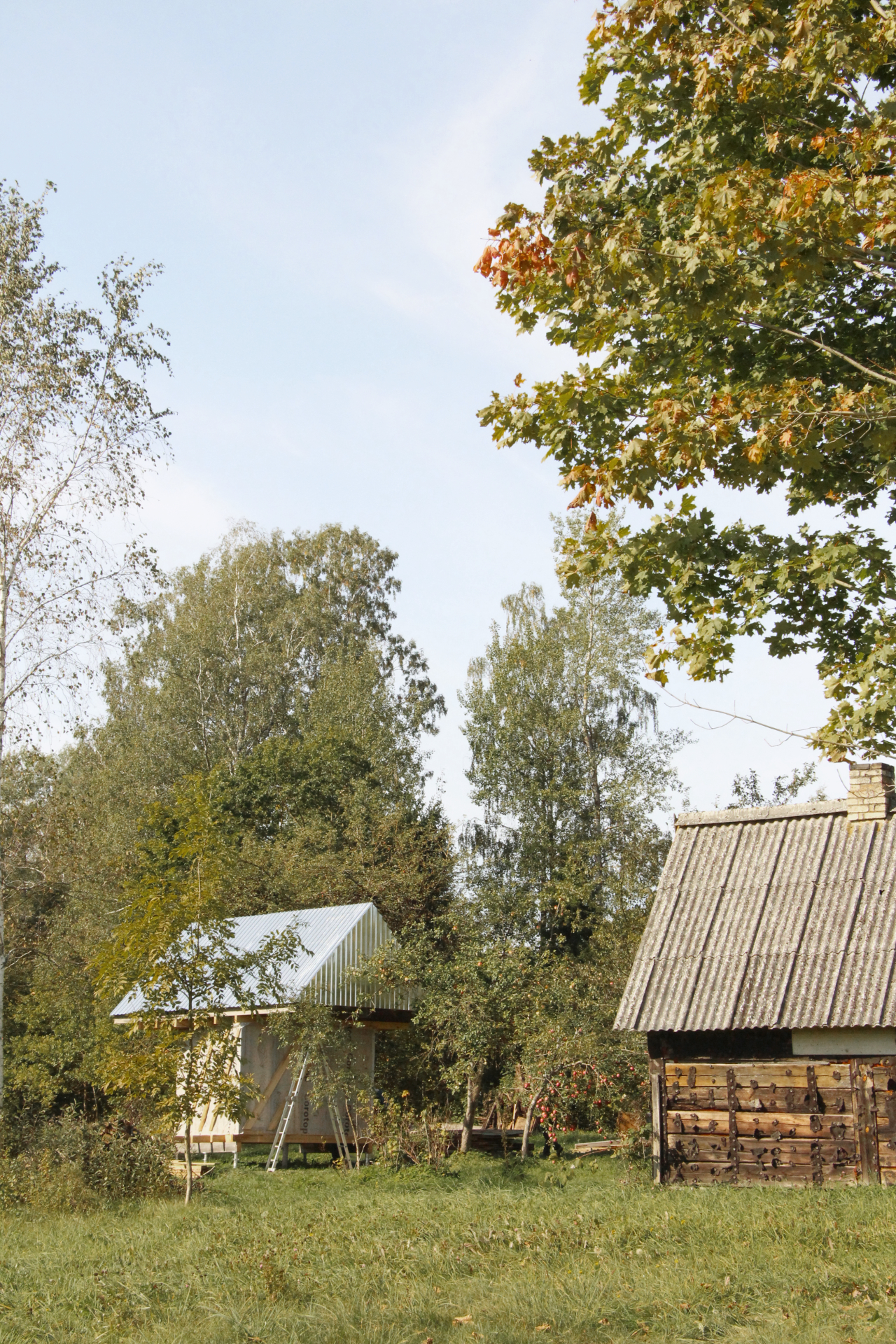
Photo: Nomad
Jurga Daubaraitė, Jonas Žukauskas, Neringa Forest Architecture, Lithuania:
At the beginning of the 18th century, a twisted, intertwined mountain pine (Pinus mugo) forest was planted on the Curonian Spit separating the Baltic Sea from the Curonian Lagoon to contain shifting sand dunes and stabilise the environment around the port of what was then Memel (now Klaipėda). This forest infrastructure holds significance as a cultural landscape shaped by human practices and has been a UNESCO World Heritage Site since 2000. Today, as the response to warming climate is shifting from mitigation (aimed at regulating the impact of human activities on Earth’s systems) to adaptation (focused on acclimation to inevitable changes), such forest serves as a case study of an environment formed as infrastructure.
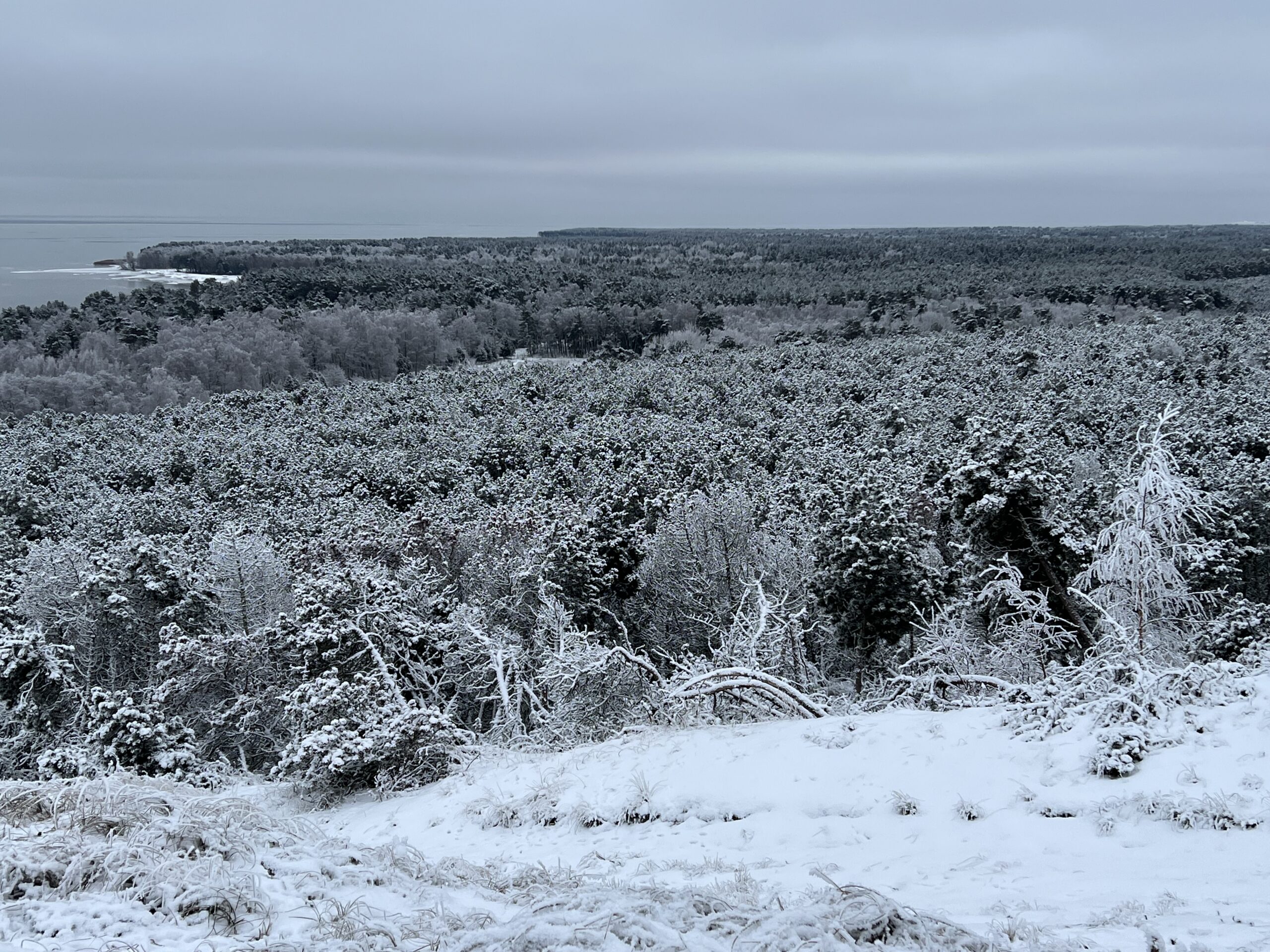
Photo: Neringa Forest Architecture
Laura Malcaitė, partner at INBLUM Architects and associate professor at Vilnius Academy of Arts, Lithuania:
Embedded histories, hidden pasts, fragile moments. Building stones form a significant part of the city landscape. Some are from Lithuania, while many have arrived from distant lands. These smoothly weathered stones are embedded in the urban environment, not only shaping spaces but also holding the secrets and memories of those who live and those who have passed. Several Jewish cemeteries were brutally dismantled in the Soviet times. Their gravestones were repurposed as stairs or other urban elements, their origins remaining unknown. I carefully climb the stairs. Sitting in the park on a sunny Sunday afternoon, I quietly observe city life from a distance. Leaning against a warm stone retaining wall, not knowing where the stones were taken from, I drown in my own memories.
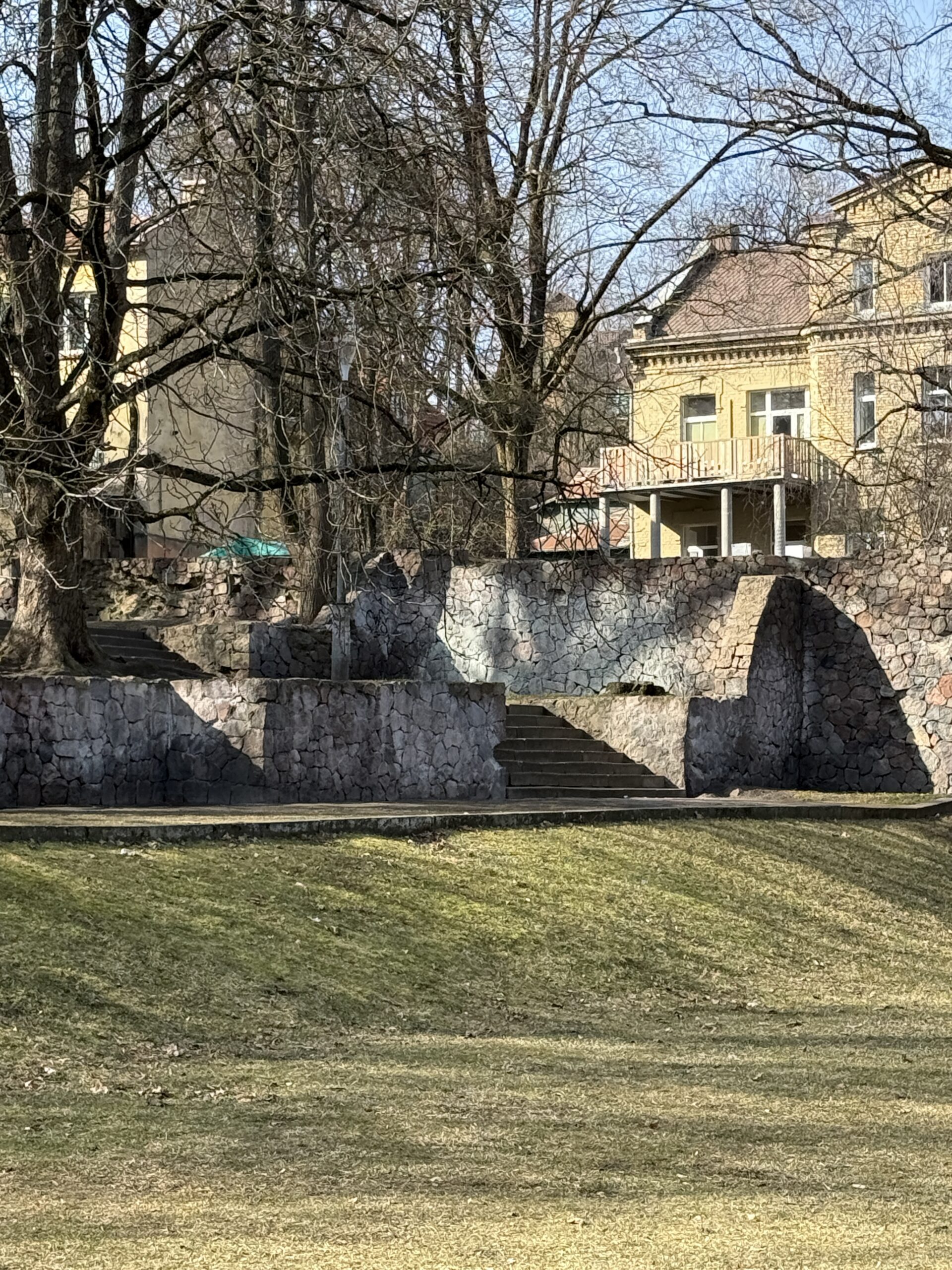
Foto: Laura Malcaitė
Mantas Peteraitis, Manto Peteraičio, Architektūros Studija, Lithuania:
Orvidas Homestead-Museum, situated in the open fields of northwestern Lithuania, features a stone park arranged in a triangular plan. It was created by the stone carver Vilius Orvidas, who began collecting boulders—a byproduct of the intensive land reclamation processes of the time—and transformed them into carved sculptures, arranging them in an architectural setting.
Last year, I finally had the chance to make a brief visit. I was amazed by the spatial and architectural complexity and the unique character of the place. The park resembles a labyrinth where it is easy to lose oneself. Those familiar with its history tell stories suggesting that the park’s intricate layout had a practical purpose. The place became a refuge for failed sculpture students who formed an unofficial living community there. To evade persecution by the Soviet authorities, the site was gradually transformed into a maze. This design allowed the residents to spot approaching officials from afar, giving them enough time to hide deep within the crevices of the ensemble.
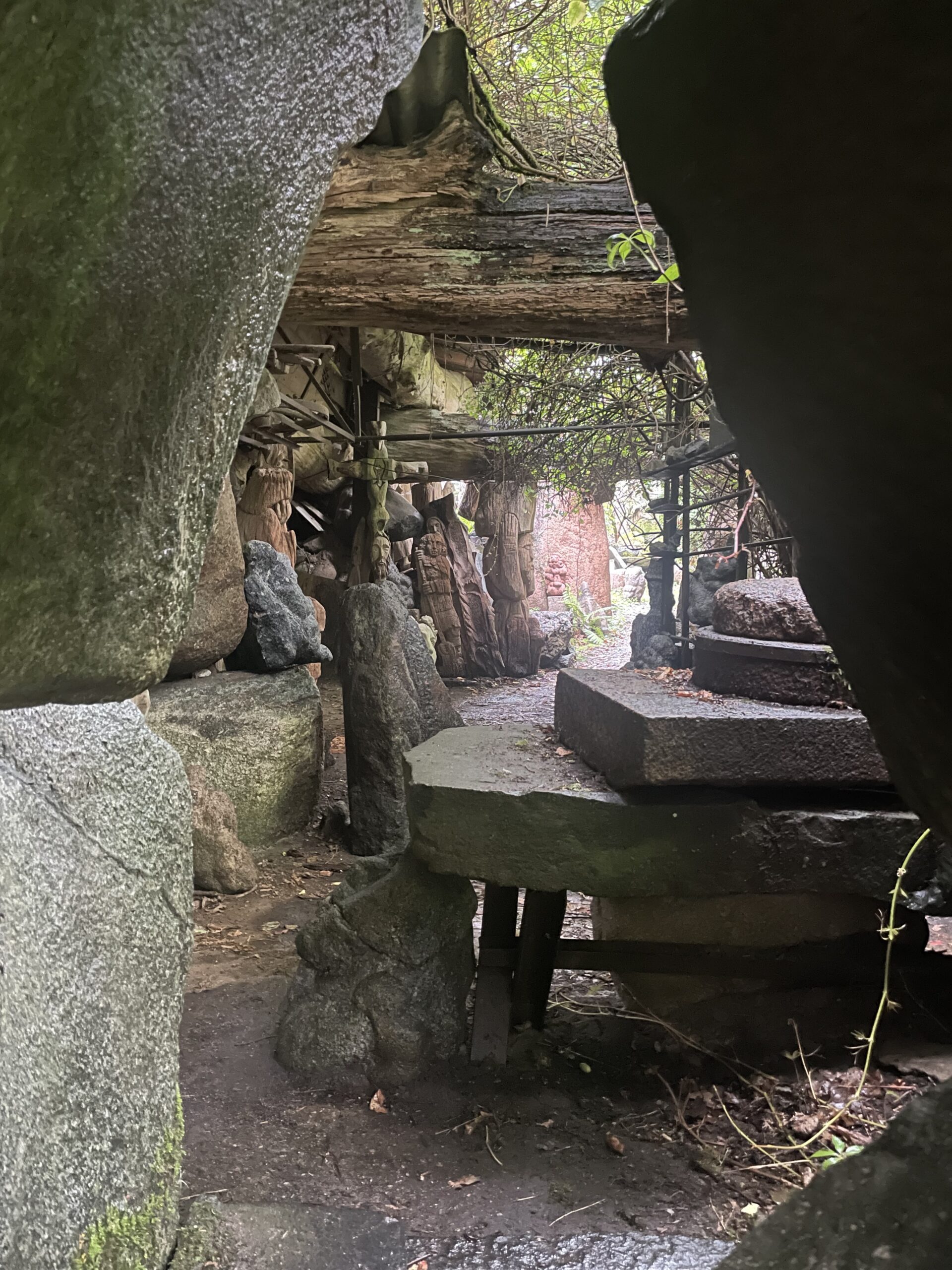
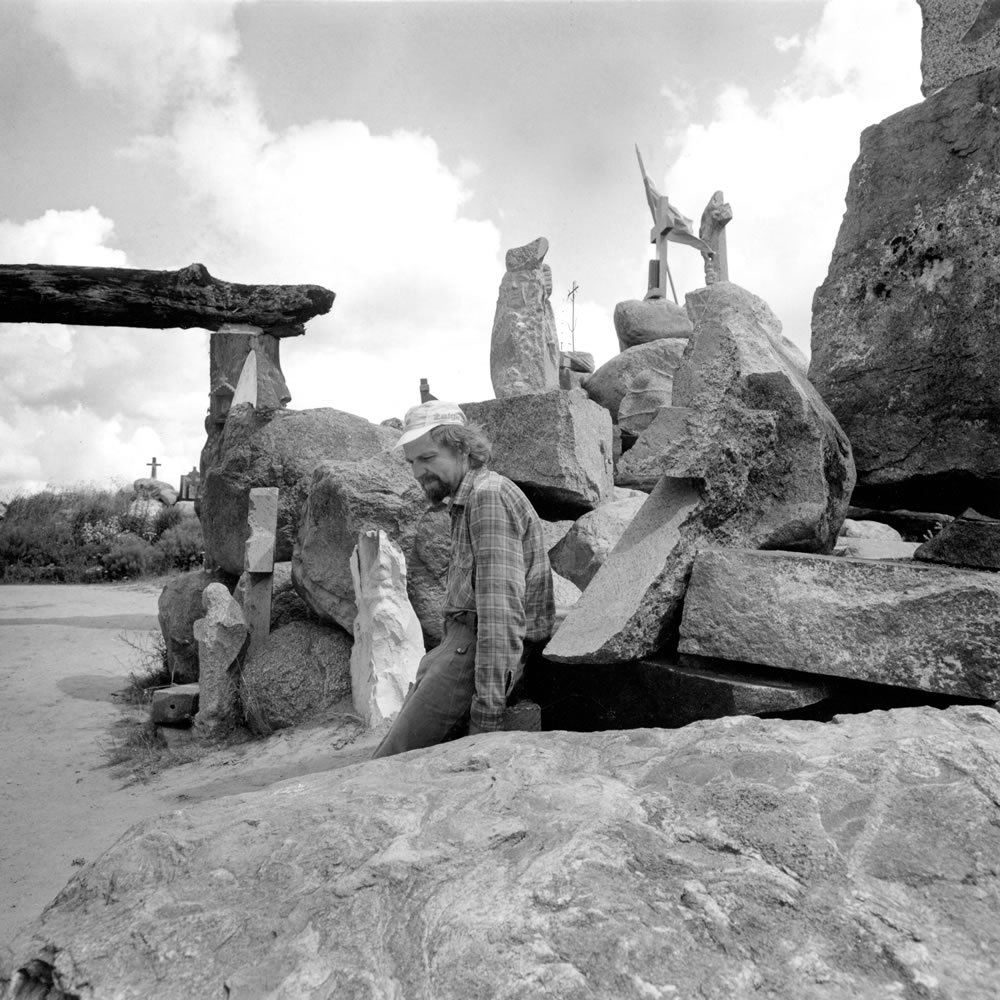
Photo: Orvidas Foundation
Koit Ojaliiv, Kuu Architects, Estonia:
I immediately thought of the limestone cliffs of northern Estonia—so perhaps this really is my favourite spatial situation in Estonia? This natural monument is impressive for its scale, primality, and energy. Moreover, it is like a local material depot, which occasionally makes me wonder why it (i.e., the material) is so little appreciated by us.
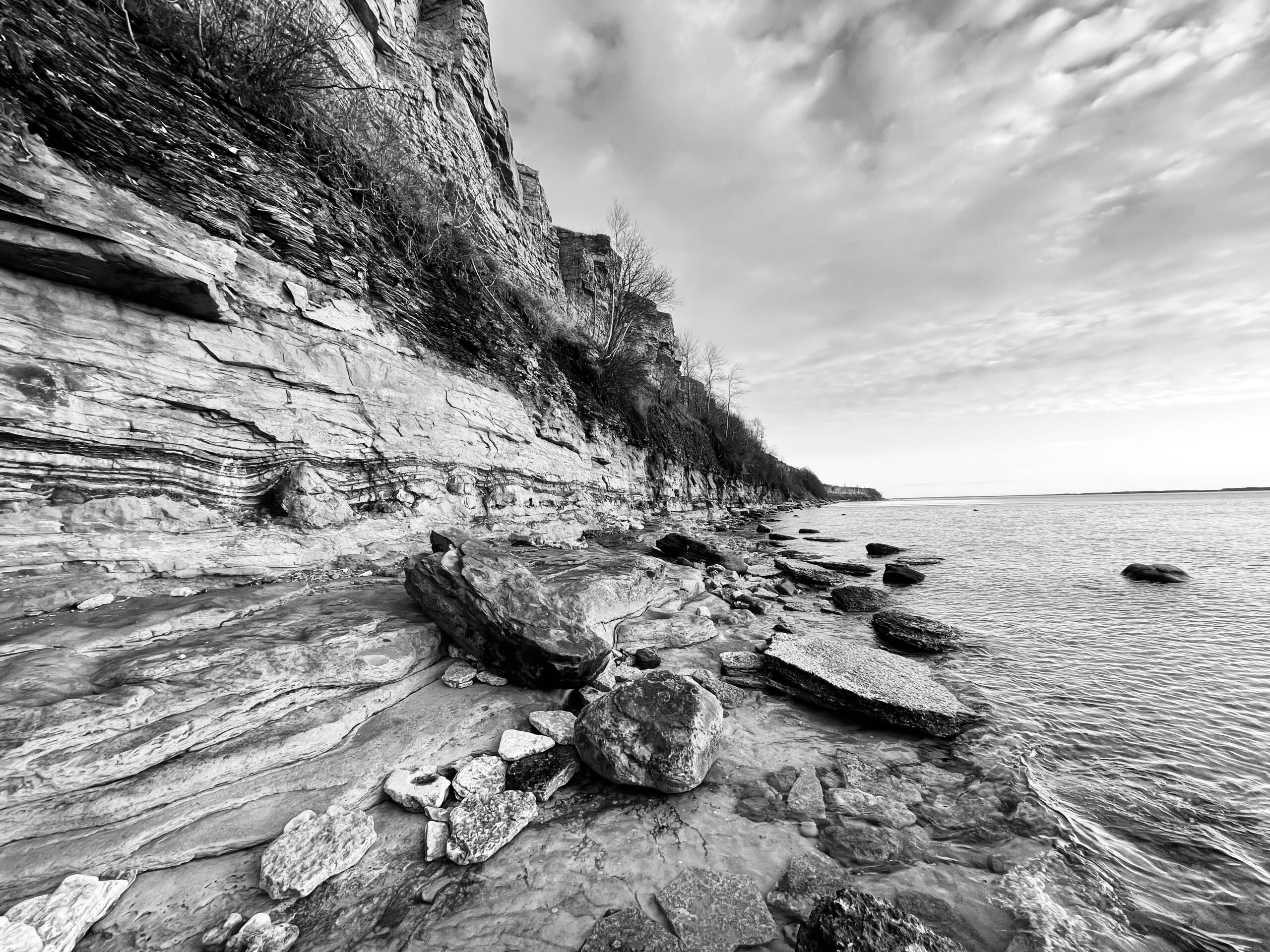
Photo: Koit Ojaliiv
Gustavs Grasis, artist, architect, Latvia:
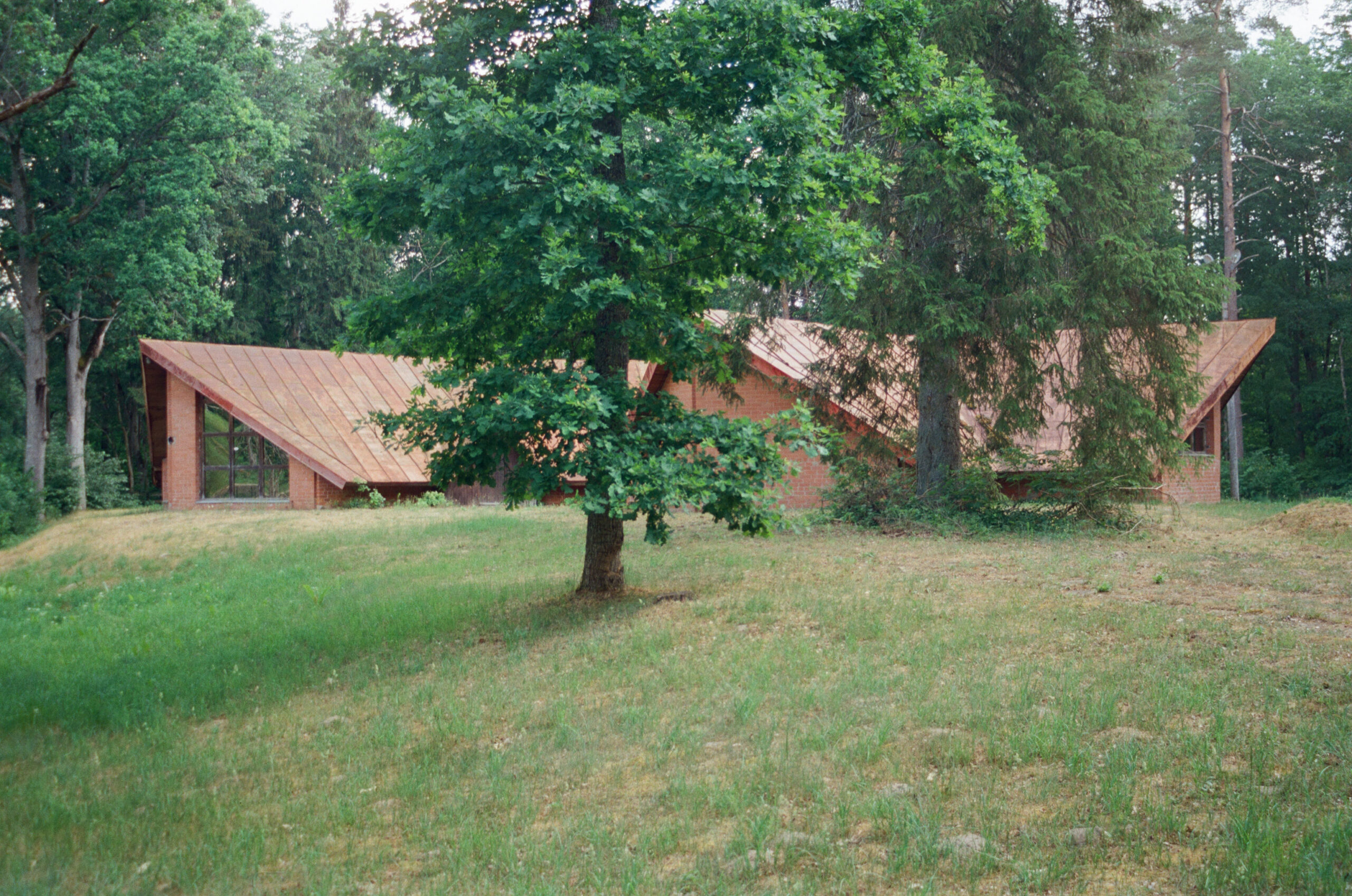
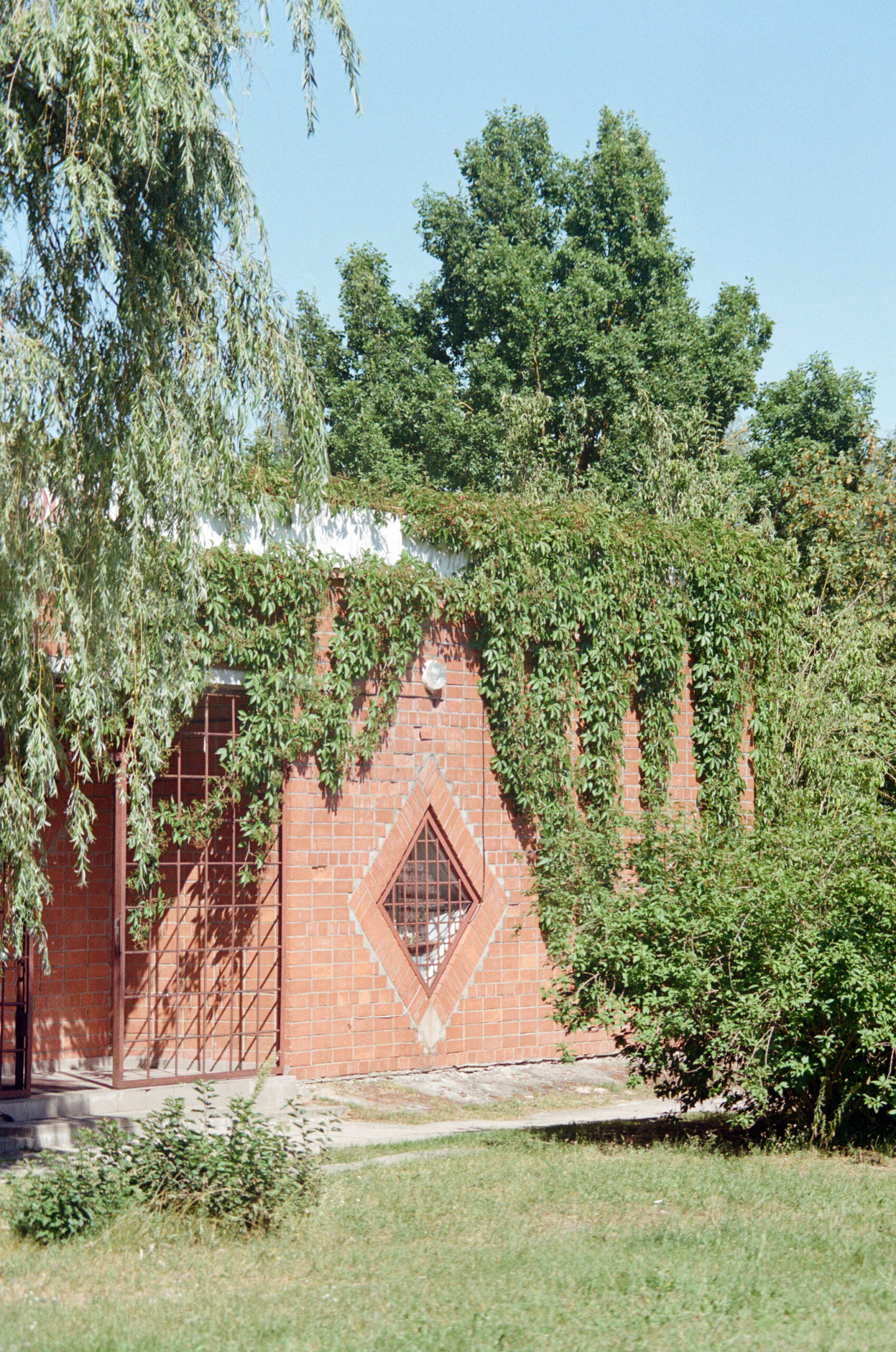
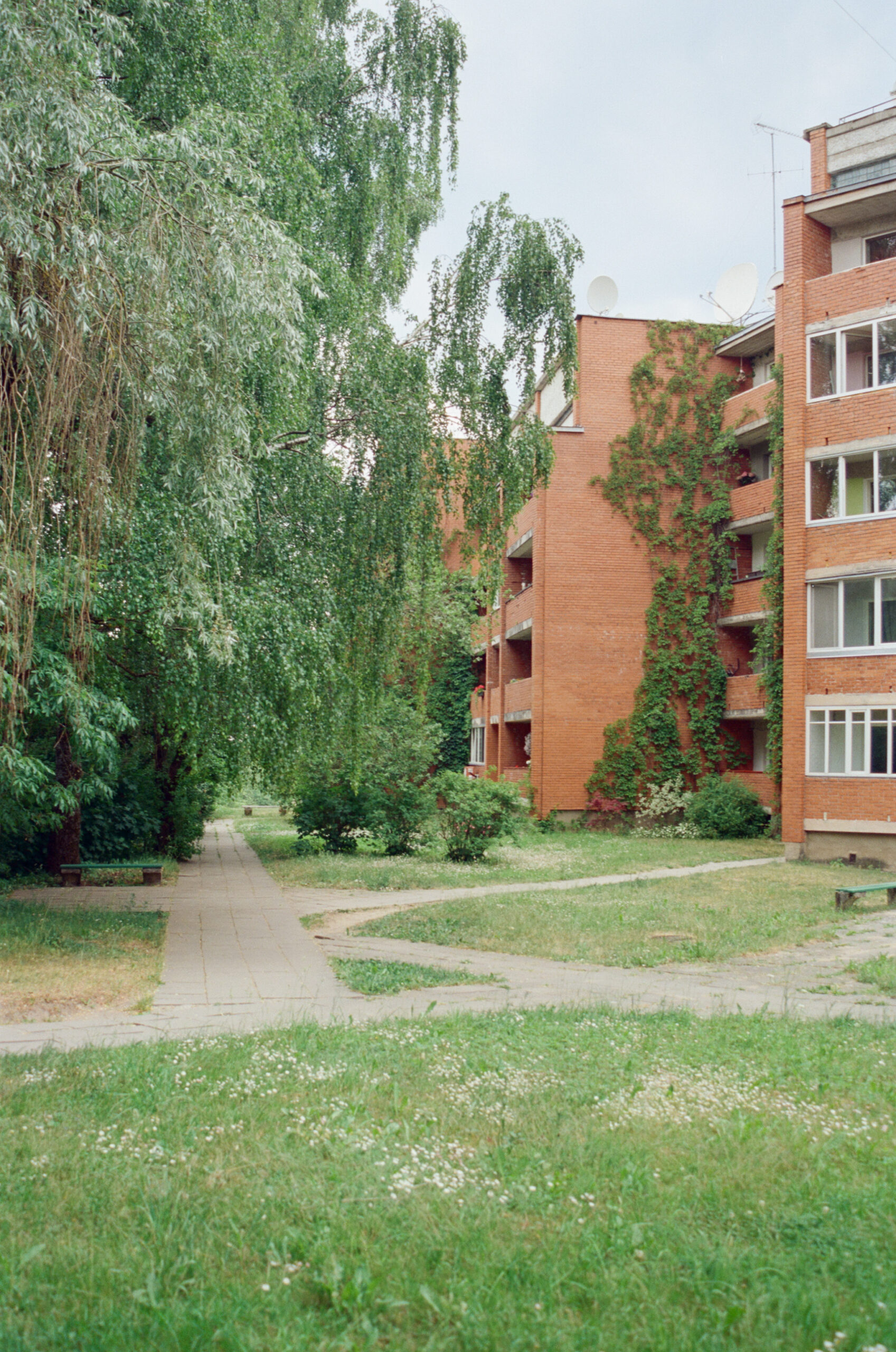
This is what it felt like growing up in the 1990s and early 2000s. Lushness, nostalgia (for what?), decay and abandonment. A neighbourhood of apartment blocks, an open kitchen window. An observant grandma surveying the yard. Somebody’s tinkering with something on their balcony. Maybe something interesting will happen this evening? I crave chips with Coca Cola, and somewhere there is a forgotten shashlik restaurant by the roadside in a national park.
Photos: Gustavs Grasis
Reinis Salins, Layercake Studio, Latvia:
Over time, this shared space has naturally adapted to the local culture—introversion, privacy, and quiet individualism have taken over. As Latvians say, ‘Katram savs stūrītis’—everyone finds their own corner. Something to remember and respect in the future.
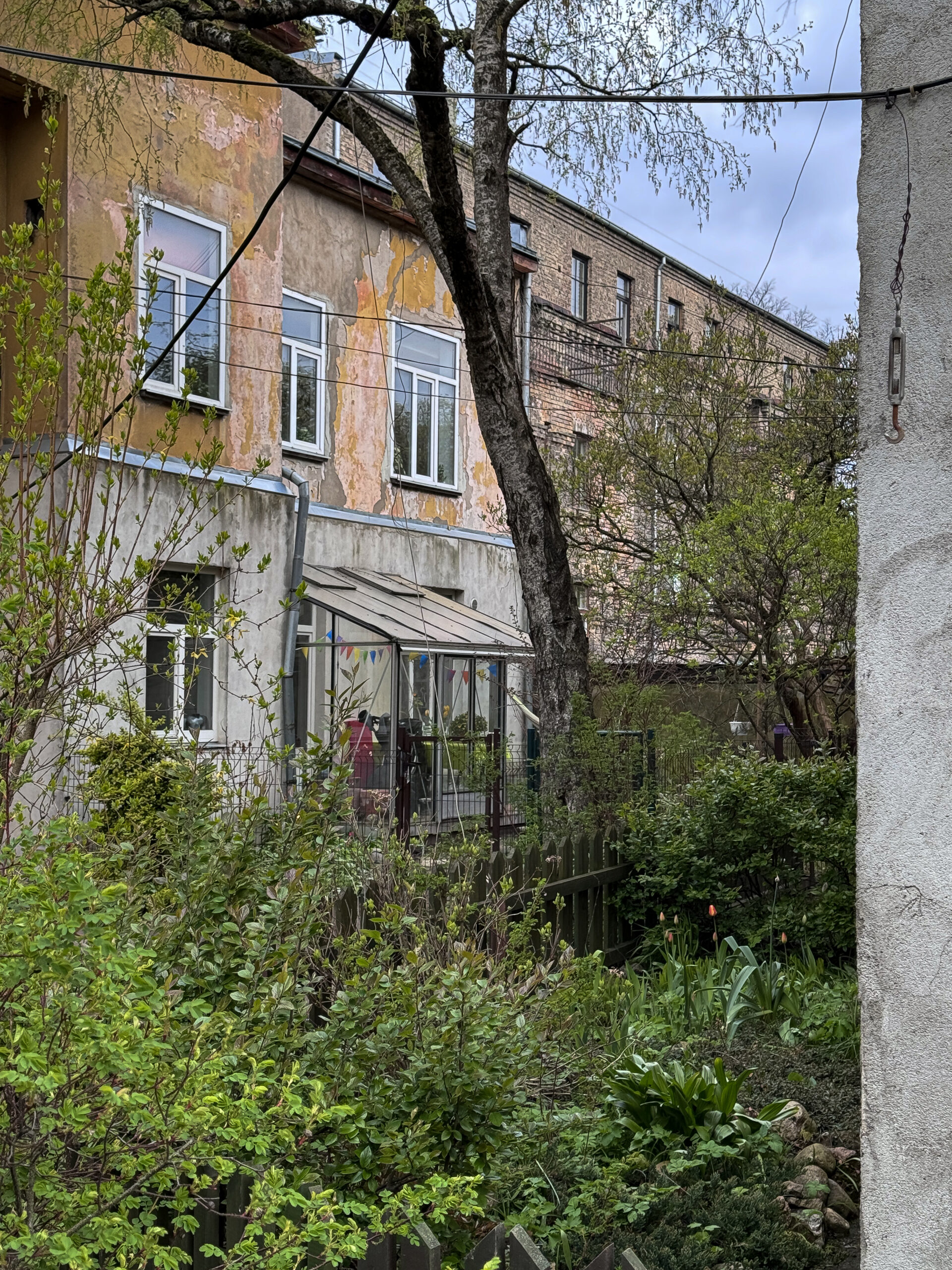
Photo: Reinis Salins
Gabrielė Ubarevičiūtė, After Party, Lithuania:
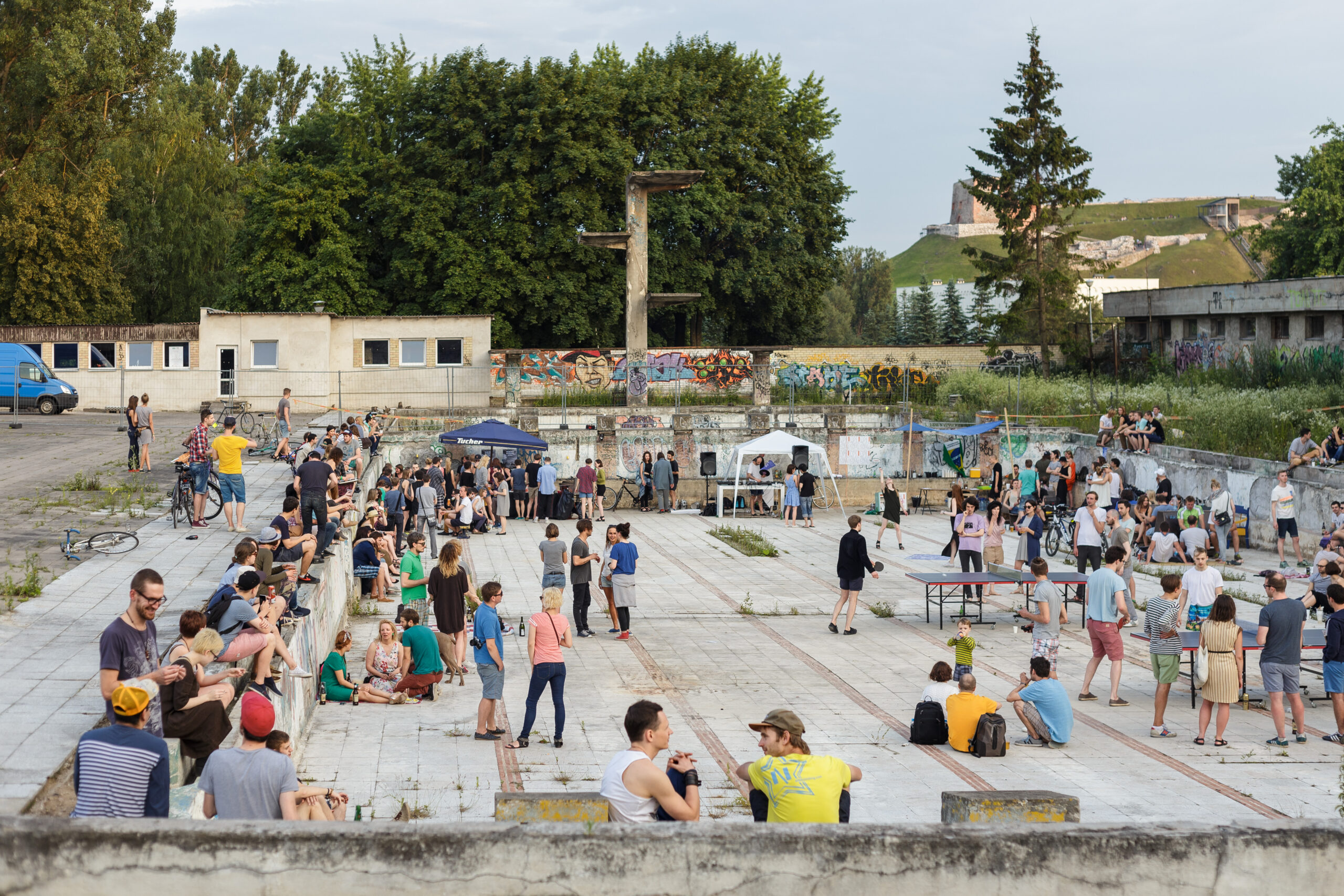
The shared foundation of the three Baltic states lies not in a specific physical space, but in the optimism of the youth who grew up in the newly independent nations. Emerging from the remnants of a Soviet past, it is these dynamic minds—resilient and candid—who know how to create more with less.
Hanna Eliise Kitter, Saskia Krautman, Kail Timusk, Carolyn Vilk, Anett Maiste, Elise Marie Olesk, Kunstiryhmitus/Art Gr0up, Estonia:
Living in Estonia, we have an easy opportunity to shape our everyday space—we just need to take note and act accordingly. Intervening in urban space and having a say is an unequivocal right of every city dweller. In Tallinn today, however, any signs of grassroots activity need to be consciously looked for: at first glance, the streets seem to be reserved only for official events and transportation. It is hard to say whether this reflects the passivity of Estonians or simply the scarcity of people passing through, but due to empty-looking spaces, every action is magnified and everyday activities are easily transformed into spectacles. We hope that the performative use of urban space leads to the stage becoming a platform that can be used without feeling like performing—that public space truly becomes a space for all.
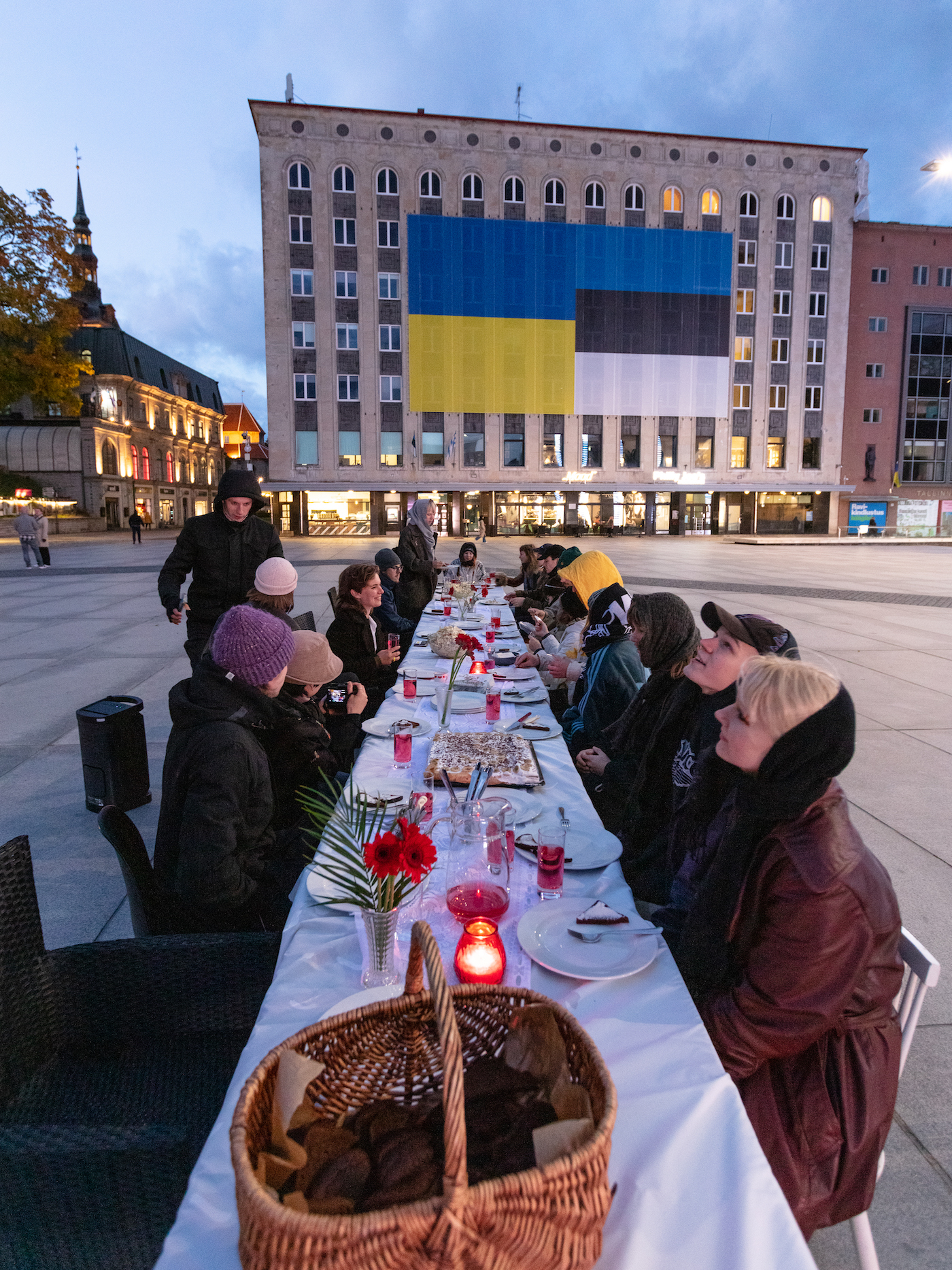
Photo: Tobias Tikenberg
Eneli Kleemann, Saskia Epp Lõhmus, Katariina Mustasaar, Mia Martina Peil, Marie Anette Veesaar, Anna Riin Velner, Lill Volmer, Stuudio Kollektiiv, Estonia:
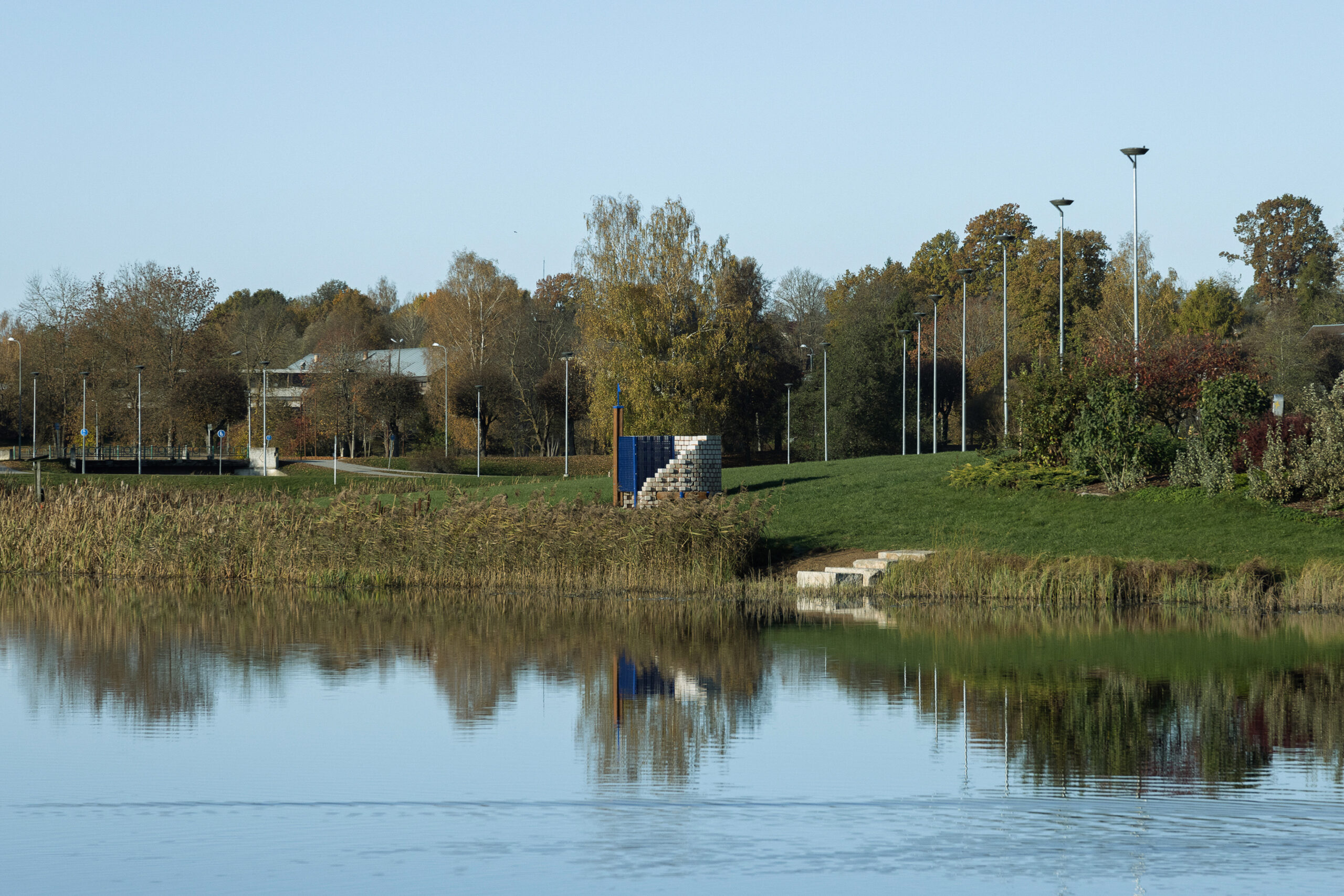
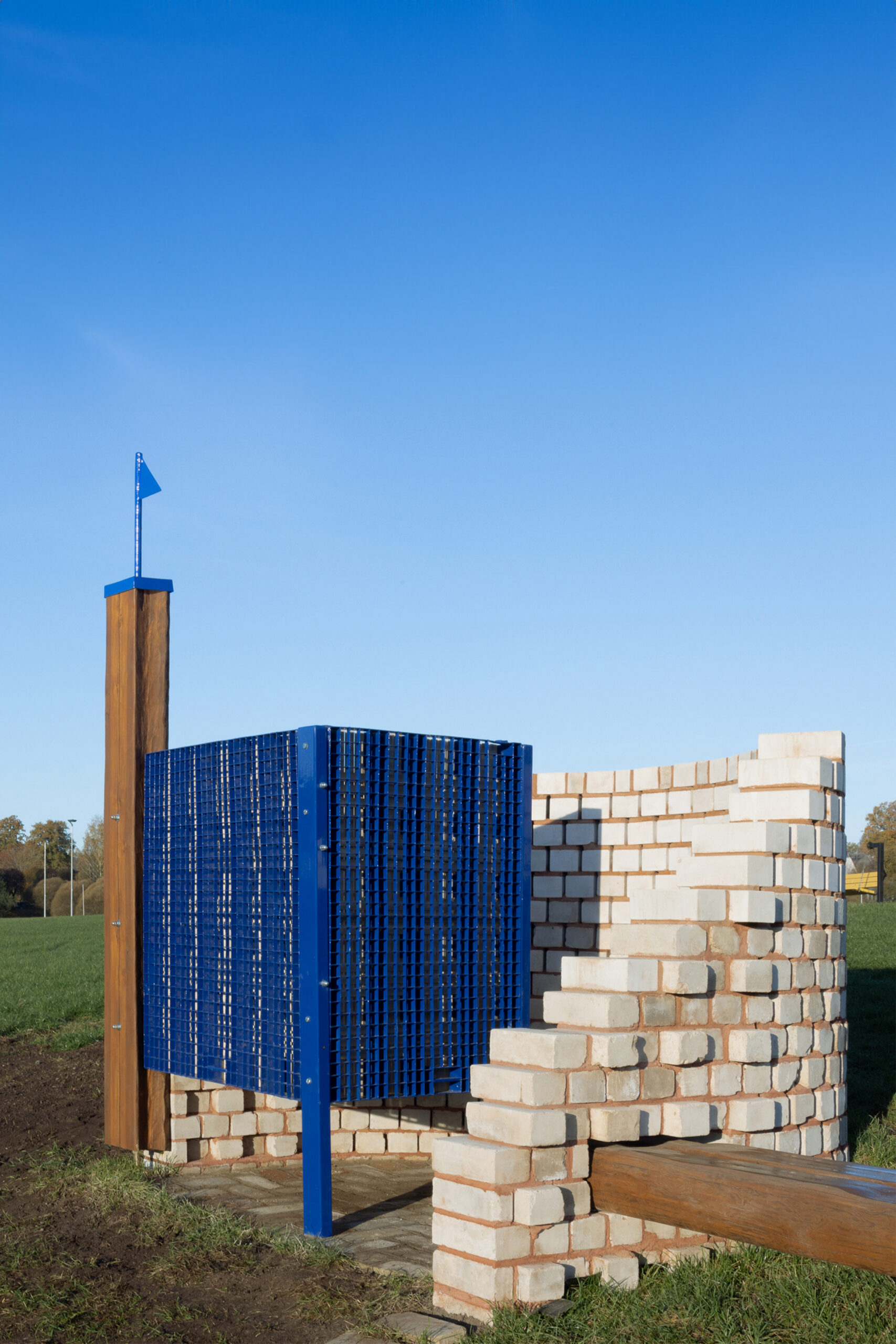
Waterside space connects—even the common name for the countries of Estonia, Latvia, and Lithuania comes from the (Baltic) sea, which keeps us together both geographically and culturally. The Baltic beaches, which were known for their resort and bathing culture already in the last century, are still characterised by simple dressing cabins that only partially occlude the body, leaving the swimmer’s toes and head exposed. Despite the short swimming season, these cabins can be found at long white sandy beaches and secluded forest lakes alike. In the dressing cabin and its vicinity, the boundary between private and public is extremely thin, but instinctively respected by the beachgoers. Last autumn at the VARES architecture residency, we built a dressing cabin in Valga by the Pedel River at the request of local residents. By using reclaimed materials collected from the Estonian-Latvian border and involving the local community, we combined Soviet-era heritage with contemporary methods. The dressing cabin, a practical element of public space, is a reminder that waterside areas should remain open to all.
Kristel Niisuke, Nikita Atikin Architects, Estonia:
Our key to success lies in seeing opportunities and bringing innovation. This means having the courage to experiment, develop, and improve. The important thing is to keep evolving and becoming better. We need to be flexible and adapt to new needs and desires—this creates new opportunities for us.*
*The text paraphrases the values listed on the website of Rimi Baltic. Rimi is a brand that operates exclusively in the Baltic states. As I am writing this, the Swedish company ICA Gruppen has just sold it for €1.3 billion to the Danish company Salling Group. I must say that the values of this retail company are not that different from the spatial values of the Baltic countries. Due to historical and geographical reasons, we have had to keep evolving and adapting in order to survive. Although a supermarket chain is an inherently global phenomenon, this one also contains something unexpectedly local and Baltic.
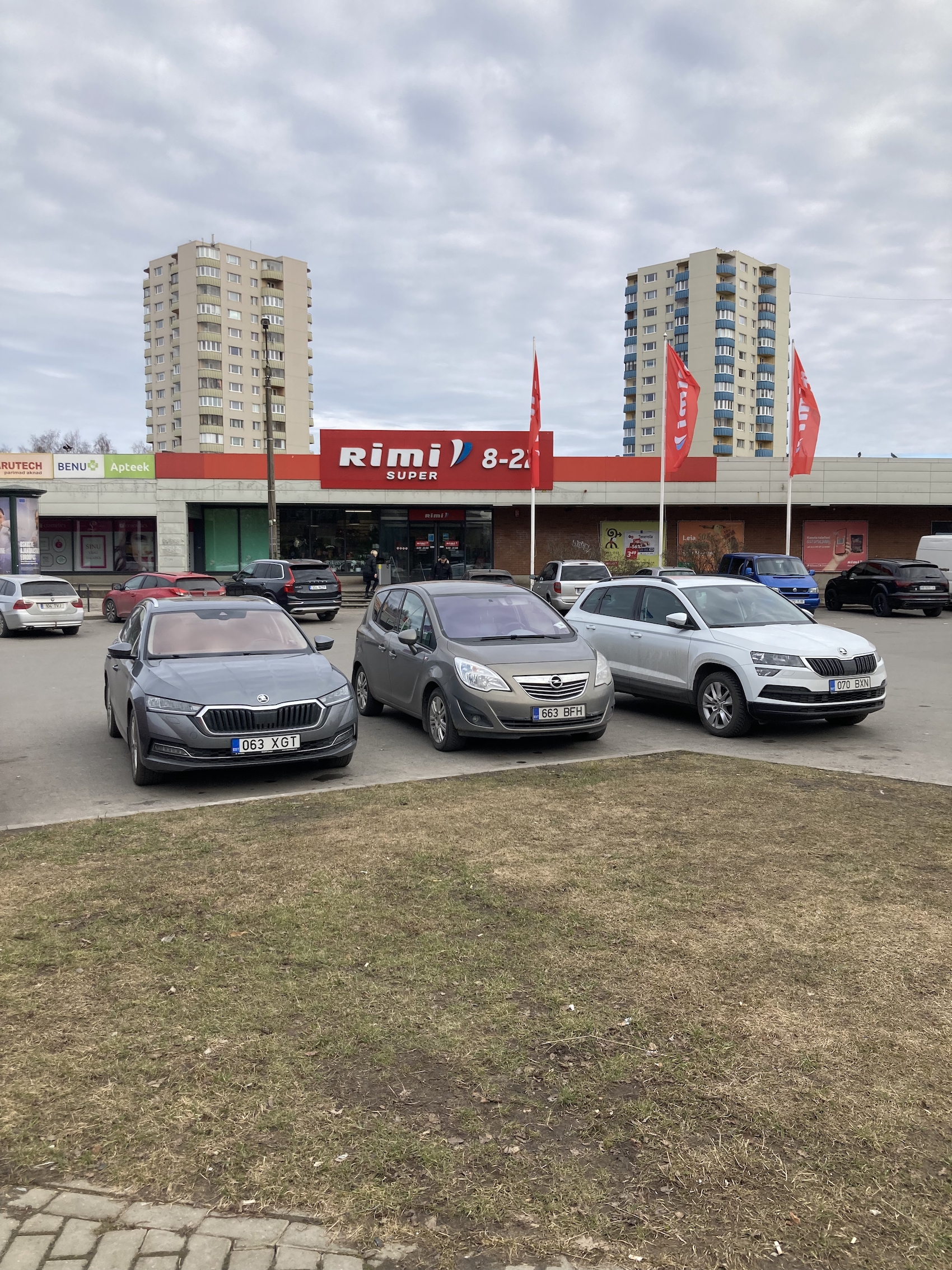
Photo: Kristel Niisuke
Siiri Vallner, Kavakava Architects, Estonia:
Roadway engineers, other sorts of ‘land developers’, Soviet-era standard projects, and large retail chains all blur together when seen from a distance. Upon scratching this thin surface layer, old places begin to emerge, which might seem unique, but also might turn out to have a twin in the neighbouring country. How is it that Kalamaja Park has a doppelgänger in Riga, considering that this required making exactly the same spatial choices at every transformative juncture for the last five hundred years? Peak similarity between the two comes every spring when the ground beneath the bare trees gets covered with dark blue Siberian squills—indeed, wearing identical outfits is an old trick of twins.
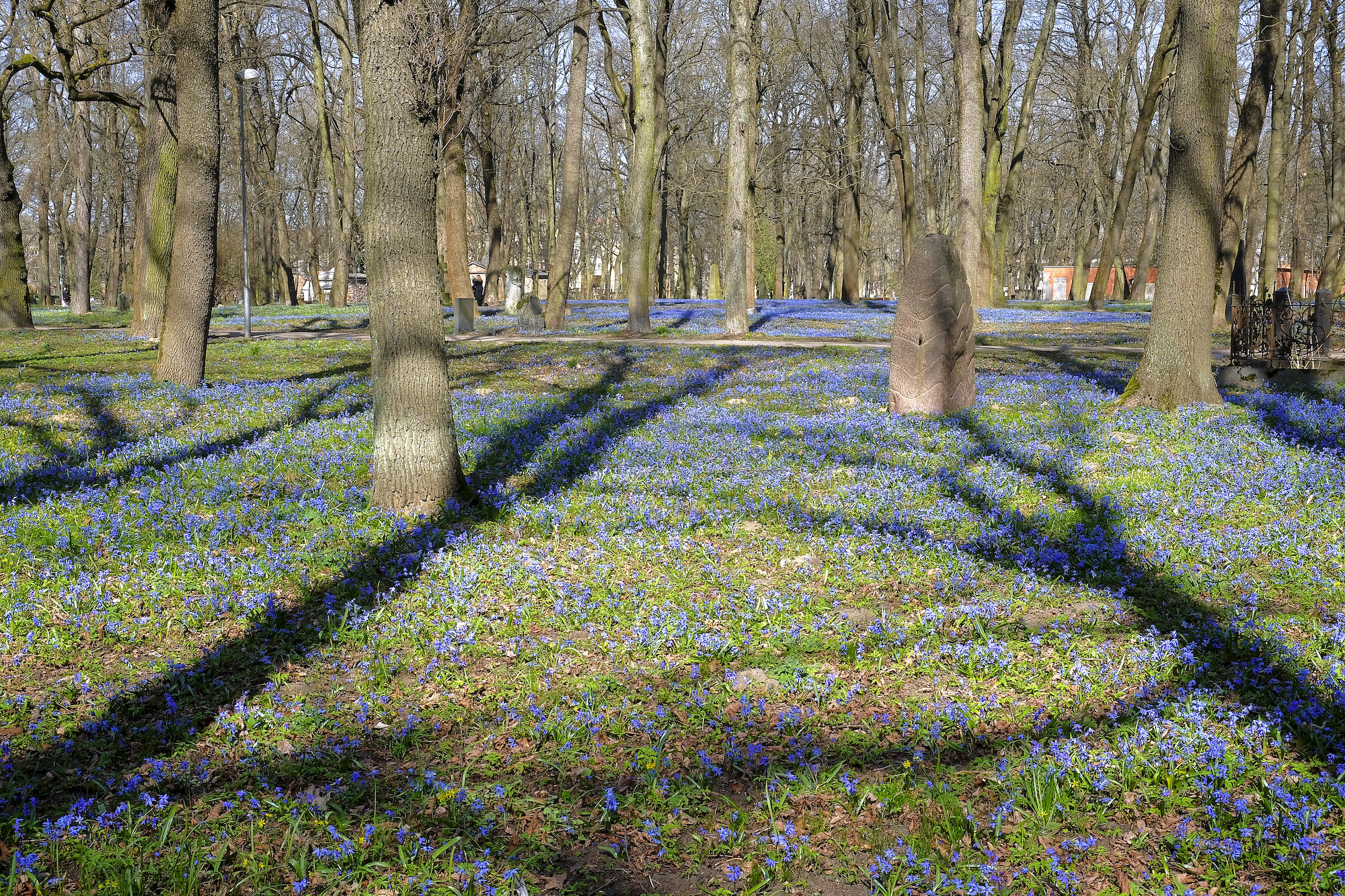
Photo: Aivars Gulbis
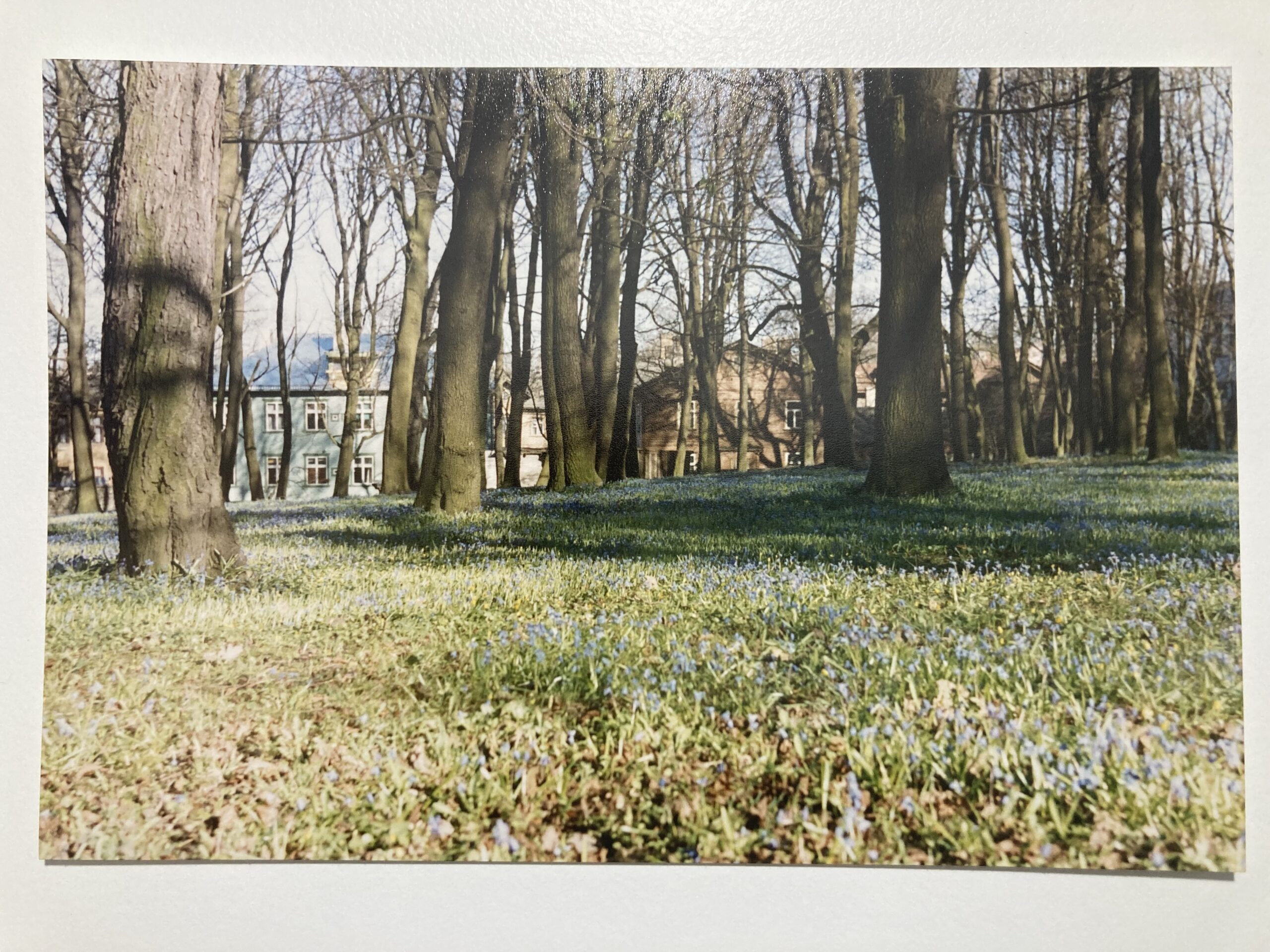
Photo: Siiri Vallner
Paula Veidenbauma and Diāna Mikāne, Gel Office, Latvia:
‘Closer than expected’. Travelling to, from, or within the Baltic region often means passing through the limbo of Riga International Airport (RIX) transfer corridors—a shared Baltic waiting room of fast mobility. Time in layover terminals is thick as honey—lichen green directions on pine green signs; strolling through the tax-free shops to check the prices for Riga Black Balsam, sprats in oil, and Madara Cosmetics; lounging in a chair surrounded by birch-wood interiors before taking off. En route to one of the four drinking water fountains, there is a high chance of meeting friends, relatives, or colleagues in transit from Vilnius, Palanga, or Tallinn to elsewhere. With the cessation of Air Litaunica’s services in 2015, followed by Estonian Air in the same year, and Nordica, another Estonian airline, in 2024, AirBaltic remains the sole flag carrier of the Baltic countries, with RIX as the central hub. While Riga International is waiting to be linked to the green mobility corridor via the high-speed Rail Baltica train, the dream of Baltic connectedness plays out in the RIX layover zones.

Foto: Asketic
Liene Pavlovska, artist, scenographer, spatial designer, Latvia:
In the Baltics, layers of architecture reveal spatial representations of different and ideologically conflicting pasts. They are often reminders of traumatic historical events for the society as a whole, but also in the personal histories of individuals. Although this is true for many places, the history of the Baltics is characterised by sudden changes of power through centuries. The potentiality and strength of the spaces consists in the fact that despite the ever-present trauma, they also hold hope and defiance, and somehow in working with these spaces, there is healing.
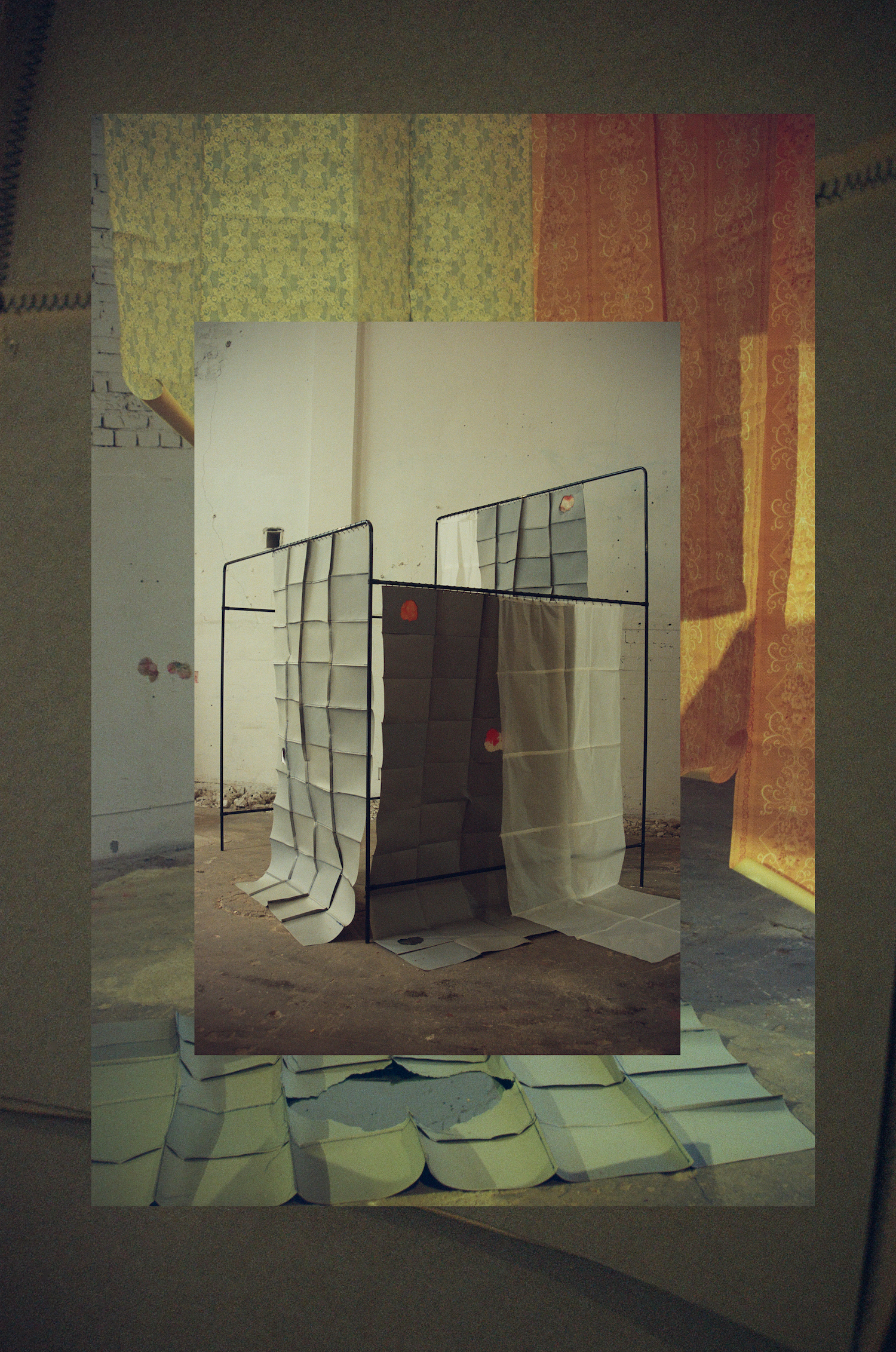
Photo: Liene Pavlovska
PUBLISHEDF: MAJA 1-2025 (119) with main topic BALTIC EXTRA
MAJA editors